
Wooden Library Cabinet
These wooden library cabinet pieces bring enduring practicality and rich timber character into a room.
Wooden Library Cabinet
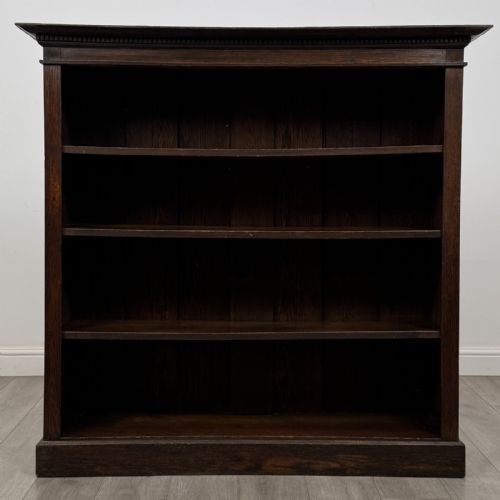
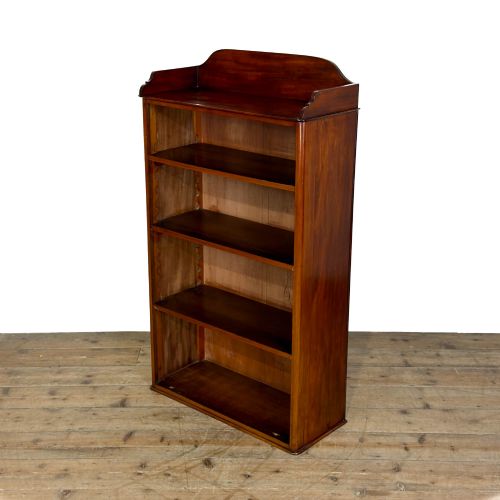
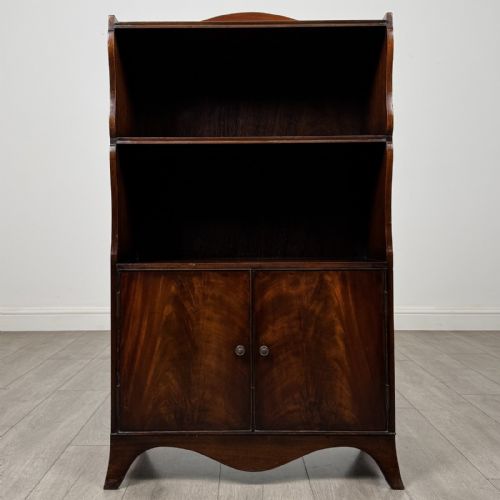
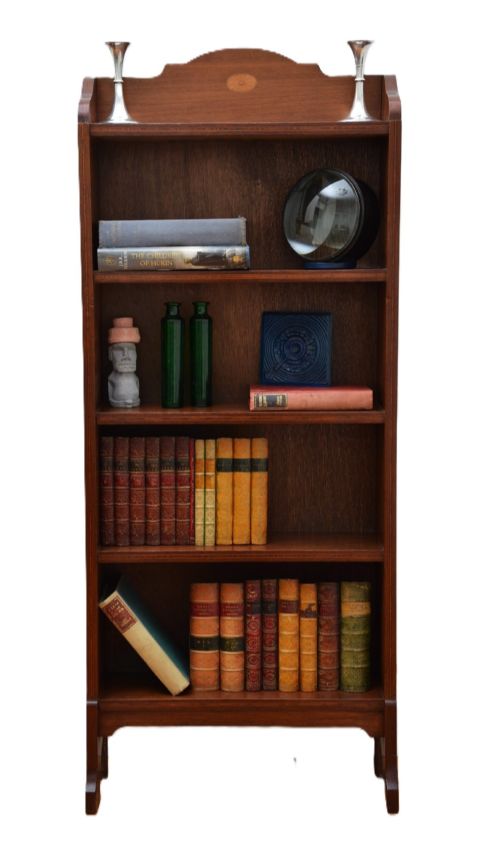
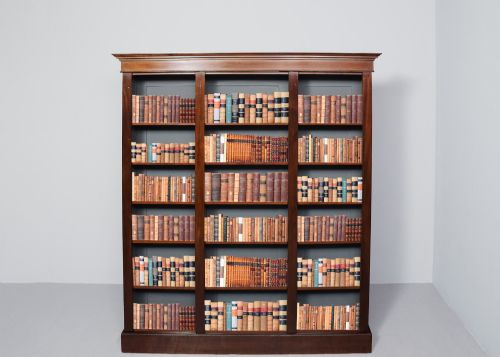
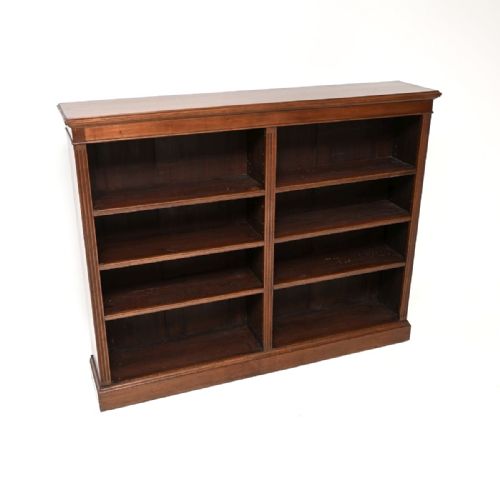
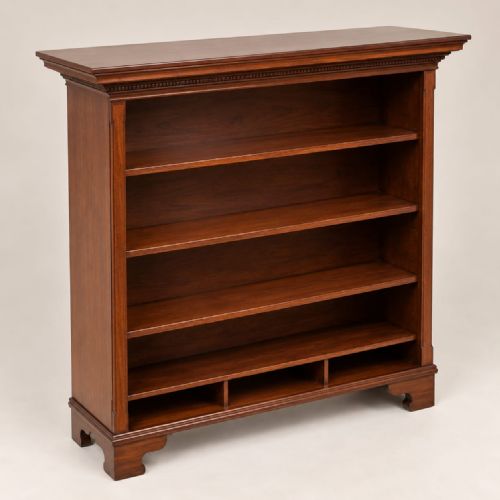
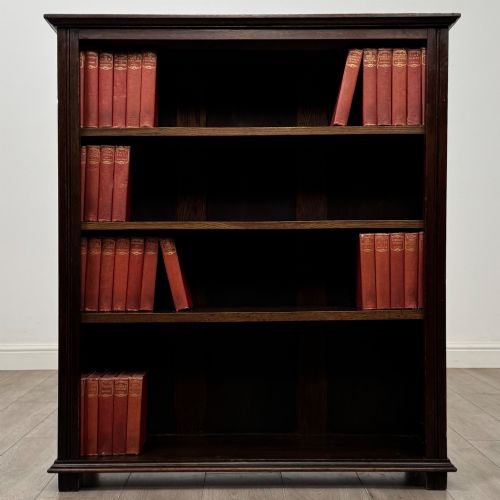
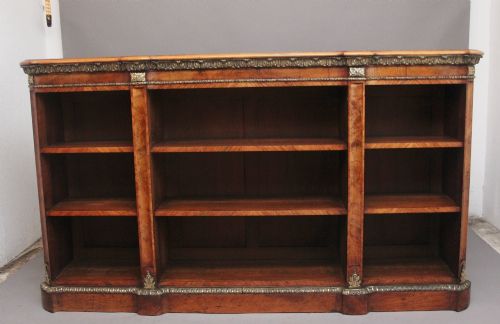
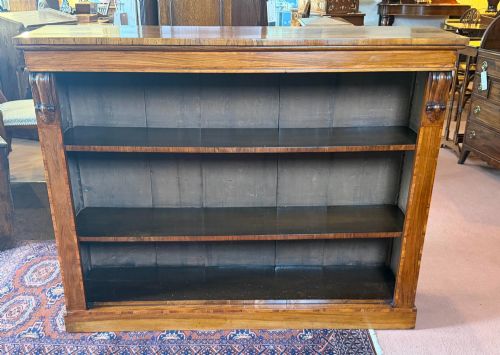
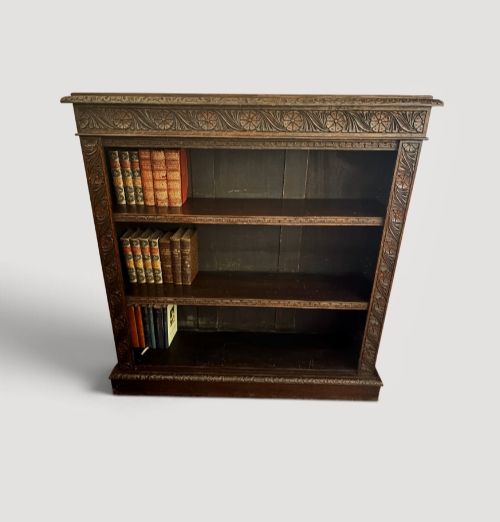
A wooden library cabinet primarily serves as a sturdy home for books and documents, taking forms such as bookcases, open bookcases, and stacking barrister variants. When searching for a wooden library cabinet, buyers frequently encounter pieces originating from the Victorian and Edwardian eras, alongside items spanning the broader nineteenth and early twentieth centuries.
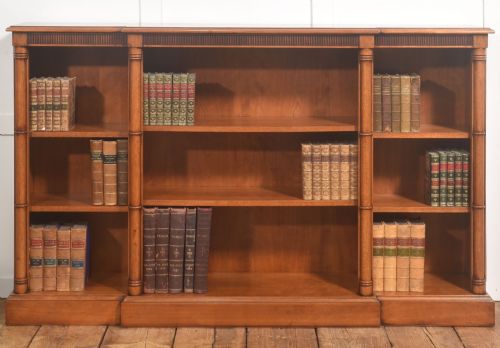
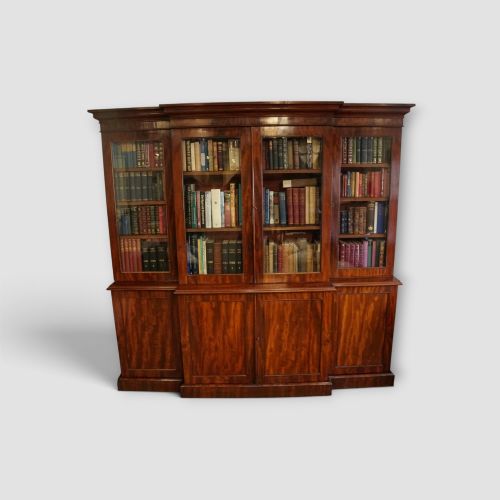
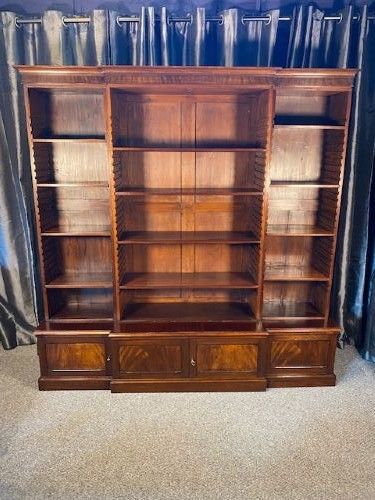
The assortment on this page leans heavily towards mahogany and oak variations, often featuring open shelving or glazed doors. Formats range from neat, compact units to large breakfront configurations with multiple sections and adjustable shelves designed for practical utility.
Materials and Construction
Cabinet makers utilised dense hardwoods like mahogany, oak, and walnut, frequently applying burr walnut or amboyna veneers to create striking surface grain patterns. Solid timber forms the structural core of these pieces, ensuring stability for heavy collections of books.
Brass fittings, glass panes, and occasionally ormolu mounts provide functional and decorative accents. Joinery methods of the period prioritized durability, accommodating adjustable shelving and modular stacking designs.
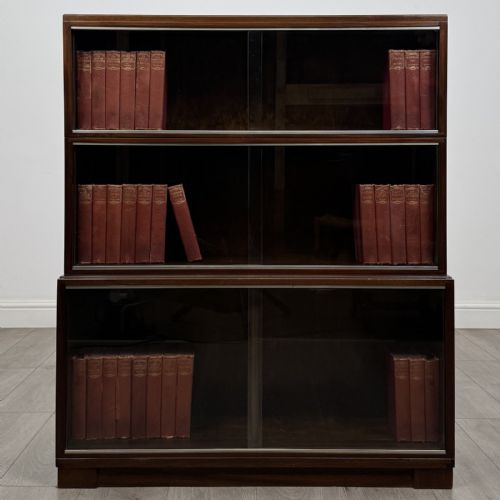
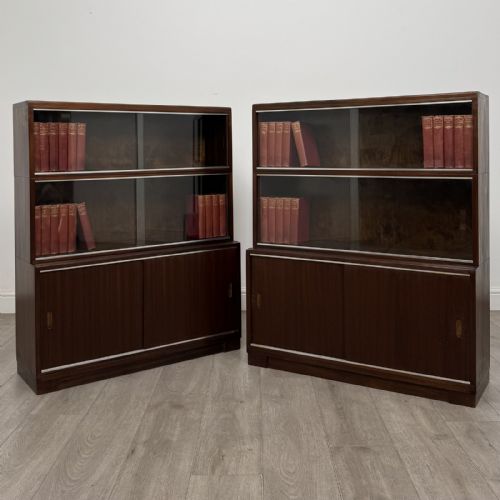
Some barrister bookcases were designed to stack like building blocks, letting owners expand their library upward one shelf at a time.
Distinctions in Quality
Quality rests upon the selection of timber and the precision of decorative elements such as inlaid banding, raised galleries, and carved details. Pieces utilising figured veneers like burr walnut or exotic woods exhibit a higher degree of craftsmanship than standard utility furniture.
Johnstone and Jeanes
The Wooden Library Cabinet Glossary
- Breakfront
- A piece of furniture where the central section projects forward from the side sections. This layout creates visual depth and is common in larger nineteenth-century bookcases.
- Barrister bookcase
- A modular bookcase featuring multiple stacked sections with glass-fronted doors that lift and slide inward. These were designed for easy transport and office utility.
- Ormolu
- Gilded bronze mounts applied as decorative ornaments on furniture. It appears on select nineteenth-century pieces to accent timber surfaces.
- Inlay
- A technique where contrasting materials are inserted into the wood surface to form decorative patterns. Edwardian and late Victorian pieces frequently utilise this method.
- Adjustable shelves
- Shelves that can be moved to different heights using internal racks or pins. This feature allows the interior space to accommodate books of varying sizes.
Wooden Library Cabinet: Frequently Asked Questions
What is a wooden library cabinet used for?
These cabinets are built to store books, manuscripts, and display items securely within a study or living space. Their internal shelves accommodate various volumes while keeping collections organised.
Open formats allow for quick access to frequently read texts, whereas glazed or enclosed variants protect delicate bindings from dust and light.
How do I date a wooden library cabinet?
Dating relies upon identifying timber choices, stylistic markers, and construction techniques characteristic of periods like the Victorian or Edwardian eras. Mahogany and heavy carved oak typically point towards nineteenth-century production.
Subtle details such as inlay patterns, brass hardware, and joinery methods help narrow down the decade of manufacture.
Are the shelves usually adjustable?
Many of the breakfront and multi-section bookcases listed feature adjustable shelving to suit different book heights. This adaptability was a common inclusion in better-quality library furniture.
Fixed shelves do appear on certain simpler or earlier vernacular pieces, so checking the interior configuration is advisable.
How do I care for a antique wooden cabinet?
Maintenance involves keeping the timber away from direct heat sources and sudden humidity changes to prevent wood movement or veneer lifting. Regular dusting with a soft, dry cloth preserves the finish.
Applying appropriate wax occasionally helps nourish hardwoods like mahogany, walnut, and oak without building up harmful residues.