



Wooden Kneehole Bureau
Wooden kneehole bureau options combine compact proportions with concealed drawers, offering practical writing space alongside classic period craftsmanship.
Wooden Kneehole Bureau
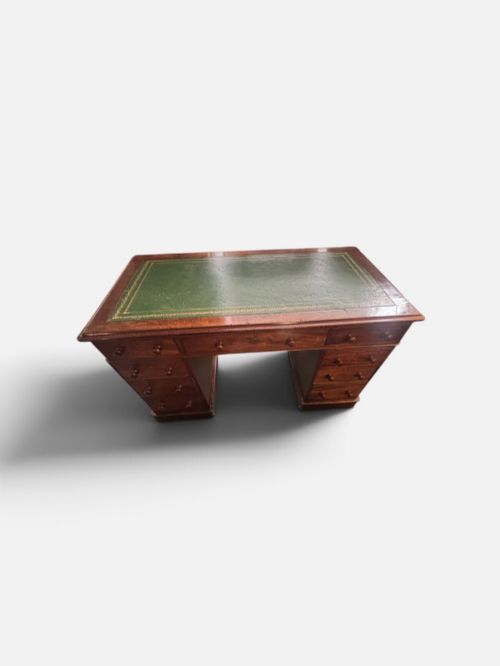
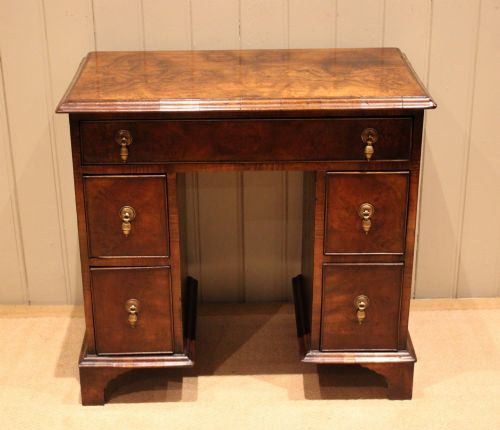
A wooden kneehole bureau brings together pedestal desks and writing tables in formats ranging from Georgian walnut to Victorian mahogany. These pieces serve as functional workstations while functioning as statement furniture within a room.
Most examples found here date from the Georgian and Victorian periods, alongside Edwardian and later interpretations. Buyers encounter varying pedestal layouts, twin pedestal formats, and configurations featuring central kneehole recesses.
Formations include simpler child's desks alongside larger library bookcases and cylinder roll-top variations. Each style reflects the prevailing aesthetic of its era, from Queen Anne influences to Art Deco lines.
Materials and Construction
Cabinetmakers utilised dense timbers such as mahogany, oak, walnut, and burr walnut for structural integrity and visual depth. Figured veneers and red walnut further accentuate the natural grain of these woods.
Brass handles, escutcheons, and leather writing inserts frequently complement the primary timber construction. Glass panels appear on associated bookcase upper sections where applicable.
Wooden Kneehole Bureau Retail Price Guide 2026
Typical asking prices for wooden kneehole bureau among the pieces listed under this phrase on Sellingantiques today, from the lower quarter to the upper quarter. They describe what is for sale here now, not the wider market.
Certain Victorian examples were designated for specific occupations, including a dedicated Post Master's desk.
Evaluating Quality
The degree of refinement in timber selection and veneer matching distinguishes finer examples. Subtle details like figured walnut surfaces or precise inlay work demonstrate superior workshop execution.
Structural honesty and original hardware elevate a piece's standing. Proportion and balance across pedestals and writing surfaces dictate the overall visual success of the desk.
John Gregory London·Étienne Kohlmann
The Wooden Kneehole Bureau Glossary
- Kneehole
- A recessed central space beneath a desk top, typically flanked by banks of smaller drawers. This configuration defines the classic layout of these bureaus.
- Pedestal desk
- A heavy writing desk supported by two pedestals or columns of drawers resting on the floor. It forms the structural basis for many kneehole bureaus.
- Burr walnut
- Timber taken from a tree growth or burl, yielding intricate, swirling grain patterns. It commands attention for its decorative qualities on desk fronts.
- Escutcheon
- A protective plate surrounding a keyhole, usually fashioned from brass. It guards the surrounding wood from wear.
Wooden Kneehole Bureau: Frequently Asked Questions
Where were kneehole desks used?
These desks traditionally served as private writing tables in studies, libraries, and principal bedrooms of period homes. Their compact footprints allowed them to sit comfortably against walls or within window bays.
Today, they transition easily into modern home offices and living spaces, offering concealed storage alongside functional work surfaces.
How do I date a wooden bureau?
Dating relies on examining timber choices, construction techniques, and hardware styles. Georgian pieces often display different drawer linings and dovetailing compared to Victorian iterations.
Secondary woods and structural assembly methods provide further clues regarding the era of manufacture.
What is the difference between a desk and a bureau?
Bureaus traditionally incorporate sloping writing flaps that conceal internal pigeonholes and small drawers. Pedestal desks typically feature flat writing surfaces supported by banks of drawers on either side.
Terminology often overlaps in antique markets, encompassing various forms of writing furniture with kneehole configurations.
How do I care for antique wood surfaces?
Maintain timber surfaces by dusting with a soft, dry cloth and avoiding direct sunlight or excessive heat sources. Periodic application of appropriate wax preserves the patina without harming the finish.
Protect leather inserts from sharp implements and moisture to maintain the integrity of the writing surface.