

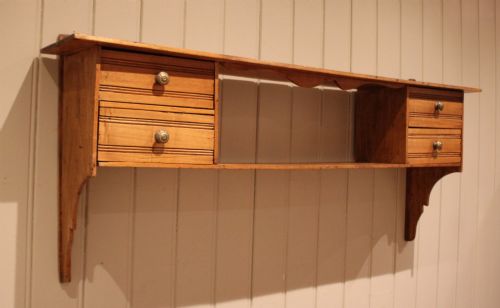

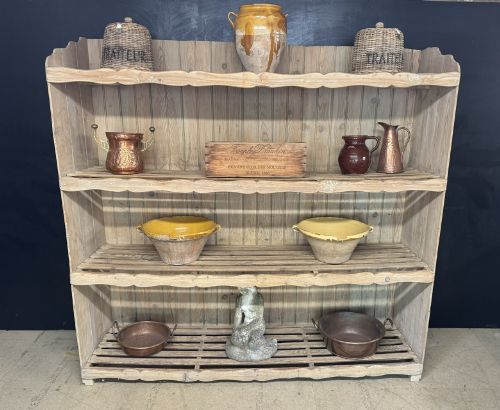
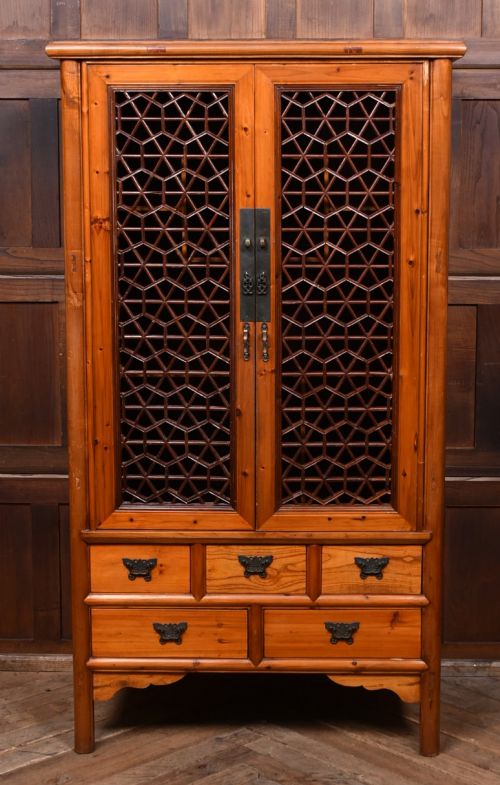


Wooden Kitchen Unit
These wooden kitchen unit pieces are practical storage furniture built from oak, pine, and painted wood for daily domestic use.
Wooden Kitchen Unit
A wooden kitchen unit encompasses heavy oak dressers, larder cupboards, and wall shelves designed for storing provisions and crockery. These items span periods from the early eighteenth century through the twentieth century, reflecting varied domestic needs across different regions.
Buyers will most frequently encounter pine and oak pieces on this page, often built in regional styles like French Provincial or English Country. Formats range from large housekeeping cupboards to slim plate racks and baker's racks.
How they were made
Cabinet makers relied on solid timber construction, primarily using oak and pine alongside cedar and walnut. Joints were hand-cut to withstand heavy everyday use in busy domestic kitchens.
Hardware additions typically featured forged iron and brass hinges, handles, and latches. Surface finishes varied from natural waxed wood to hand-applied paint layers like Little Greene shades.
Wooden Kitchen Unit Retail Price Guide 2026
Typical asking prices for wooden kitchen unit among the pieces listed under this phrase on Sellingantiques today, from the lower quarter to the upper quarter. They describe what is for sale here now, not the wider market.
Current listings feature wooden kitchen units spanning the eighteenth to the twentieth centuries, built from oak, pine, walnut, and cedar.
What varies in quality
The standard of a wooden kitchen unit depends heavily on the integrity of the timber and the skill of the original joinery. Pieces retaining their original brass or iron hardware and uncompromised structural frames command greater interest.
Proportion and regional vernacular detail also set exceptional examples apart from simpler utility items. Well-executed mouldings, balanced shelving proportions, and untouched surface patinas distinguish superior provincial work.
The Wooden Kitchen Unit Glossary
- Dresser
- A piece of furniture featuring base cupboards or drawers surmounted by open shelves for displaying plates.
- Larder Cupboard
- A tall storage cabinet traditionally ventilated for keeping food provisions cool before refrigeration.
- Plate Rack
- A wall-mounted or freestanding wooden frame designed to hold plates vertically on edge.
- Provincial
- Denoting furniture made in the regions rather than capital cities, reflecting local materials and practical traditions.
- Buffet Vaissellier
- A traditional French storage combination featuring a lower buffet base beneath an open plate display upper section.
Wooden Kitchen Unit: Frequently Asked Questions
What is a larder cupboard used for?
A larder cupboard serves as a tall storage unit originally designed to keep food ingredients cool and organised in domestic kitchens before modern refrigeration.
Today, these pieces function effectively as pantry storage for dry goods, kitchenware, or linens in contemporary homes.
How do I date an old wooden dresser?
Dating relies on examining construction techniques, tool marks, timber species, and overall hardware styles. Examining the drawer dovetails and backboards often reveals the period of manufacture.
Comparing regional vernacular traits and panel construction further helps narrow down whether a piece originates from the eighteenth or twentieth century.
Can I use an antique plate rack in a modern kitchen?
An antique plate rack integrates easily into contemporary spaces by providing functional wall storage and rustic visual warmth. These units free up cupboard space while displaying everyday crockery.
Secure wall fixings are essential when mounting older wooden plate racks to support the weight of heavy ceramic plates safely.
What is the difference between oak and pine kitchen units?
Oak furniture tends to offer heavier structural durability and a deeper, darker grain pattern that develops a rich patina over centuries. Pine units are typically lighter in weight and colour, often finished with paint.
Both timbers served practical domestic roles, but oak was favoured for formal country furniture while pine was common in utilitarian kitchen settings.