
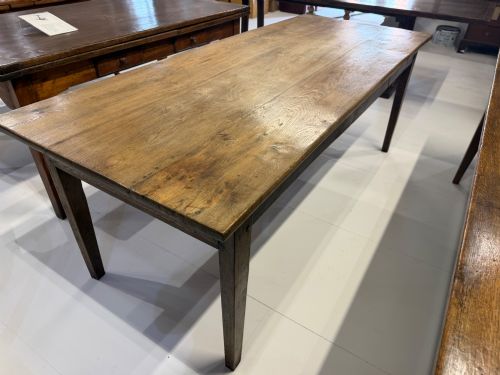
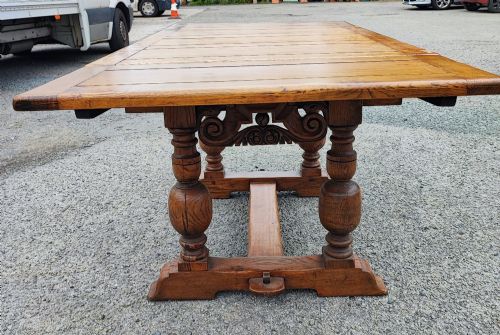
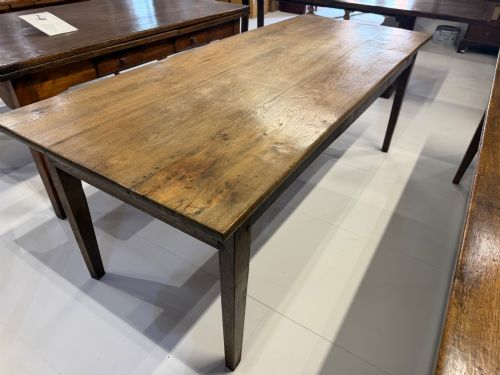
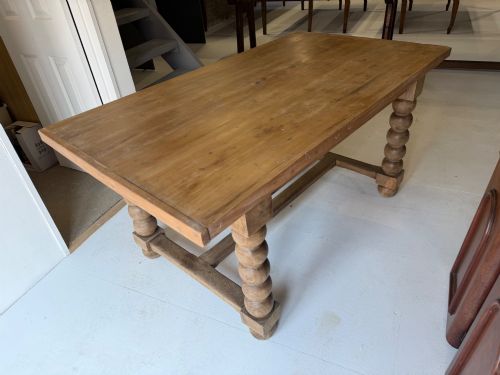
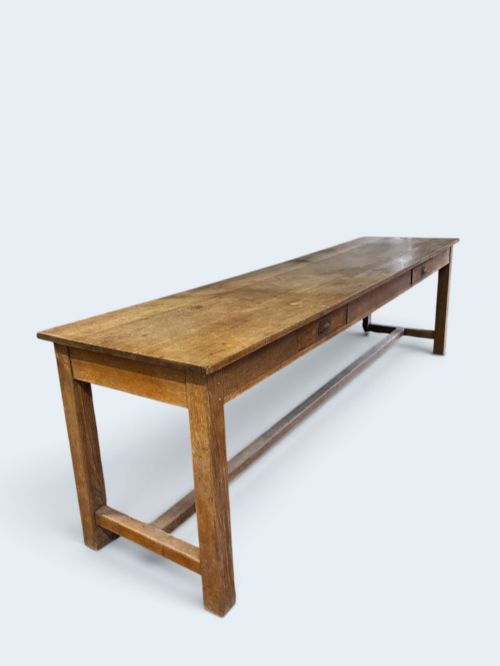
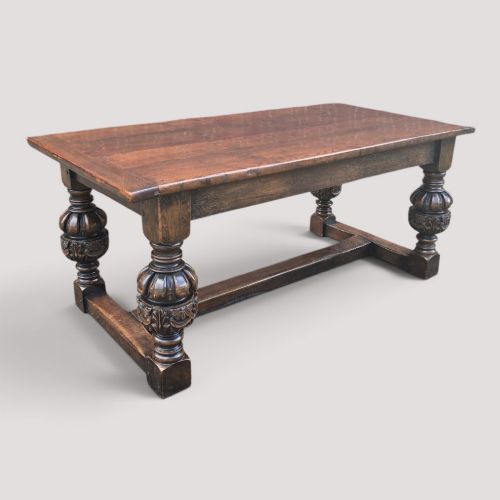
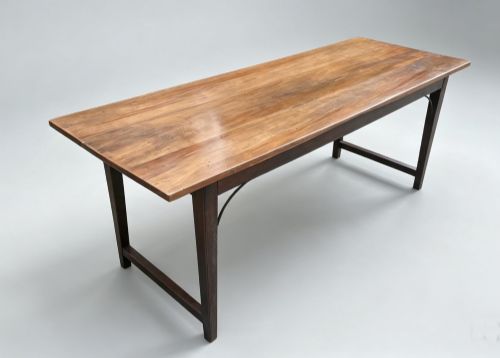
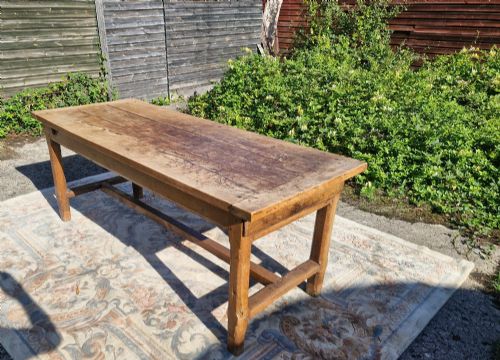
Wooden Kitchen Refectory Table
These wooden kitchen refectory tables offer solid surfaces for gathering, built to handle daily family meals with enduring rustic character.
Wooden Kitchen Refectory Table
When you search for a wooden kitchen refectory table, you encounter long, sturdy boards designed originally for communal dining halls and adapted over centuries for domestic kitchens. The examples on this page span from the eighteenth century through the Edwardian period and into the early twentieth century, drawing on diverse regional traditions.
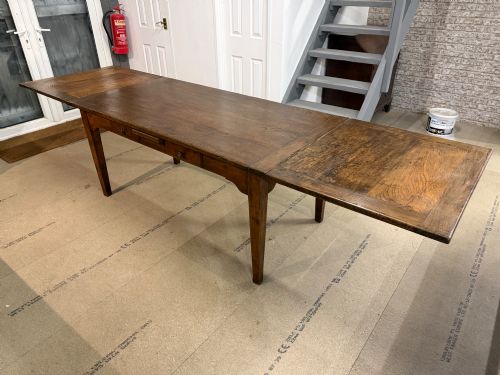
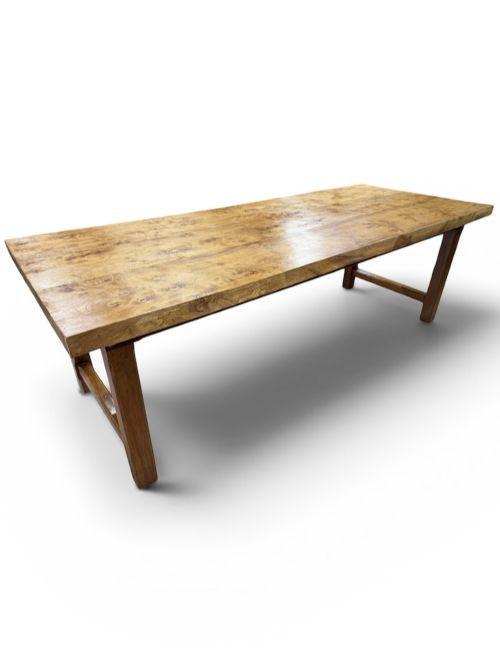
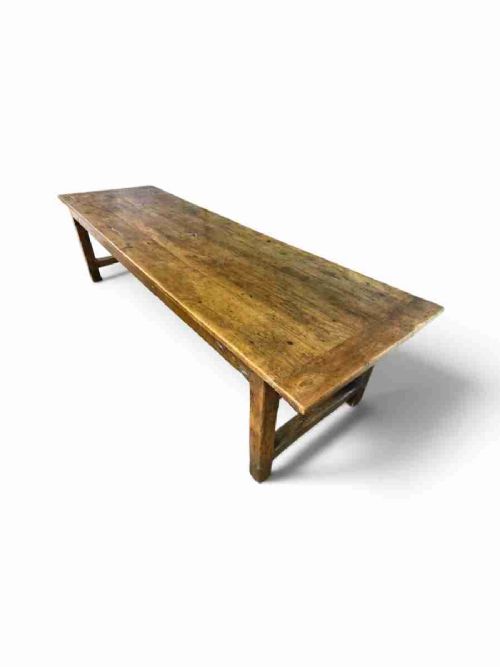
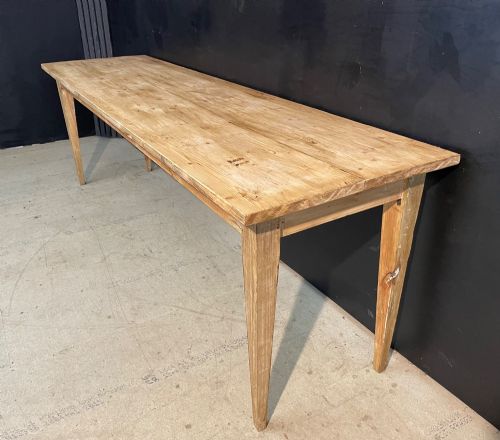
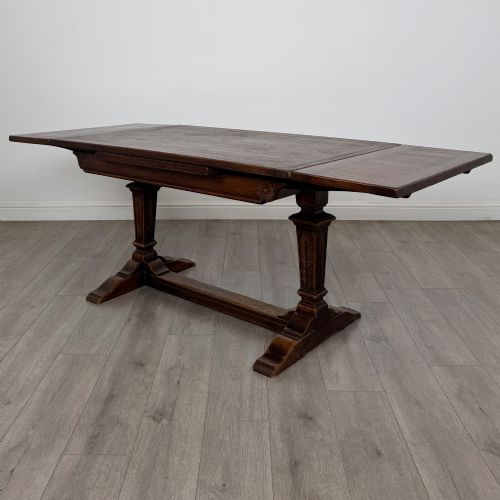
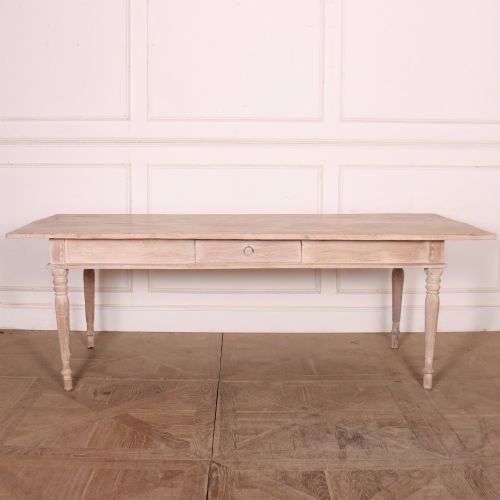
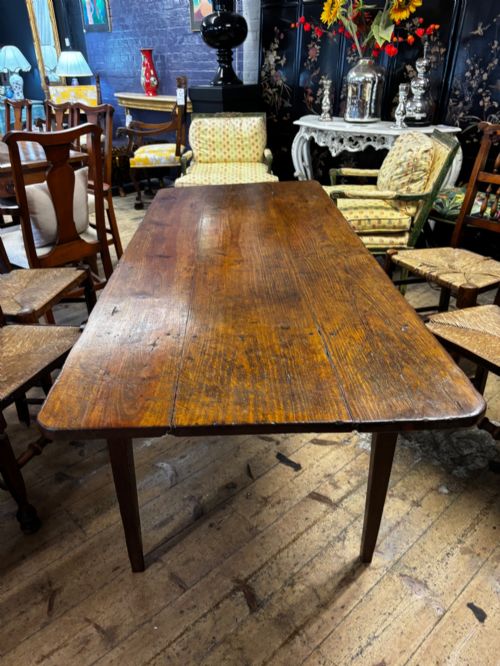
You are most likely to meet substantial oak and pine versions, often exhibiting rustic farmhouse or French provincial styles. Many feature traditional extensions like draw leaves or trestle ends, alongside simpler variations with tapered or bobbin legs intended for everyday use.
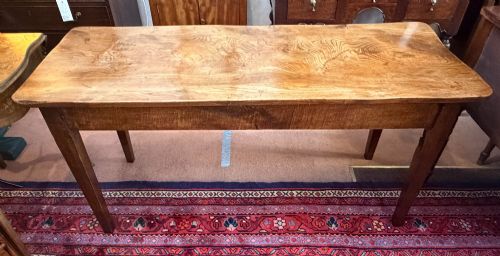
The selection ranges from Spanish elm and French cherry wood to fruitwood and walnut, reflecting both English and continental workshops. These forms serve equally as dining tables, serving tables, or extended working surfaces in a modern kitchen.
Materials and construction methods
Joiners and cabinetmakers relied heavily on solid hardwoods like oak, elm, and fruitwood, paired occasionally with softer pine for large domestic surfaces. Timber selection depended on regional availability, resulting in dense oak frames and lighter cherry or walnut tabletops.
Construction techniques prioritise structural strength through thick planks, pegged joints, and heavy trestle supports or substantial legs. Draw leaf mechanisms and double extending frames were engineered into the woodwork to allow boards to slide smoothly beneath the main top.
Listings feature woods spanning oak, pine, elm, fruitwood, beech, walnut, cherry, and birch across the eighteenth, nineteenth, and early twentieth centuries.
Distinguishing quality in older tables
The distinction between ordinary and superior pieces rests on the weight and selection of the timber, such as golden oak or figured walnut, rather than ornamental excess. Heavier framing and deeply proportioned tops indicate substantial domestic or institutional utility.
Finishing techniques and structural joinery also define the standard, seen in carefully shaped trestle ends and integrated extension systems. Tables retaining their original surface patination through wax or natural wear demonstrate better integrity than heavily altered examples.
The Wooden Kitchen Refectory Table Glossary
- Refectory table
- A long, narrow dining table historically used in monastic dining halls and later adopted for domestic kitchens. These pieces rely on sturdy stretcher bases to maintain stability over long spans.
- Draw leaf table
- A dining table equipped with sliding extension leaves hidden beneath the main surface. Pulling these leaves outwards increases the seating capacity without requiring separate storage.
- Trestle ends
- Upright supports connected by a horizontal beam, commonly found on heavier dining and refectory tables. This configuration provides robust support while leaving legroom along the length of the table.
- Bobbin leg
- A turned leg carved with a series of rounded, spherical swellings resembling bobbins on a lace-making pillow. This decorative turning appears frequently on nineteenth-century seating and tables.
- Fruitwood
- Timber derived from fruit-bearing trees such as cherry, pear, or apple, utilised for its fine grain and warm tone. Cabinetmakers favoured it for smaller regional dining furniture and provincial tables.
Wooden Kitchen Refectory Table: Frequently Asked Questions
How do I seat eight people?
Look for tables measuring eight feet or longer, or select variants equipped with draw leaf mechanisms that extend the surface on demand. Many nineteenth-century oak and pine examples naturally accommodate larger gatherings along their generous lengths.
Check the clearance beneath the aprons or trestle supports to ensure chairs slide in comfortably without obstructing diners.
Are these suitable for daily use?
These pieces were originally constructed for heavy domestic or communal dining, making them robust enough for modern kitchen environments. Solid hardwoods like oak and elm withstand regular meals and family gatherings.
Maintenance involves applying appropriate waxes or oils to protect the timber grain from moisture and daily wear.
How do I identify a draw leaf?
Inspect the ends of the tabletop to see if secondary leaves slide out from beneath the primary surface. When pulled, these leaves rise smoothly to meet the main board and extend the overall length.
This mechanism allows the table to remain compact for daily dining and expand easily when hosting guests.
What is the difference between oak and pine?
Oak is a dense, heavy hardwood prized for its durability, prominent grain patterns, and deep patination acquired over centuries. Pine is a lighter softwood that yields a softer texture, often associated with painted finishes or scrubbed country surfaces.
Both materials served distinct regional traditions, with oak dominating formal refectory designs and pine favoured for harvest and farmhouse tables.