


Wooden Inkwell Box
A wooden inkwell box is a desk accessory that keeps writing materials orderly and portable, valued for its fine cabinetwork and practical desk presence.
Wooden Inkwell Box
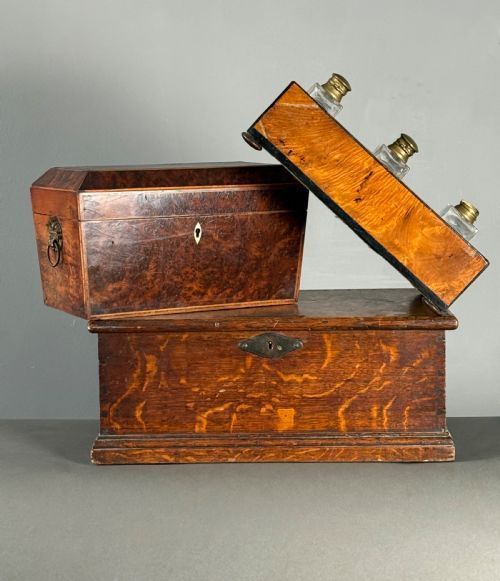
When you search for a wooden inkwell box, you are looking at desk accessories designed to hold writing instruments, paper, and glass ink bottles. The selection spans the eighteenth century, the Regency period, and the Victorian era, showing how portable writing equipment evolved. Most examples on this page are Victorian creations in walnut or oak, alongside Regency rosewood sets and earlier pieces with bone details.
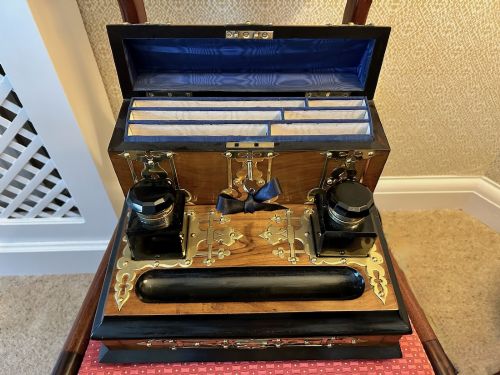
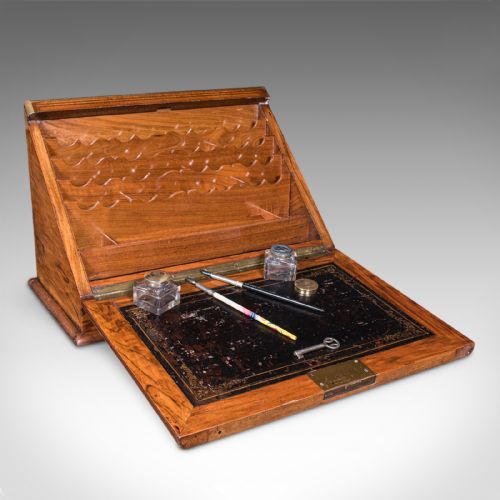
The forms range from compact travelling inkwells to substantial stationery cabinets and desk stands fitted with brass or mother-of-pearl. A buyer typically encounters hinged boxes that open to reveal fitted interiors, ink bottles with brass or metal collars, and compartments designed for letters and nibs. These pieces reflect the serious correspondence habits of past centuries when hand-written letters demanded dedicated desk furniture.
Originating primarily from English workshops, these items combine utilitarian purpose with decorative appeal, often incorporating contrasting woods and inlaid details. Whether structured as a slant-front desk stand or a vertical stationery box, each piece serves to organise the desktop. The variety on offer demonstrates both domestic and campaign use, catering to writers at home or on the move.
How they were made
Cabinetmakers constructed these boxes using dense timbers such as walnut, oak, and rosewood, often selecting veneers for visual depth on the exterior surfaces. These woods provided the necessary durability for daily desktop use while offering a smooth ground for decorative inlays and brass mountings.
Internal fittings incorporated glass for the ink bottles, paired with metal collars and occasional bone or mother-of-pearl accents for handles and escutcheons. Silk and leather linings frequently appeared inside stationery cabinets and writing stations, adding a refined touch to the compartments that held paper and envelopes.
Some Victorian travellers relied on concealed secret drawers within their ink boxes to hide love letters from prying eyes.
What varies in quality
The distinction between standard examples and finer pieces lies in the precision of the cabinet joints and the complexity of the materials used. Superior boxes feature intricate inlays like Tunbridgeware or mother-of-pearl, tightly fitted compartments, and robust brass hardware that has aged gracefully.
Consideration must also be given to the completeness of the interior fittings, such as matching glass ink bottles and intact leather or silk linings. The choice of timber grain and the crispness of carved or applied details separate mass-produced desk accessories from exceptional maker-attributed pieces.
The Wooden Inkwell Box Glossary
- Tunbridgeware
- A form of woodworking peculiar to Tunbridge Wells where small mosaic tiles of coloured woods form pictorial or geometric decoration. It appears on Victorian walnut boxes to create intricate surface patterns.
- Stationery box
- A desk accessory designed to hold writing paper, envelopes, and correspondence upright in partitioned slots. These boxes often feature a sloping lid or a fall-front door.
- Escutcheon
- A flat plate of brass or bone surrounding a keyhole to protect the surrounding wood from wear. It serves both a functional and decorative purpose on the front of desk boxes.
- Coromandel
- A dense, heavy wood imported from Asia featuring dark brown grain with dramatic black stripes. It was utilised for luxury Victorian desk stands and decorative boxes.
- Inkstand
- A tray or stand holding one or more inkwells, sanders for drying ink, and pen troughs. These pieces sat permanently on a library or study desk.
Wooden Inkwell Box: Frequently Asked Questions
How were these boxes used?
They served as portable or stationary writing desks that kept inkwells from tipping over while holding nibs, stamps, and paper. Users opened the hinged lids or doors to access writing materials during correspondence.
Travel versions allowed writers to pack their ink safely on journeys, while larger desk stands remained fixed in studies and libraries.
How do I date a wooden inkwell box?
Dating relies on observing the timber choices, construction methods, and decorative styles characteristic of periods like the Regency or Victorian eras. Regency pieces often feature rosewood and classical brass mounts, while Victorian examples frequently use walnut, oak, or Tunbridgeware.
Internal hardware, such as the style of the glass ink bottles and hinges, also helps determine the approximate decade of manufacture.
Where should I place an inkwell box?
These boxes sit well on desks, side tables, or bookshelves where their timber tones and brass details can be appreciated. They provide functional storage for modern stationery or small everyday items.
Keep them away from direct heat sources and strong sunlight to protect the wooden veneers and any delicate interior linings.