


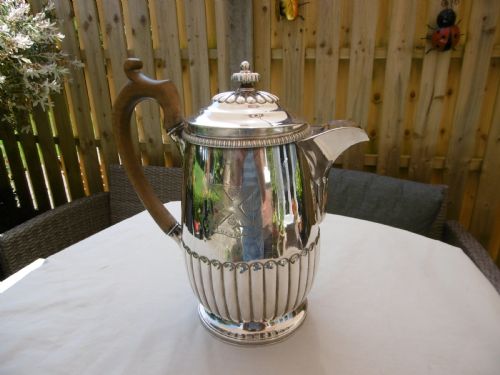


Wooden Handle Teapot
These wooden handle teapot examples combine precious and base metals with organic grips, offering a practical thermal barrier for daily service.
Wooden Handle Teapot
When you search for a wooden handle teapot, you are looking at hollowware vessels designed for brewing and pouring hot infusions while keeping the hand cool. These pieces span several centuries of British and continental metalworking, appearing in forms from compact individual pots to extensive service sets.
The versions you are most likely to meet on this page include Georgian silver examples with stark wooden grips, alongside 19th-century copper kettles and silver-plated coffee pots. Makers utilised timber specifically for its poor thermal conductivity, mounting insulating handle rings between the metal body and the user's hand.
How they were made
Silversmiths and metalworkers shaped sterling silver, Sheffield plate, copper, and brass into hollow vessels through hammering, spinning, or casting. Handles were turned from dense hardwoods and attached via sockets or metal pins, often insulated with small ivory or bone spacers to further prevent heat transfer.
Surface decoration ranges from restrained Neoclassical lines and Regency engraving to ornate Victorian Rococo revival chasing. Metals such as copper and silver plate were finished with smooth polishes that highlight the contrast between cold polished metal and warm organic wood.
Wooden Handle Teapot Retail Price Guide 2026
Typical asking prices for wooden handle teapot among the pieces listed under this phrase on Sellingantiques today, from the lower quarter to the upper quarter. They describe what is for sale here now, not the wider market.
Some industrious 19th-century hosts relied on heavy copper kettles fitted with wooden handles to keep water hot while gossip ran long.
What varies in quality
The distinction between standard domestic wares and top-tier pieces lies in the precision of the metal gauge and the integrity of the handle fitting. Heavier silver and substantial copper retain structural rigidity, ensuring the wooden insulating joints remain stable without wobbling over time.
Artistry in the turning of the wooden handle and the crispness of chased crests or hallmarks separate high-workshop production from basic utility items. A well-preserved piece maintains a tight junction between the timber grip and the metal sockets, showing no shrinkage or historic cracking in the organic material.
Matthew Boulton·Georg Jensen
The Wooden Handle Teapot Glossary
- Sterling Silver
- A silver alloy containing 92.5 percent pure silver by mass, standard for high-grade British hollowware. It provides both structural durability and a bright finish.
- Sheffield Plate
- An early fusing technique where a thin sheet of sterling silver is fused to a thicker copper base. This method creates lighter, more affordable vessels with precious metal surfaces.
- Regency
- A British design period spanning the early 19th century, characterised by classical restraint and clean geometric forms. Pieces from this era often feature streamlined wooden handles.
- Rococo Revival
- A 19th-century decorative style inspired by French 18th-century motifs, featuring asymmetric scrollwork, floral embossing, and dramatic handles. It appears frequently on Victorian silver tea and coffee pots.
- Hollowware
- Tableware items such as teapots, coffee pots, and kettles formed by shaping sheet metal rather than casting solid blocks. This category forms the backbone of antique metal service sets.
Wooden Handle Teapot: Frequently Asked Questions
Why do these teapots have wooden handles?
Wood acts as a natural thermal insulator, preventing the heat of boiling water from transferring to the user's hand during pouring.
Craftsmen turned timber into curved grips and secured them to metal sockets, keeping the handle cool and comfortable to hold.
How do I clean a silver plated pot?
Gentle washing with warm soapy water and a soft cloth preserves the underlying metal and protects the organic wooden handle components.
Harsh chemical dips can strip historic patinas and damage the fitted wooden joints permanently.
How do I date a Georgian silver pot?
Assay office marks, maker stamps, and King's heads stamped directly onto the metal provide precise year stamps and regional origins.
Stylistic cues like Neoclassical urn shapes or Regency proportions offer further clues when hallmarks are rubbed or worn.