


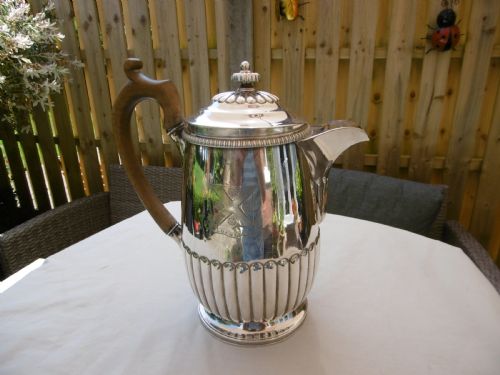


Wooden Handle Silver Coffee Pot
A wooden handle silver coffee pot brings tactile warmth to formal table service through contrasting materials.
Wooden Handle Silver Coffee Pot
A wooden handle silver coffee pot combines sterling silver, silver plate, or Old Sheffield plate with insulated wooden grips designed for pouring hot beverages. These hollowware vessels emerge across periods such as the Georgian, Victorian, and mid-century eras, reflecting shifts from elaborate neoclassical and rococo revival styles to clean modernist forms.
The inventory on this page ranges from early eighteenth-century examples with hardwood mounts to twentieth-century sterling services. Buyers encounter varied forms including dedicated coffee pots, hot water pots, side-handled chocolate pots, and complete tea and coffee sets.
Most items on this page date from the Georgian and nineteenth-century periods, alongside select twentieth-century modernist designs. They demonstrate the enduring functional requirement to insulate silver vessels against boiling liquid while retaining structural elegance.
How they were made
Silversmiths constructed the primary body of each coffee pot from sterling silver, silver plate, copper, or Old Sheffield plate, often shaping the metal through hammering, raising, or soldering techniques. Surface decoration ranged from plain polished planes to intricate neoclassical engraving or Victorian rococo repoussé work.
Makers integrated wood or hardwood components into the handles to prevent heat transfer during use. These insulating grips were shaped to fit the hand securely and attached to the silver body via sockets or pins.
Wooden Handle Silver Coffee Pot Retail Price Guide 2026
Typical asking prices for wooden handle silver coffee pot among the pieces listed under this phrase on Sellingantiques today, from the lower quarter to the upper quarter. They describe what is for sale here now, not the wider market.
Listings feature sterling silver, silver plate, copper, and hardwood across Georgian, Victorian, and mid-century periods.
What varies in quality
Quality rests in the harmony of proportion between the metal body and the wooden handle, alongside the crispness of chased or engraved details. Superior vessels display balanced weight distribution and secure, well-fitted handle mounts that maintain rigidity over decades of service.
The integrity of the underlying metal, whether solid sterling silver or fused Old Sheffield plate showing copper seams, defines the manufacturing standard. Maker marks and crisp crests further distinguish pieces produced by established workshops.
Matthew Boulton·John Hoyland·Georg Jensen
The Wooden Handle Silver Coffee Pot Glossary
- Hollowware
- Tableware items such as coffee pots, jugs, and tea sets formed from sheet metal rather than cast solid. This category forms the primary grouping for silver vessels designed to hold liquids.
- Old Sheffield Plate
- A composite material made by fusing a thin sheet of silver to a thicker copper base before rolling and shaping. This technique predates modern electroplating.
- Repoussé
- A metalworking technique where the artisan hammers the design from the reverse side to form raised relief patterns on the exterior. It appears frequently on Victorian pieces.
- Sterling Silver
- An alloy containing a high proportion of pure silver combined with other metals, typically copper, to ensure structural durability. Hallmarks often verify this standard.
- Side-Handled
- A configuration where the pouring handle attaches at a ninety-degree angle to the spout, common in specific chocolate and coffee vessels from the eighteenth century.
Wooden Handle Silver Coffee Pot: Frequently Asked Questions
What is Old Sheffield plate?
Old Sheffield plate involves fusing a layer of silver to a copper core through heat and pressure. This composite material creates durable vessels with the appearance of solid silver.
Over time, subtle hints of the underlying copper may show through high-wear areas, indicating the age and authenticity of the piece.
How do I clean wooden handles?
Wooden handles require gentle cleaning with a damp cloth to remove dust without drying out the grain. Avoid submerging the entire pot in water or using harsh silver dips that could damage the wood.
Applying a small amount of neutral oil helps preserve the hardwood finish on older vessels.
Why do these pots have wooden handles?
Silver is an excellent thermal conductor that quickly heats up when filled with boiling coffee or water. Wooden handles provide necessary thermal insulation so the server can pour safely.
Hardwood also offers a firm, comfortable grip compared to an all-metal handle.
How do I date a silver coffee pot?
Dating relies on identifying stamped hallmarks, maker marks, and stylistic clues specific to periods like the Georgian or Victorian eras. Shape profiles also shift from neoclassical urns to mid-century modern cylinders.
Comparing construction techniques helps confirm the manufacturing era.