

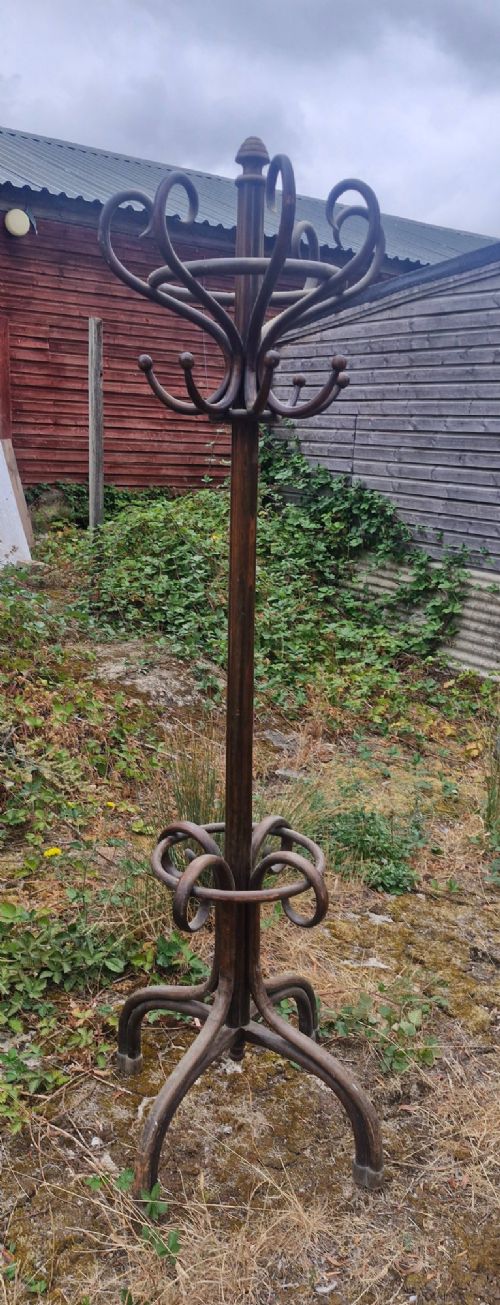
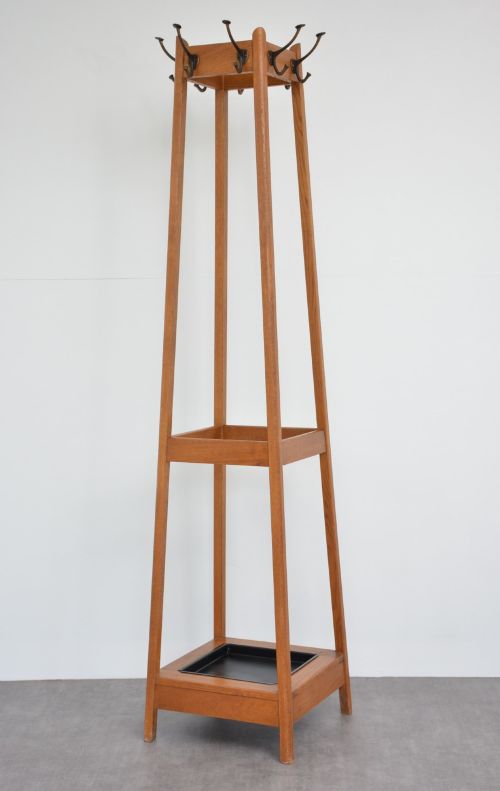
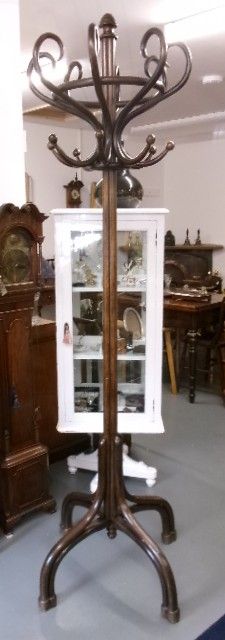
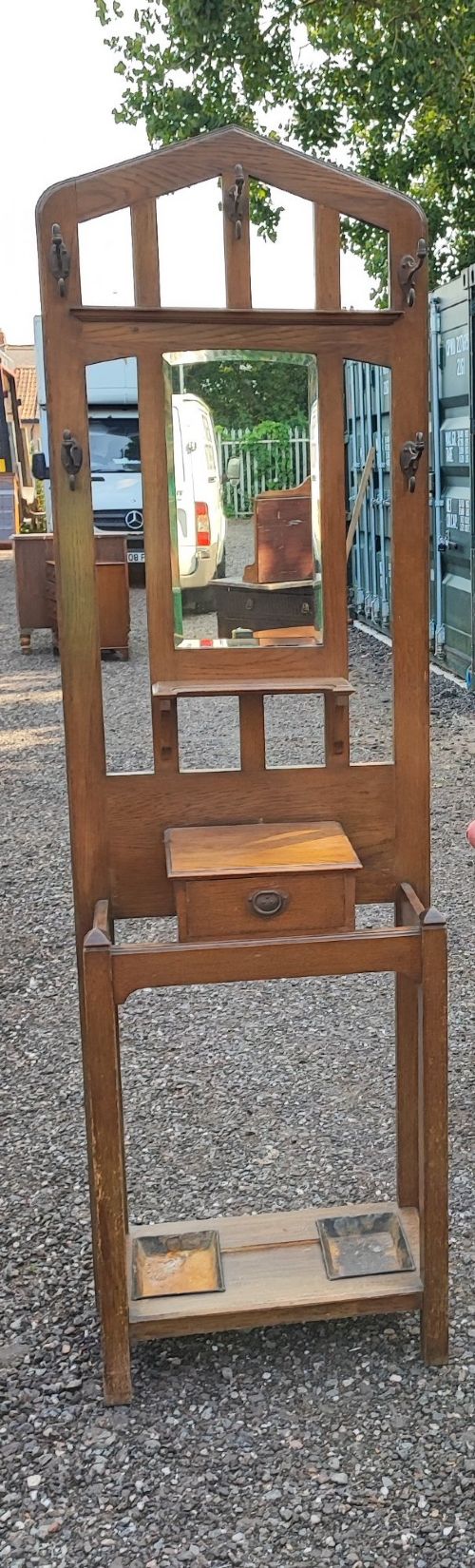
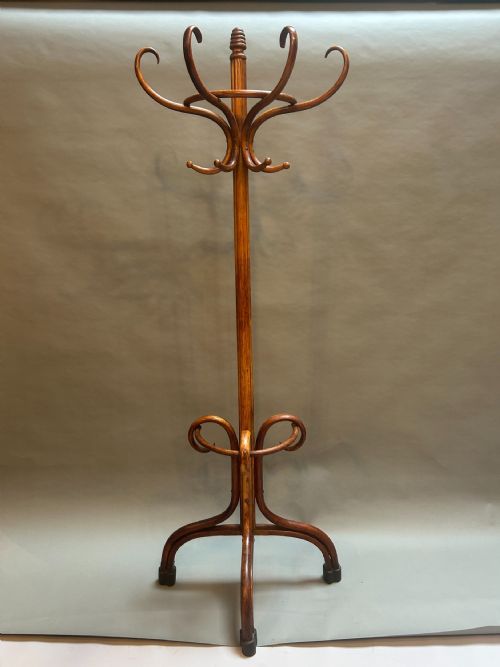
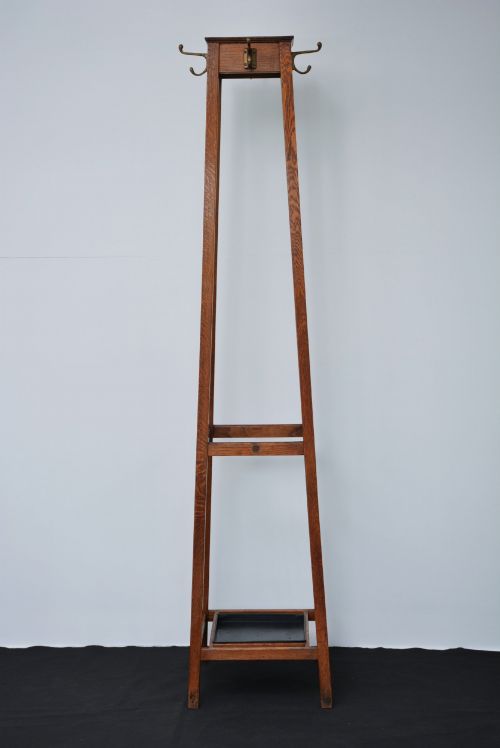
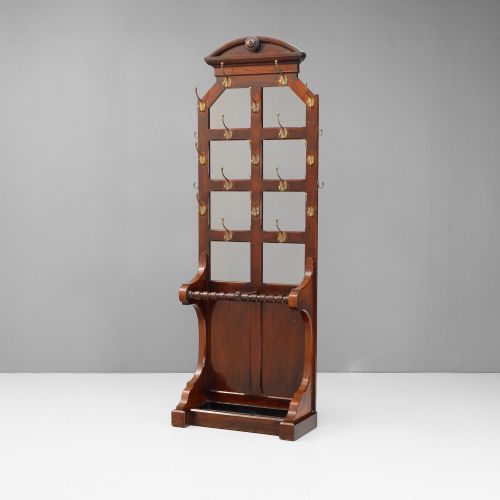

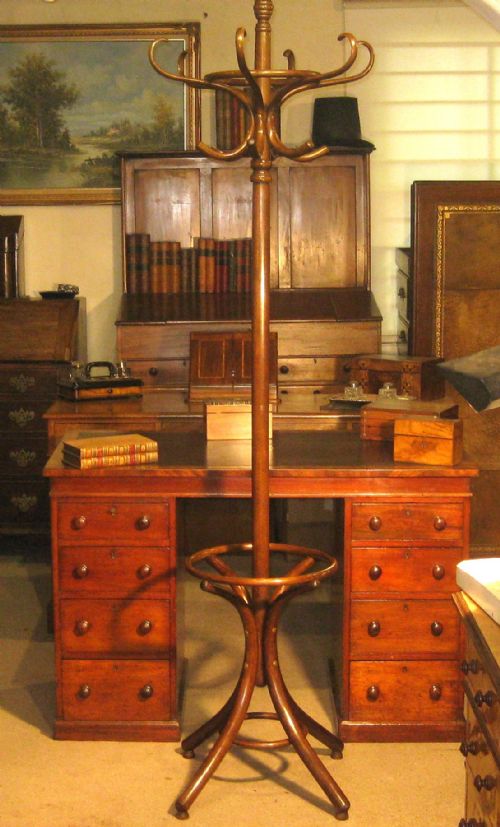


Wooden Hallstand Rack
A wooden hallstand rack organises coats, hats and walking sticks while setting the tone of an entrance hall.
Wooden Hallstand Rack
A wooden hallstand rack serves as a practical entryway furnishing designed to hold outdoor garments and walking gear. When searching for a wooden hallstand rack, a buyer encounters forms spanning the Victorian era through the Edwardian period and into the early twentieth century.
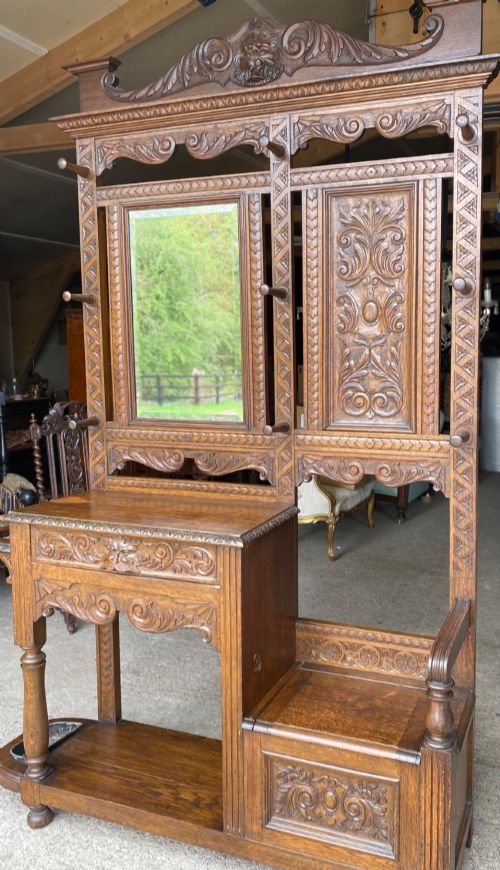
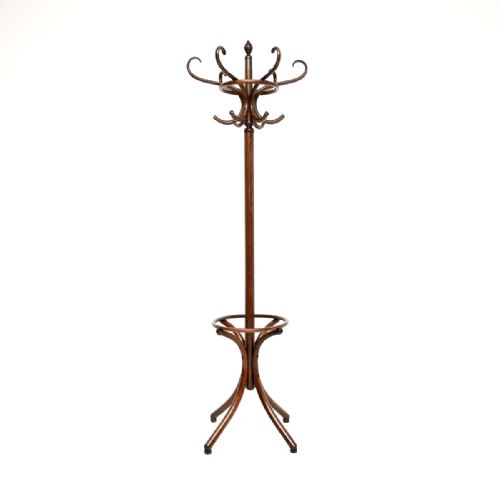
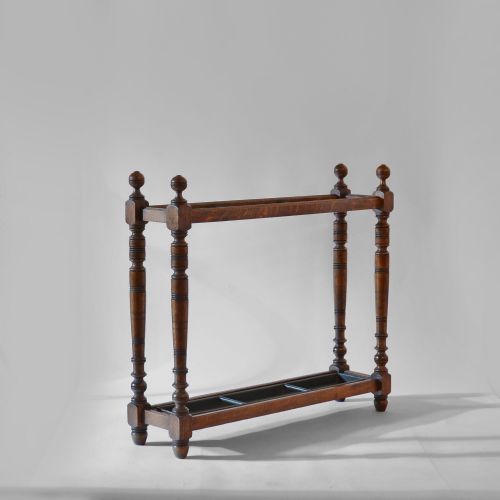
The selection includes upright bentwood hat and coat stands alongside substantial oak or mahogany hallstands fitted with mirror panels, marble inserts and integrated umbrella holders. Makers utilised various woods to suit domestic interiors, ranging from light oak to dark walnut and ebonised finishes.
Regional variations and stylistic movements such as Arts and Crafts, Gothic Revival and Black Forest carving appear frequently among the listings. These pieces combine hat hooks, coat pegs and stick racks into single space-saving units for hallway placement.
How they were made
Carpenters and cabinetmakers constructed these hallstands using solid and veneered timbers such as oak, mahogany, walnut, beech and bentwood. Steam-bending techniques shaped flexible beech into curving hat and coat stands, while joinery methods secured upright panels and framework.
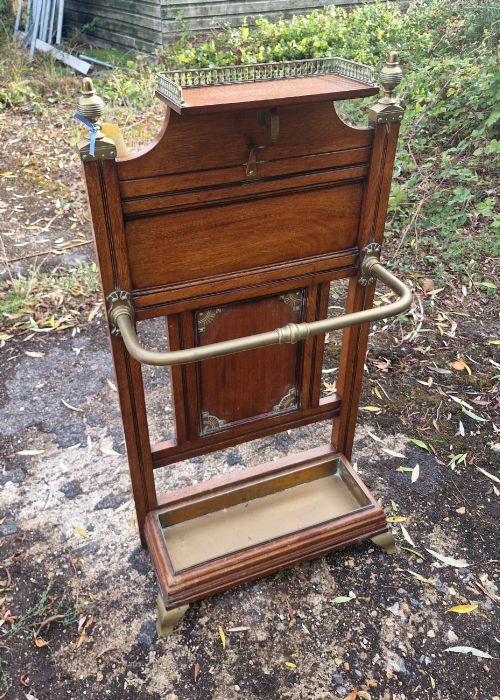
Metal components added utility and strength, incorporating brass coat hooks, iron drip trays and glass mirrors into the wooden structures. Carved ornamentation, including figural elements like bears and Greenman motifs, adorned the solid wood surfaces of specific regional and stylistic examples.
Listings feature oak, mahogany, walnut, beech and bentwood alongside brass and glass elements.
What varies in quality
The standard of timber selection and joinery distinguishes finer examples from simpler utilitarian versions. Dense oak, figured mahogany and well-executed steam-bent beech indicate careful workshop production.
The integration of secondary materials such as cast brass hardware, bevelled mirror glass and stone drip trays marks the distinction between standard hall furniture and pieces designed for country houses.
GW Evans·James Shoolbred·Astrola
The Wooden Hallstand Rack Glossary
- Bentwood
- Wood shaped by steaming to create curved forms, commonly used in lightweight hat and coat stands. This technique allowed manufacturers to produce graceful arches without heavy joinery.
- Hallstand
- A piece of furniture placed in an entrance hall to hold coats, hats and sticks. Many versions incorporate a mirror, glove box and umbrella wells.
- Arts and Crafts
- A design movement favouring craftsmanship and simple construction over mass production. Pieces from this style often display exposed joints and honest use of oak.
- Black Forest
- A style of wood carving originating in Switzerland and Germany, known for realistic animal figures. Bears holding card trays or acting as umbrella stands are typical examples.
Wooden Hallstand Rack: Frequently Asked Questions
Where should a hallstand be placed?
A hallstand belongs in an entryway or entrance hall where coats, hats and umbrellas are needed close to the door. Position it against a solid wall to support the weight of hanging garments.
Ensure there is enough clearance around the piece for users to reach coat hooks and remove walking sticks from the umbrella wells.
How do I care for wooden hall furniture?
Dust the timber surfaces regularly with a dry cloth and apply occasional wax polish to nourish the wood. Keep the piece away from direct heat sources to prevent the wood from drying out.
Empty metal drip trays periodically to prevent moisture damage to the base of the stand.
What is the difference between a hallstand and a coat stand?
A coat stand is typically a vertical post with outward-facing hooks at the top for hats and coats. It has a compact footprint designed primarily for upper garments.
A hallstand is a larger, wall-standing unit that combines coat hooks with umbrella racks, a mirror, and sometimes a small shelf or glove drawer.
How can I date an oak hallstand?
Examine the construction methods, hardware materials and stylistic cues such as carved motifs or mirror bevels. Pieces showing heavy oak construction with simple pegged joints often point to the Arts and Crafts period around nineteen ten.
Victorian examples tend to feature darker finishes, elaborate carvings and mirrored backs enclosed in heavy wooden frames.