

Wooden Hall Mirror
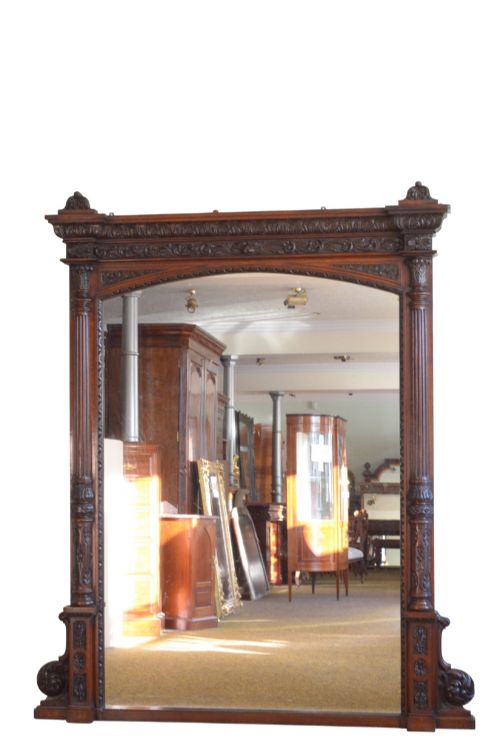
A wooden hall mirror greets visitors with practicality and presence, combining timber frames with reflective glass for the entrance space.
Wooden Hall Mirror
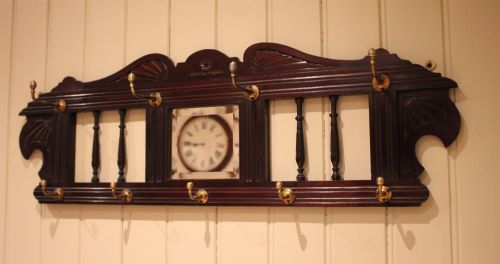
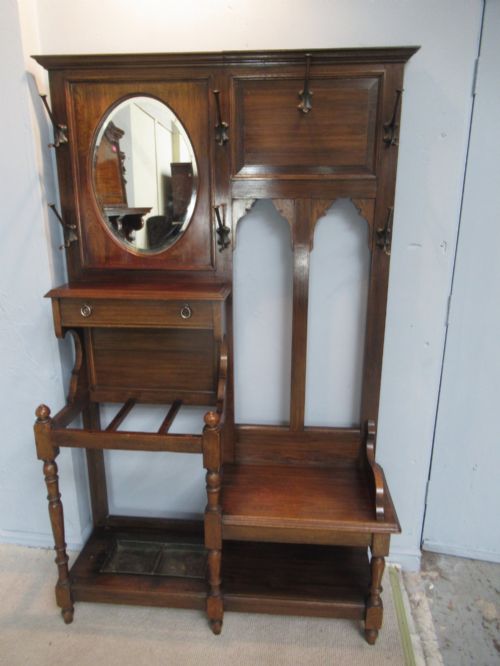
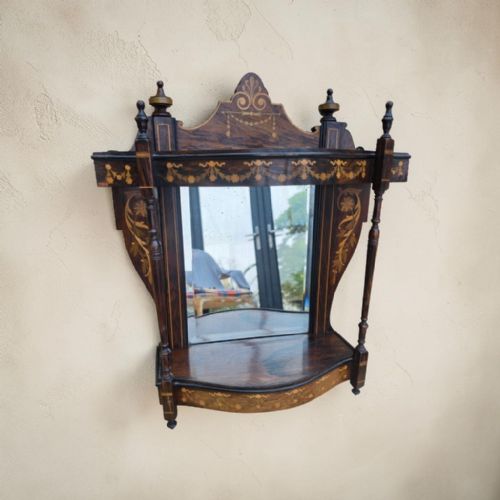
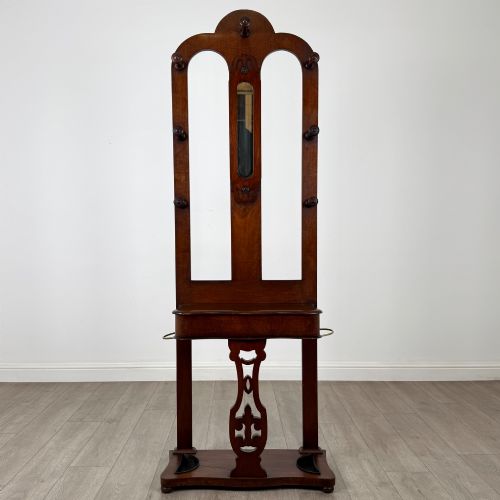
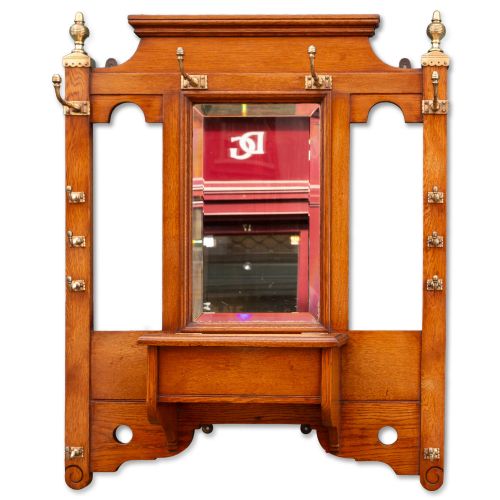
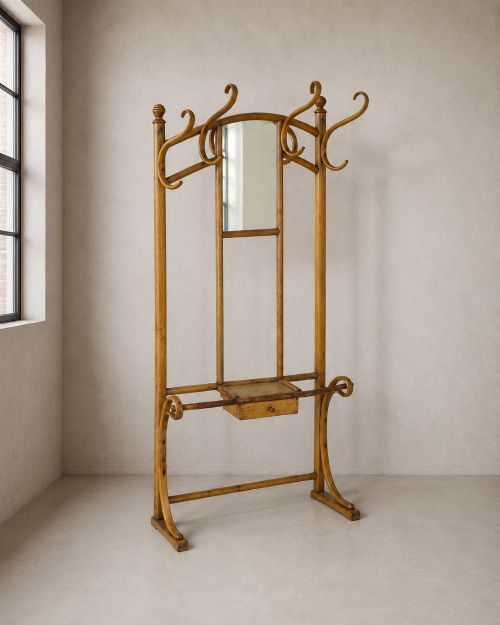
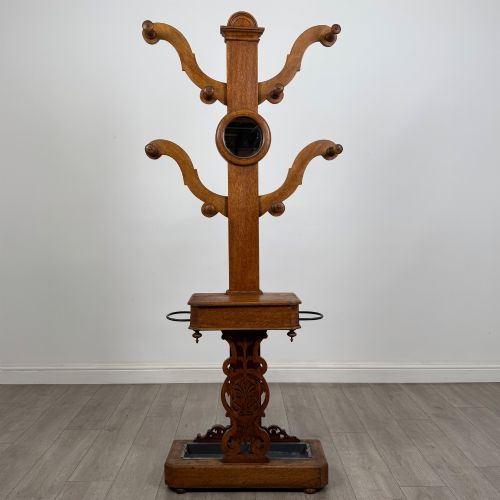
A wooden hall mirror serves as a functional fixture for an entrance, often incorporating shelves, hooks, or combination stands in the selection. These pieces originate across the nineteenth and early twentieth centuries, spanning Victorian, Edwardian, and Arts and Crafts eras.
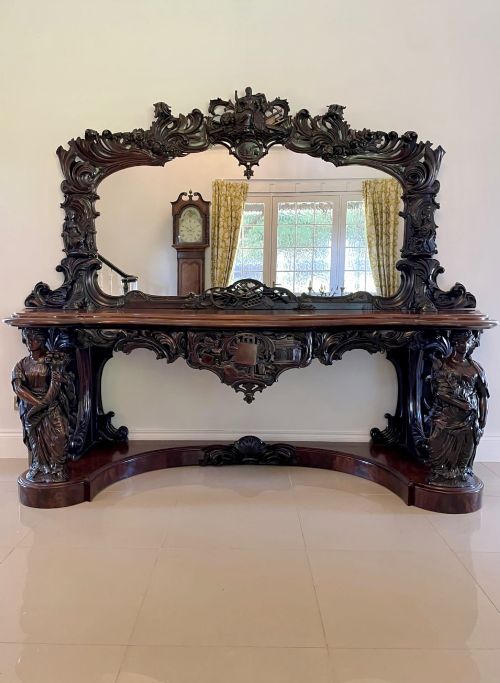
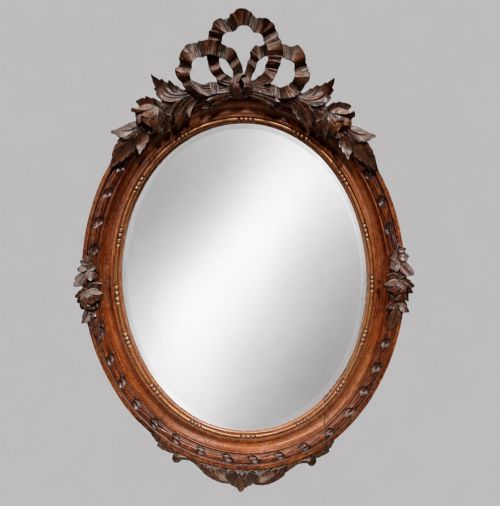
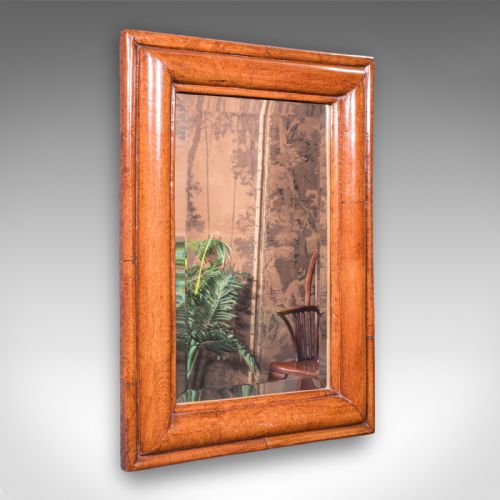
The objects take many forms, from simple wall-hanging frames with integrated shelves to large multi-functional hall stands and console tables featuring carved details. Oak and mahogany dominate the timber frames, frequently paired with bevelled glass plates.
Buyers encounter everything from compact shaving mirrors with key cabinets to grand exhibition-quality mirror-back furniture designed to anchor a spacious reception hall.
Materials and construction methods
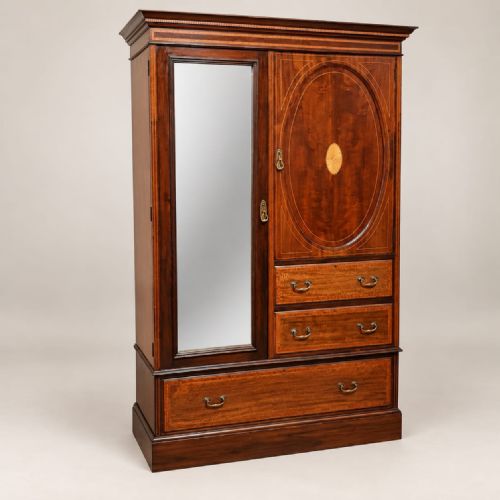
Cabinet makers utilised solid and veneered timbers such as oak, mahogany, walnut, and birdseye maple, shaping them into frames, panels, and structural supports. Metal elements like brass appear as coat hooks, rails, and decorative mounts.
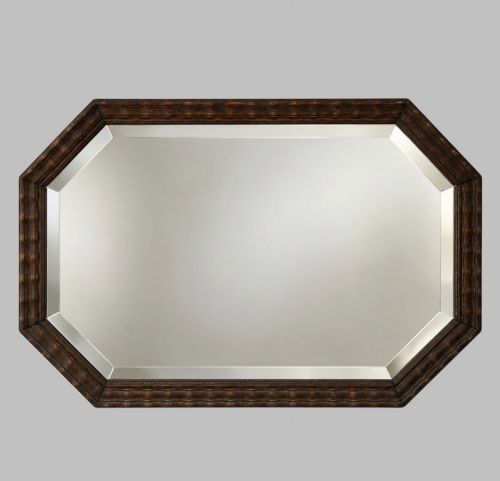
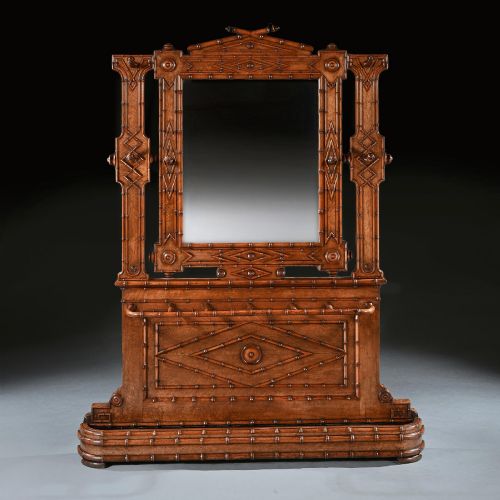
Glass plates feature bevelled edges, secured within rebated wooden frames often enhanced with hand carving, fretwork, or gilt gesso details. Bentwood techniques also shape certain stands, while faux bamboo finishes replicate exotic canes using painted or carved wood.
The listings show oak and mahogany as the predominant timbers, alongside walnut, birdseye maple, and metal accents.
Distinctions in craftsmanship
Quality rests in the precision of the timber joinery, the depth of hand-carved ornamentation, and the preservation of the original glass plate. Finer examples display crisp fretwork, substantial solid wood construction, and well-integrated brass hardware rather than simple surface decoration.
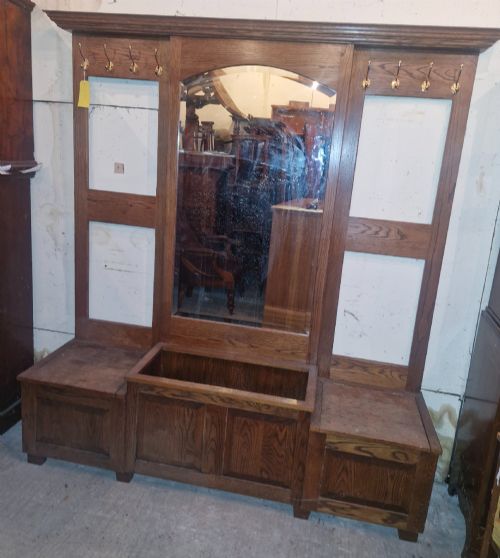
The scale and ambition of the design separate utilitarian cloakroom items from grand entrance furniture. Pieces featuring complex multi-functional elements like umbrella wells, seating, and specialised compartments demand superior joinery and command greater visual weight.
Waring and Gillow
The Wooden Hall Mirror Glossary
- Bevelled glass
- Glass with an angled edge polished around the perimeter. This catches the light and adds depth to the reflection.
- Fretwork
- Openwork ornamentation carved or pierced out of a thin board of wood. It creates delicate geometric or organic patterns on mirror frames.
- Gesso
- A plaster-like mixture applied to wood surfaces and carved or moulded before gilding. It provides a smooth base for decorative gilt finishes.
- Hall stand
- A multi-purpose piece of entrance furniture combining a mirror, coat hooks, umbrella stands, and sometimes a seat or glove drawer.
- Japonisme
- A nineteenth-century artistic style influenced by Japanese art. It manifests in pieces utilising birdseye maple and faux bamboo.
Wooden Hall Mirror: Frequently Asked Questions
What periods do these mirrors come from?
The pieces span the nineteenth and early twentieth centuries, encompassing Victorian, Edwardian, and Arts and Crafts periods. Makers from these eras utilised specific regional timbers and prevailing stylistic movements.
Examples range from late nineteenth-century mahogany designs to early twentieth-century oak pieces. Each era brings distinct decorative choices, from Gothic revival motifs to clean Arts and Crafts lines.
How were hall mirrors used originally?
Entrances functioned as social gateways in period homes, requiring furnishings that welcomed guests while managing outdoor garments. Mirrors allowed visitors to check their appearance before entering the main rooms.
Integrated shelves held calling cards, gloves, or keys, while attached hooks managed hats and coats. Larger hall stands combined these reflective surfaces with umbrella storage and seating.
Are the glass plates original?
Many pieces retain their original bevelled glass plates, which often show minor signs of age such as light foxing or small blemishes. These authentic traces confirm the age and history of the mirror.
Replacement glass does occur in antique frames, so buyers examine the silvering and backing boards to assess originality. Original plates typically exhibit subtle distortions characteristic of older manufacturing methods.
How do I secure a wall-mounted mirror?
Wall-mounted wooden frames and cloakroom mirrors require secure fixings suited to the weight of solid timber and glass. Heavy pieces need direct attachment to wall studs or appropriate masonry anchors.
Integrated hanging brackets or D-rings on the reverse support the vertical load safely. Ensuring correct wall support prevents strain on the frame joints over time.