



Wooden Haberdashery Display
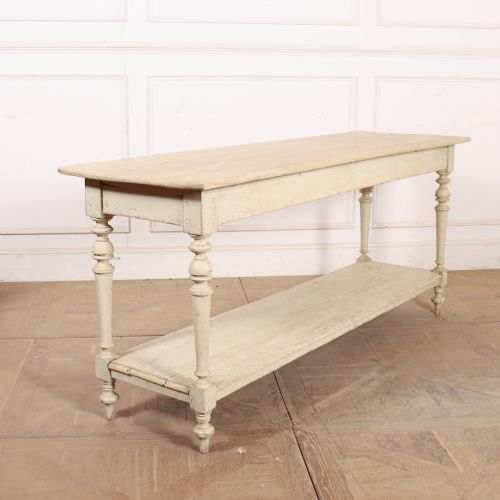
These pieces of wooden haberdashery display bring commercial shop fittings into the home, offering structured storage and architectural presence.
Wooden Haberdashery Display
A wooden haberdashery display encompasses shop fittings, multi-drawer cabinets, countertop display cases, millinery forms, and hat stands originating from commercial environments. When you search for this phrase, you encounter items designed for retail storage and presentation during the nineteenth and early twentieth centuries.
Origins range across English workshops and French country ateliers, utilising timber frames built for daily mercantile use. Buyers select these items to introduce functional compartments, glass viewing panels, and commercial character into domestic interiors.
How they were made
Construction relies upon hard timbers including mahogany, oak, walnut, teak, cedar, beech, and pine, paired with glass panels and brass or bronze framing. Cabinet makers built these pieces for endurance in busy shops, utilising solid woods and durable joinery to withstand frequent opening of drawers and access doors.
Surfaces feature painted finishes, polished veneers, and natural grain patination accumulated through decades of commercial handling. Details incorporate turned wooden hat blocks, carved millinery heads, and functional brass hardware designed to secure glass display cases and multi-drawer counters.
Wooden Haberdashery Display Retail Price Guide 2026
Typical asking prices for wooden haberdashery display among the pieces listed under this phrase on Sellingantiques today, from the lower quarter to the upper quarter. They describe what is for sale here now, not the wider market.
Listings feature items built from mahogany, oak, teak, cedar, pine, and beech, alongside glass, brass, and bronze.
What varies in quality
Quality rests upon the integrity of the timber framework, the clarity of the original glass panels, and the complexity of the internal configuration, such as banks of drawers or specialised display compartments. Pieces retaining their original brass fittings, maker branding, and structural stability sit at the upper end of the range.
The distinction between standard utility shop fittings and finer showroom pieces appears in the selection of timbers like figured mahogany or golden oak, and the refined carving on items like millinery forms and display stands. Utility pieces show straightforward construction, whereas finer examples display deliberate stylistic details from the Arts and Crafts or Art Deco periods.
Ermen & Roby·Saml. Elliott & Sons
The Wooden Haberdashery Display Glossary
- Haberdashery cabinet
- A multi-drawer storage unit originally utilised in shops for small sewing goods, ribbons, and fastenings. These pieces feature numerous shallow drawers, often with glass fronts or brass pulls.
- Millinery form
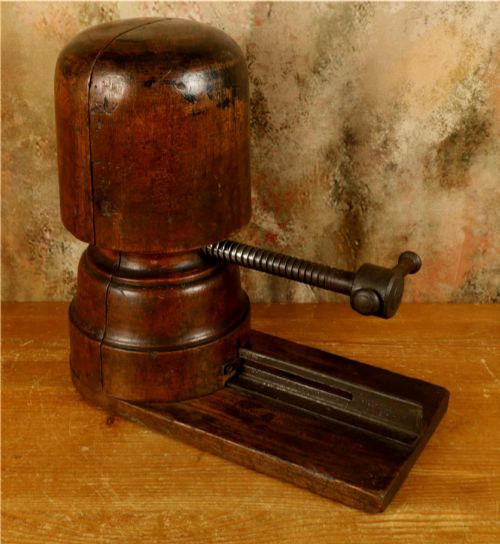
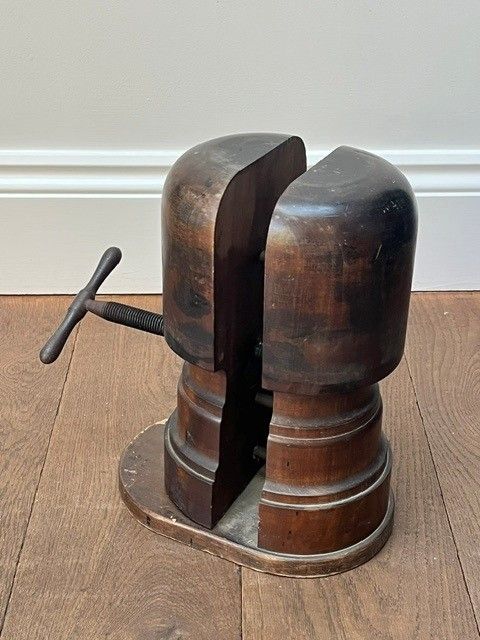
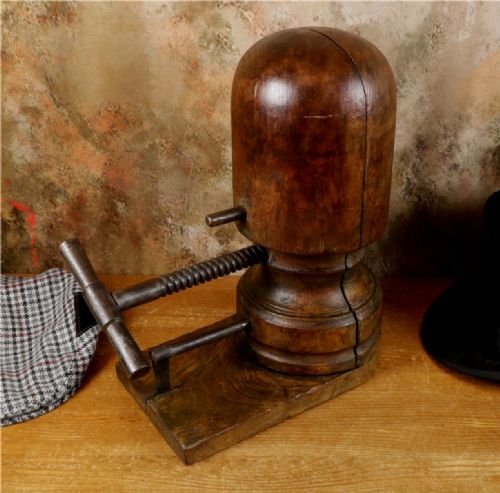
- A carved wooden shape or hat block utilised by hat makers to shape and store headwear. Collectors prize these for their sculptural forms and tactile wood grain.
- Countertop display cabinet
- A glazed showcase placed upon shop counters to exhibit small goods to customers. They combine wooden frames with glass panels for all-round visibility.
- Hat stretcher
- A mechanical wooden device inserted into hats to expand or adjust the size. These objects demonstrate utilitarian nineteenth-century engineering.
Wooden Haberdashery Display: Frequently Asked Questions
What is a haberdashery cabinet?
A haberdashery cabinet is a multi-drawer storage unit originally built for retail shops to organise small sewing items, ribbons, and buttons. They feature rows of shallow drawers designed for efficient sorting and retrieval.
Today, buyers utilise these cabinets in domestic settings for organising clothing, accessories, or collections. Their structured form provides practical storage alongside distinct commercial character.
How do I date a display cabinet?
Dating a display cabinet involves examining the timber species, construction methods, and hardware style. Pieces from the Victorian era often utilise heavy mahogany or pine with traditional joinery, while 1920s and 1930s examples incorporate brass framing, oak, or Art Deco geometric lines.
Manufacturer plaques, glass types, and original sign-writing further indicate the period of manufacture. Commercial fittings often display specific retail designs tied to their decade of production.
What are hat blocks used for?
Hat blocks and millinery forms were utilised by hat makers to shape, size, and store millinery during production. Craftsmen stretched and pinned damp felt or straw over the solid wooden forms.
In modern interiors, these carved wooden objects serve as decorative sculptural pieces. Collectors display them on shelves or tables for their organic shapes and aged timber surfaces.
Where were these cabinets used?
These cabinets and counters originated in nineteenth and early twentieth-century retail environments, including drapers, chemists, and millinery shops. Merchants used them to store inventory while displaying goods securely beneath glass.
Transitioning into homes, these pieces suit kitchens, living rooms, and dressing spaces as storage islands or display surfaces. Their robust commercial construction allows them to endure daily domestic use.