



Wooden Glazed Credenza
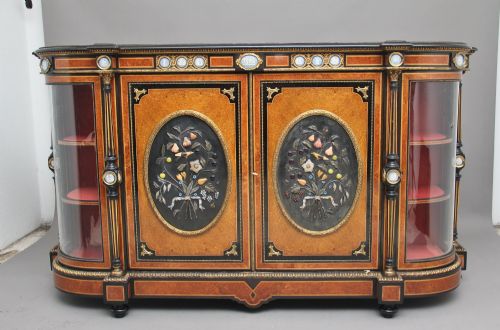
A wooden glazed credenza brings substantial nineteenth-century presence and glass display space into a room.
Wooden Glazed Credenza
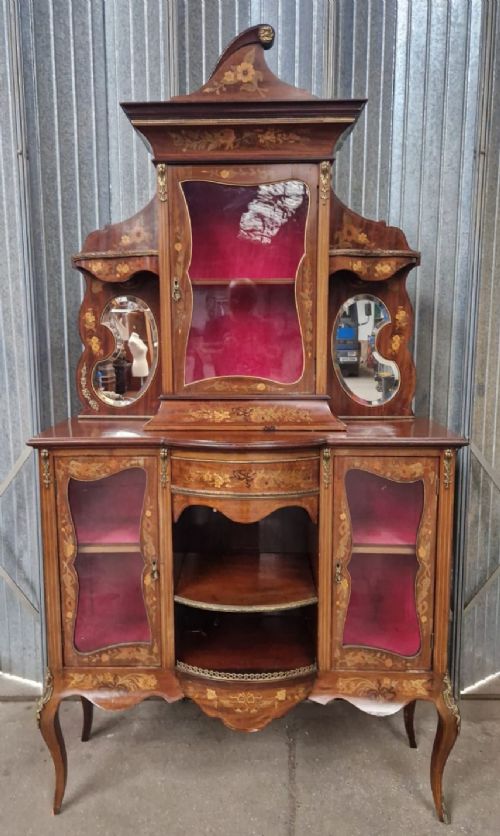
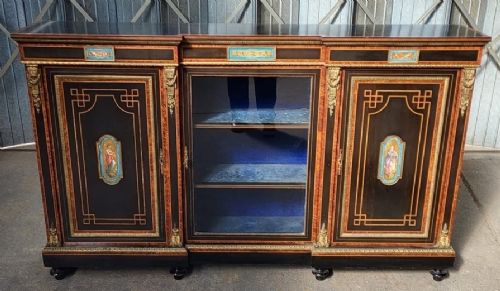
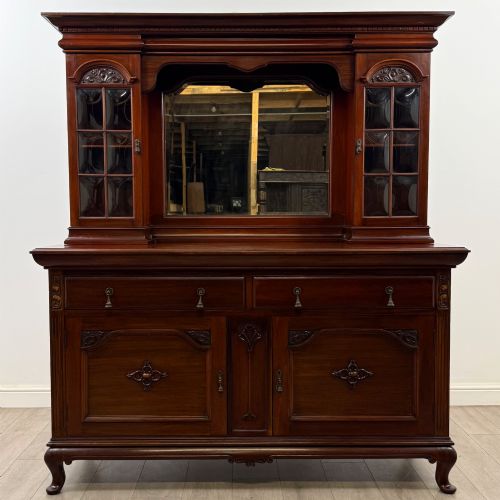
A wooden glazed credenza is a low cabinet designed for storage and display, appearing across Victorian, Edwardian, and nineteenth-century periods. These items encompass side cabinets, sideboards, and breakfront bookcases featuring glass doors or glazed cupboards.
The versions most commonly met on this page are Victorian walnut credenzas and side cabinets, frequently incorporating burr walnut, ebonised wood, amboyna, or mahogany. Many examples include mirror backs, brass or ormolu mounts, and inlaid decoration.
Makers and origins span the later nineteenth century into the early twentieth century, taking in Arts and Crafts, Queen Anne Revival, French Chateau, and Aesthetic Movement styles alongside standard Victorian forms.
How they were made
Construction relies on solid timbers and decorative veneers, notably walnut, burr walnut, amboyna, rosewood, oak, and mahogany over a carcasing. Ebonised wood and painted finishes also appear, providing deep dark surfaces alongside natural wood grains.
Glazing takes the form of fitted glass panels within wooden doors, often paired with mirror glass in the superstructure or backboards. Metalwork is integrated through brass and ormolu mounts, hinges, and handles.
Wooden Glazed Credenza Retail Price Guide 2026
Typical asking prices for wooden glazed credenza among the pieces listed under this phrase on Sellingantiques today, from the lower quarter to the upper quarter. They describe what is for sale here now, not the wider market.
Some Victorian cabinets required a gentle nudge to stay shut because wood naturally shifts when the parlour fire gets too warm.
What varies in quality
Quality depends upon the selection of timber veneers, such as the richness of burr walnut or amboyna, and the precision of the inlay work. Finer pieces demonstrate careful timber matching and crisp decorative mounts.
The execution of the glazing bars, mirror glass integration, and overall structural proportions separate standard production from superior examples. Better cabinets maintain robust joinery alongside refined surface finishing.
Howard and Sons
The Wooden Glazed Credenza Glossary
- Credenza
- A low dining room or parlour cabinet used for serving or display. These pieces usually feature cupboards and glazed sections.
- Burr walnut
- A highly figured timber veneer taken from the burl growth of a walnut tree. It creates swirling, organic patterns across the cabinet doors.
- Ormolu
- Gilded bronze used for decorative mounts and framing on furniture. It adds metallic contrast to the timber surfaces.
- Ebonised
- Timber treated to imitate ebony, producing a dense black finish. This technique is typical of nineteenth-century cabinet making.
Wooden Glazed Credenza: Frequently Asked Questions
What is a wooden glazed credenza?
A wooden glazed credenza is a low nineteenth-century storage and display cabinet featuring glass doors and timber construction.
These pieces typically combine shelving behind glass with decorative wood veneers like walnut and mahogany.
How do I date a credenza?
Dating relies on timber choices, construction methods, and stylistic cues such as Victorian or Edwardian revival details.
Nineteenth-century examples often use burr walnut and amboyna veneers, while later pieces show Edwardian oak or breakfront bookcase forms.
Where were credenzas used?
Credenzas were traditionally placed in nineteenth-century dining rooms, drawing rooms, and parlours for serving food and displaying ceramics.
Today they function as prominent living room storage units and display cabinets.
Are mirror backs original?
Many Victorian credenzas and sideboards incorporate mirror glass backboards as part of their original design.
These mirrors were integrated into the superstructure above the main cabinet surface.