



Wooden Freestanding Towel Rack
A wooden freestanding towel rack brings practical utility and warm timber tones to a bathroom or bedroom.
Wooden Freestanding Towel Rack
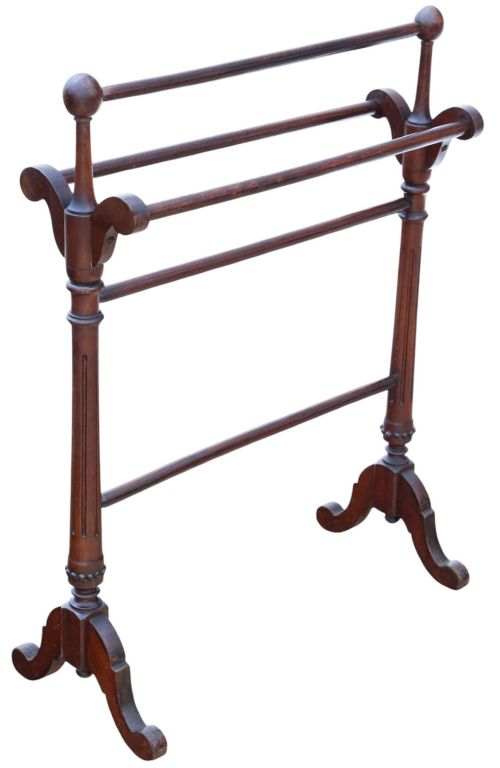
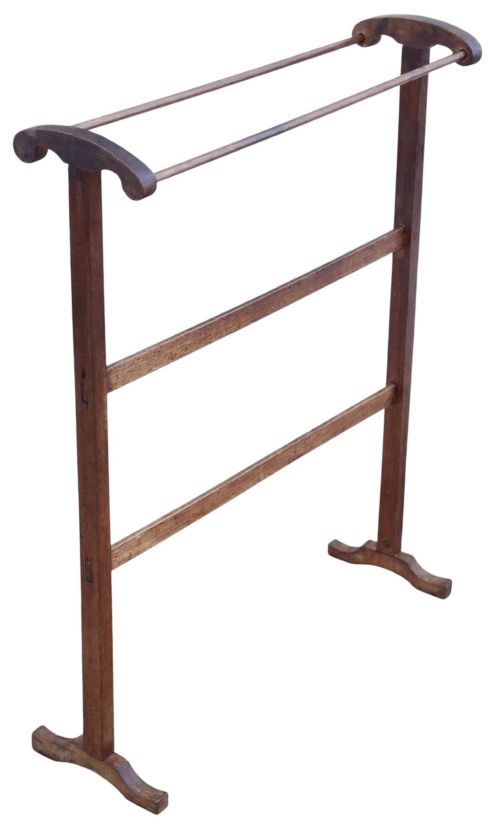
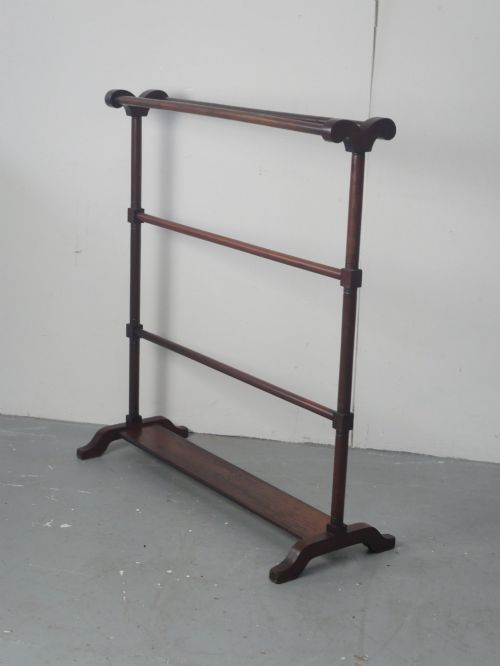
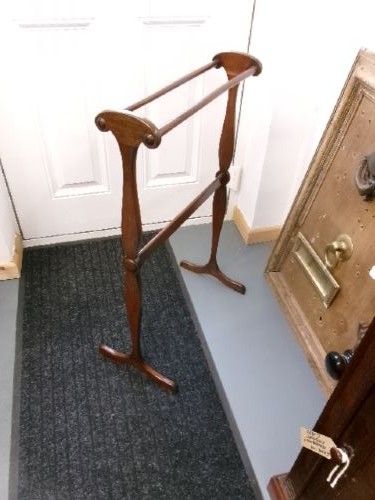
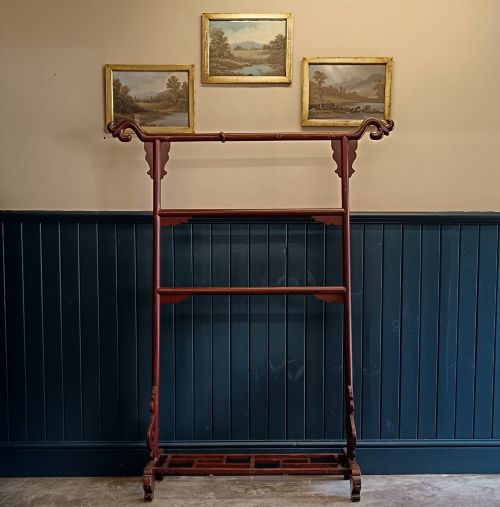
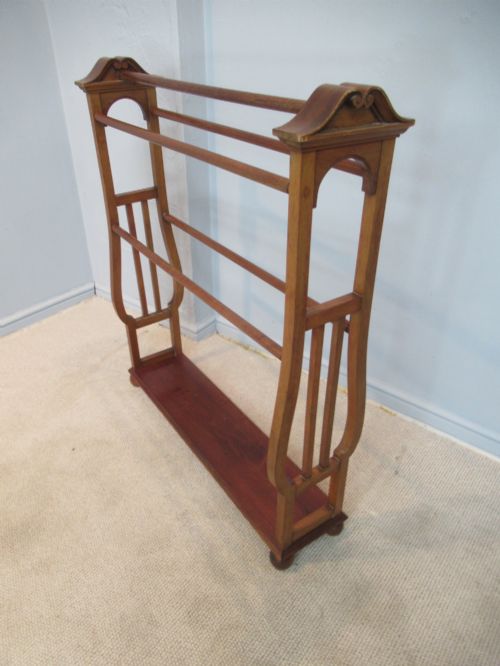
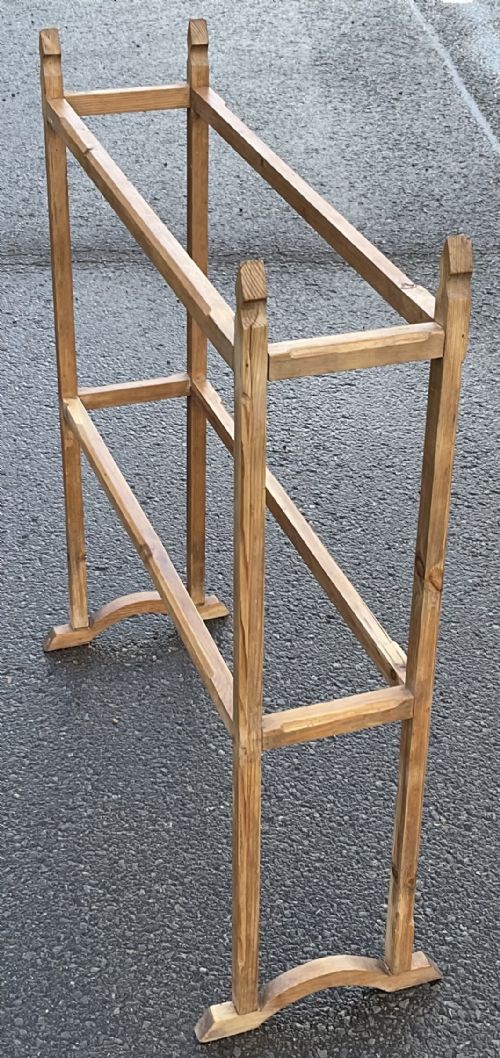
A wooden freestanding towel rack is a portable frame designed to hold damp linens and garments off the floor. The examples seen here span from the Regency and Victorian eras through to the Edwardian period, alongside distinct pieces such as Chinese lacquered clothes racks and carved hall stands.
Originating in domestic spaces where central heating was absent, these items served to warm and air fabrics near a fire. Today, they function equally well in traditional and modern interiors for hanging textiles without permanent wall fixtures.
How they were made
Carpenters constructed these frames primarily using solid timbers like mahogany, oak, walnut, and pine, often jointed to withstand daily movement and weight. Selected pieces incorporate brass fittings, black ebonised finishes, or applied pigments and lacquer.
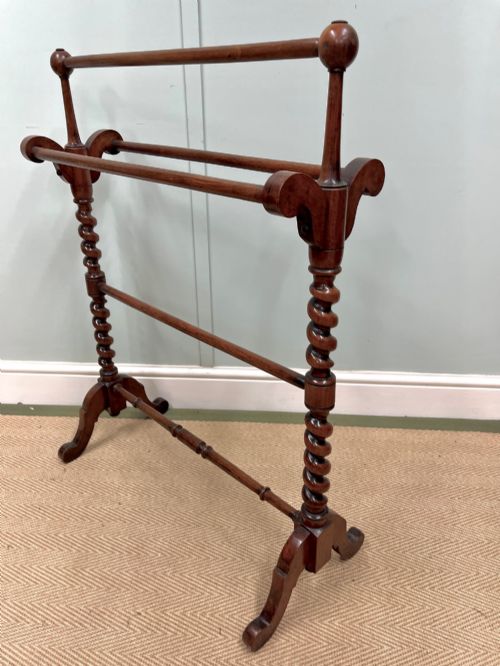
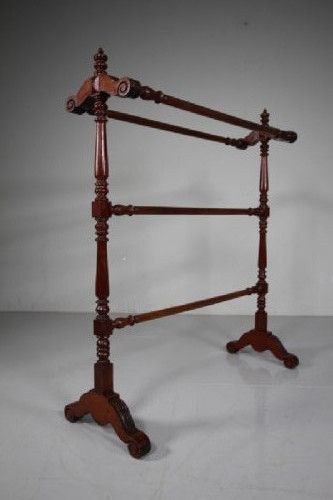
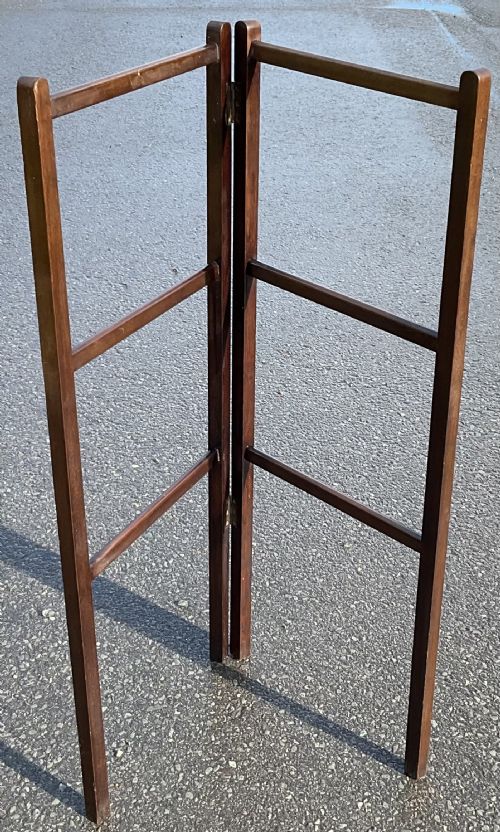
Construction techniques include turned uprights, tenon joints, and folding hinges that allow multi-fold designs to collapse when not in use. Surfaces are finished with polished or decorated treatments suited to the prevailing style of the period, from Gothic Revival to Arts and Crafts.
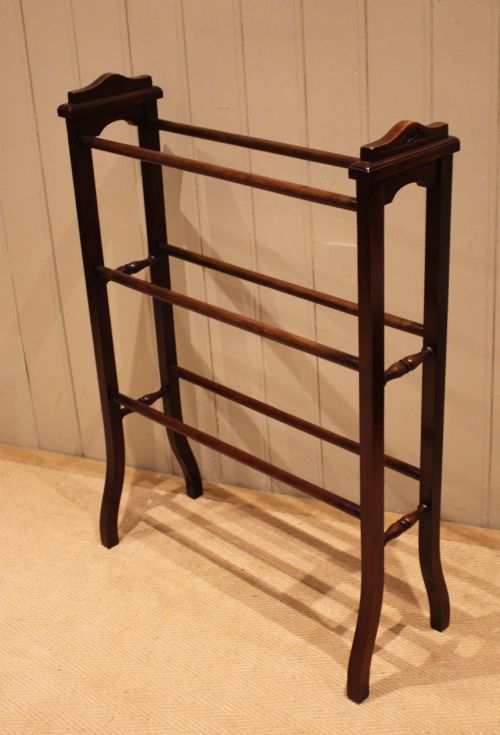
Some Edwardian models include up to five bars, proving that our ancestors took the business of warming multiple damp towels very seriously indeed.
What varies in quality
The choice of timber underpins the piece, with dense hardwoods like mahogany and walnut offering greater durability than softer woods like pine. Superior examples display thoughtful proportions, sturdy joints, and well-executed turning on the uprights.
Detailing sets finer pieces apart, such as inlaid decoration, multi-bar configurations, and ingenious folding mechanisms like cheval frames. Original surfaces and patination earned through decades of domestic use also distinguish better-preserved items.
The Wooden Freestanding Towel Rack Glossary
- Cheval rail
- A freestanding frame that pivots or swings on vertical supports. This design allows the rails to angle outward for better air circulation.
- Ebonised
- Wood treated with a dark stain or pigment to imitate ebony. This finish gained popularity in the late nineteenth century for a formal appearance.
- Gothic Revival
- An architectural and decorative style drawing on medieval forms. Pieces often feature pointed arches, heavy mouldings, and robust proportions.
- Arts and Crafts
- A design movement prioritising traditional craftsmanship and simple forms. Objects from this tradition emphasise honest construction and the natural grain of oak.
- Hall stand
- A piece of furniture placed near an entrance to hold coats, hats, and occasionally wet items. Some variations incorporate rails alongside hooks and umbrella storage.
Wooden Freestanding Towel Rack: Frequently Asked Questions
How do I use a wooden towel rack today?
Place the rack in a bathroom, bedroom, or dressing area to hold towels, robes, or freshly pressed garments. Its portable nature allows you to reposition it near a heat source or out of the way as needed.
Because these stands are freestanding, they require no drilling into walls, making them ideal for rented homes or historic properties where wall fixings are restricted.
Are these racks sturdy enough for damp bath sheets?
Most sturdy mahogany, oak, and walnut frames easily support damp bath linens. Multi-bar configurations spread the weight evenly across the structure.
To preserve the timber, ensure excessively wet items are wrung out before hanging, and allow adequate ventilation in the room to prevent moisture damage to the wood.
How do I tell an Edwardian rail from a Victorian one?
Victorian pieces often feature heavier proportions, darker finishes, and robust turned uprights. Walnut and mahogany were frequently used during this period, alongside elaborate Gothic Revival styles.
Edwardian examples tend to exhibit lighter construction, simpler lines, and a prevalence of inlaid mahogany or pine. Five-bar formats and folding designs became particularly common around the turn of the twentieth century.
How do I care for antique wood furniture?
Dust the timber regularly with a soft, dry cloth to prevent dirt buildup. Avoid placing the rack in direct sunlight or directly against radiators to prevent the wood from drying out or splitting.
Apply a suitable beeswax or furniture polish occasionally to nourish the surface and maintain the natural lustre of the mahogany, oak, or walnut.