




Wooden Folio Holder
These wooden folio holder pieces are practical and elegant storage solutions for large papers, prints and drawings, crafted to keep collections orderly and accessible.
Wooden Folio Holder
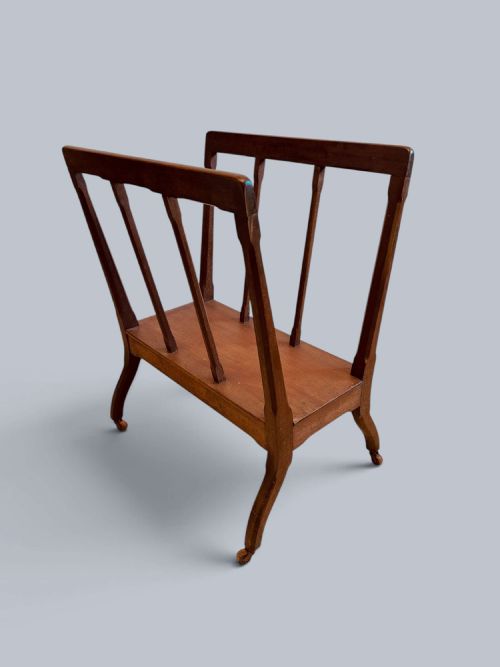
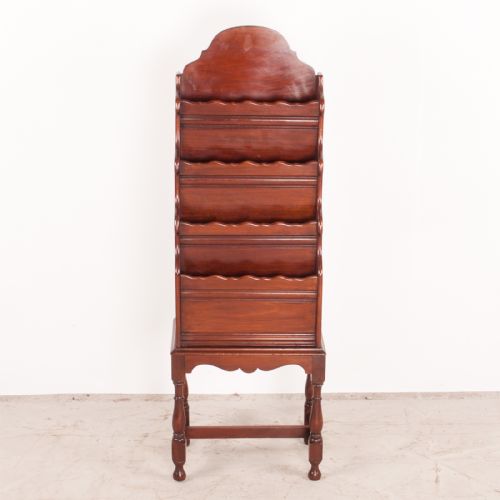
A wooden folio holder serves as a dedicated rack for storing large unbound papers, architectural plans, artists' sketches and prints. When searching for a wooden folio holder, collectors encounter forms spanning the Regency and Georgian periods down to the early twentieth century.
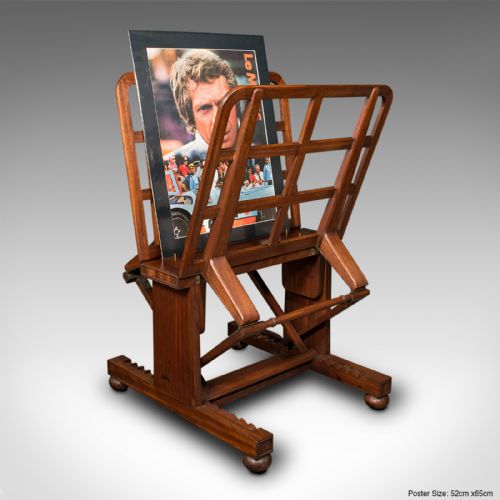
The inventory on this page ranges from formal library folio stands and large country house canterburys to adjustable artist and architect picture racks. Mahogany and rosewood are prominent timber choices, often accompanied by walnut, oak and brass fittings.
Folio stands and canterburys appear alongside magazine racks and music stands, reflecting the varied domestic and professional uses these wooden folio holder items fulfilled over the centuries.
How they were made
Cabinet makers constructed these pieces using dense hardwoods such as mahogany, rosewood and walnut, which provided the structural rigidity required to support heavy paper collections. Brass was frequently utilised for hinges, adjustable mechanisms, castors and carrying handles.
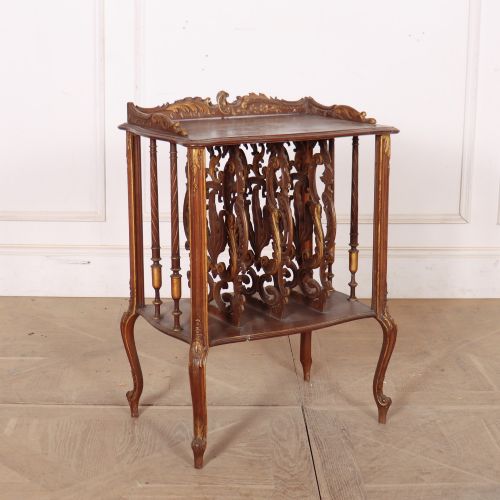
Design vocabulary draws upon Regency, Georgian, Victorian and French Rococo Revival styles, demonstrating detailed craftsmanship including carved woodwork and tailored compartments for sorting folios.
Wooden Folio Holder Retail Price Guide 2026
Typical asking prices for wooden folio holder among the pieces listed under this phrase on Sellingantiques today, from the lower quarter to the upper quarter. They describe what is for sale here now, not the wider market.
Listings on this page span the Georgian, Regency, Victorian and 1920 eras, constructed primarily in mahogany, rosewood and walnut.
What varies in quality
Quality in a wooden folio holder is defined by the selection of figured timber, the robustness of the structural joints and the sophistication of any adjustable mechanism. Pieces intended for grand country houses often display finer carving, superior brass hardware and oversized proportions.
Simpler domestic items, such as standard magazine racks or later twentieth-century interpretations, utilise more utilitarian construction methods while still serving their primary storage function effectively.
The Wooden Folio Holder Glossary
- Folio stand
- A hinged or fixed rack designed specifically to hold large loose sheets of paper, prints or drawings upright. These stands allow portfolios to be browsed easily.
- Canterbury
- A low wooden stand featuring partitions for holding folios, music sheets or magazines, often fitted with castors for mobility about a room.
- Regency
- A style period dating from the early nineteenth century defined by classical restraint, elegant proportions and the frequent use of rosewood and brass inlay.
- Gilt
- A thin layer of gold leaf applied to wooden surfaces to provide decorative highlights, seen occasionally on revival pieces.
Wooden Folio Holder: Frequently Asked Questions
What is a wooden folio holder used for?
These pieces were originally built to store oversized documents, architects' plans, artists' sketches and valuable prints in an organised manner. They keep large paper collections flat, safe from creases and easy to browse through.
Today, they serve a similar purpose in domestic settings for holding large art books, maps, contemporary prints and periodicals while adding period character to a room.
How do I identify a Regency period piece?
Regency items typically date from the early decades of the nineteenth century and exhibit clean classical lines inspired by ancient Greece and Rome. They frequently feature rich timbers like rosewood and mahogany, sometimes paired with brass mounts.
Construction details and secondary woods can also point towards this era, distinguishing them from later Victorian revivals or twentieth-century interpretations.
Where should I place a folio stand at home?
A folio stand works best in a study, library or living room where there is sufficient floor space to allow easy access to the stored papers. Position the stand away from direct sunlight to protect sensitive paper contents and timber finishes from fading.
Because many examples feature castors, they can be moved gently around the room to suit your layout and browsing habits.