



Wooden Folding Base
These wooden folding base pieces are adaptable tables with hinges and pivots designed for easy storage, offering practical surfaces for everyday use.
Wooden Folding Base
A wooden folding base supports surfaces designed to collapse or fold away when not in use, spanning coffee tables, tea tables, and occasional tables. Buyers examining this category encounter pieces originating from periods such as the Georgian, Regency, Edwardian, and the nineteenth century.
The selection encompasses diverse regional forms including Anglo-Indian and Chinese export items, alongside Scandinavian and French country designs. Materials range from mahogany and rosewood to teak, oak, pine, and hardwood, frequently paired with metal or brass components.
Functional variants include drop leaf tables, dumbwaiters, tray top tables, and trestle tables designed for versatile placement. These objects serve varied domestic roles, functioning as coffee tables, side tables, and fireplace accessories.
How they were made
Makers utilised timber varieties such as mahogany, rosewood, oak, teak, and pine to construct the structural supports and folding mechanisms. Hardwoods provide the necessary durability for joints and hinges that undergo regular movement.
Metal and brass components frequently feature as hinges, brackets, or removable tray tops resting on collapsible wooden frames. Painted finishes also appear, particularly in Scandinavian ragwork examples and French provincial pieces.
Wooden Folding Base Retail Price Guide 2026
Typical asking prices for wooden folding base among the pieces listed under this phrase on Sellingantiques today, from the lower quarter to the upper quarter. They describe what is for sale here now, not the wider market.
Listings include mahogany, rosewood, teak, oak, pine, and hardwood, alongside brass and painted finishes across multiple centuries.
What varies in quality
Quality rests in the precision of the joinery and the smoothness of the folding mechanism, ensuring the table remains stable in both deployed and collapsed states. Superior execution involves tightly fitted hinges and well-balanced pedestals or trestle supports.
The selection of timber grain and the condition of decorative elements, such as brass engraving or painted surfaces, distinguish finer examples. Coarser production employs simpler pine or utilitarian hardwoods without intricate turning or detailed carving.
William Trotter
The Wooden Folding Base Glossary
- Dropleaf table
- A table with a fixed centre section and hinged flaps that fold down when unsupported. These leaves extend the surface area significantly when raised.
- Dumbwaiter
- A tiered freestanding piece of furniture used for holding food or tableware, sometimes incorporating folding or rotating tiers. Georgian examples showcase fine cabinetmaking.
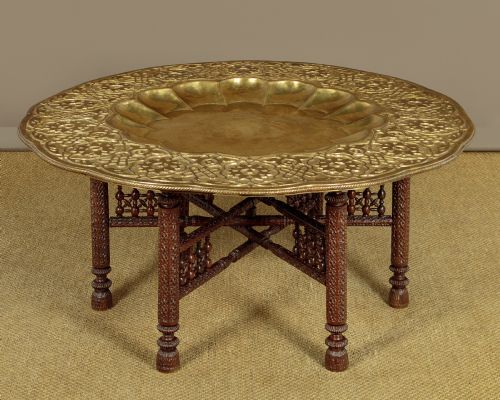
- Tray top table
- A table featuring a removable tray resting upon a folding or collapsible wooden base. The trays frequently display detailed brass work from Indian or Moroccan traditions.
- Trestle table
- A table comprising a horizontal beam supported by two vertical legs or frames, often designed to dismantle or fold flat. French country versions often utilise bleached timber.
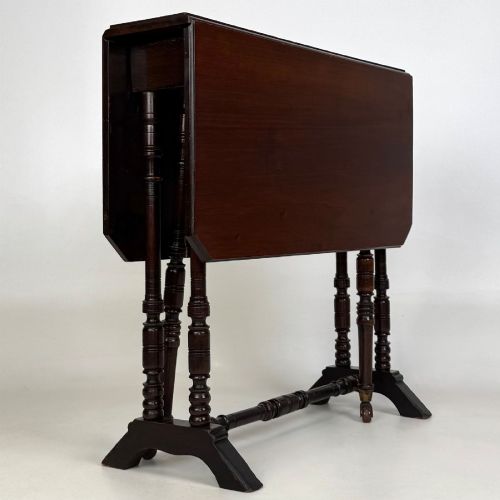
- Sutherland table
- A narrow drop-leaf table where both leaves fold down almost vertically, supported by swing legs. Edwardian variations frequently employ mahogany.
Wooden Folding Base: Frequently Asked Questions
What is a wooden folding base?
A wooden folding base is a collapsible support structure designed to hold a table top, tray, or shelf. These bases utilise hinges, pivots, or interlocking joints so the furniture can be stored flat.
They appear across various historical periods, including Georgian and Edwardian eras, serving utilitarian and decorative roles in the home.
How do I use a folding table?
These tables are positioned as occasional surfaces, coffee tables, or tea tables in living spaces and reception rooms. Their collapsible design allows them to be moved or stored away when extra floor space is needed.
Tray top versions also permit the upper section to be lifted independently for serving refreshments before resting back upon the wooden base.
How do I care for these surfaces?
Maintenance involves dusting timber surfaces regularly with a soft cloth and avoiding excessive moisture on polished mahogany, rosewood, or oak. Brass trays and mounts benefit from occasional gentle cleaning to preserve the metal finish without abrasive contact.
Protecting the wood from direct heat sources and sunlight prevents warping in older hardwood and pine structures.
How are different periods identified?
Dating relies on timber selection, construction methods, and stylistic cues present in the woodwork and metalwork. Georgian and Regency pieces often display formal mahogany craftsmanship, while Edwardian versions incorporate lighter proportions and alternative timbers.
Nineteenth-century colonial pieces frequently combine regional brass trays with indigenous hardwoods, distinguishing them from European country furniture.