




Wooden Fireplace Guard
These wooden fireplace guard pieces combine period warmth with domestic craft, offering practical hearth protection.
Wooden Fireplace Guard
A wooden fireplace guard serves to block radiant heat and protect rooms from stray embers while adding a decorative focal point to the hearth. Buyers seek these items to bring period character and functional warmth into a reception room.
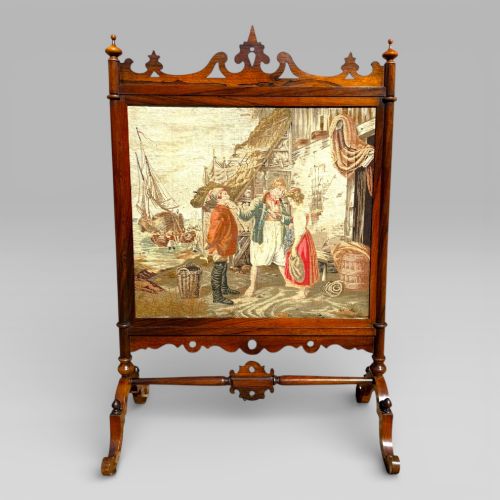
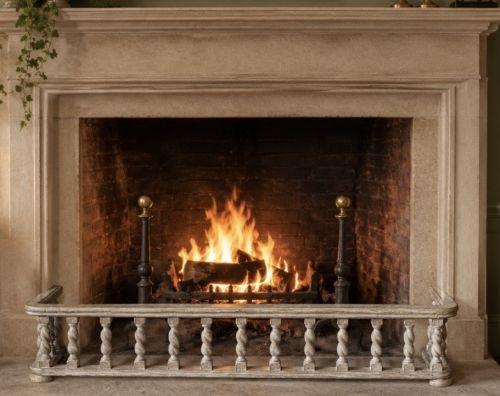
The selection here encompasses Victorian, Regency, and later pieces constructed from timber such as oak, mahogany, walnut, and rosewood. Forms range from standing screens with adjustable panels to low fireplace fenders designed to sit directly around the hearth stone.
Many examples incorporate secondary materials within the wooden frame, including glass, embroidered tapestry, wool, canvas, and brass. Metamorphic versions even double as occasional tables, combining utility with decorative design.
How they were made
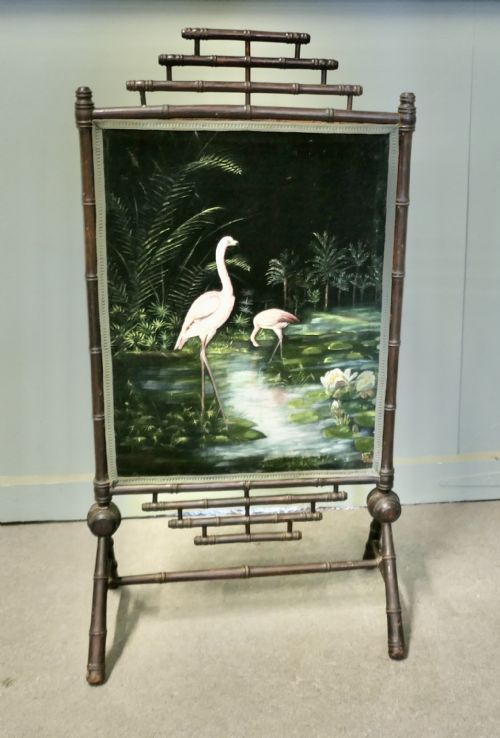
Makers utilised solid timbers like oak, mahogany, walnut, and rosewood, shaping the frames through traditional joinery and carving techniques. Surface treatments include black lacquer, limed finishes, and polychrome painted decoration as seen in Black Forest and Chinoiserie styles.
Panels were frequently fitted with hand-woven needlepoint tapestry, wool embroidery, or etched and carved glass. Mechanical ingenuity appears in adjustable screens with sliding panels, folding leaves, and poker work details.
Wooden Fireplace Guard Retail Price Guide 2026
Typical asking prices for wooden fireplace guard among the pieces listed under this phrase on Sellingantiques today, from the lower quarter to the upper quarter. They describe what is for sale here now, not the wider market.
Periods represented span from the Regency era through Victorian times up to the 1930s.
What varies in quality
Quality rests in the precision of the timber carving, the integrity of the joinery, and the complexity of the integrated panels. Elaborate Black Forest carvings or fine Regency mahogany framing stand apart from simpler vernacular items.
The artistic merit of the inset work - whether hand-woven pastoral tapestry, delicate needlepoint, or detailed glass etching - dictates the distinction of the piece. Dual-purpose designs, such as metamorphic tables, display higher mechanical ambition.
The Wooden Fireplace Guard Glossary
- Fire Screen
- A movable panel placed before a fireplace to shield occupants from the intense heat of an open fire. These often feature decorative needlepoint or glass panels.
- Fire Fender
- A low frame of metal or wood placed on the hearth around the base of a fireplace to contain ash and embers. Examples here utilise solid oak.
- Needlepoint
- Embroidery stitched onto a canvas mesh to create dense pictorial or geometric designs. This technique appears frequently on Victorian screen panels.
- Poker Work
- A method of decorating wood by burning designs into the surface with a heated metal point. Regency examples sometimes utilise this technique on adjustable panels.
- Black Forest
- A style of ornate, deeply carved wooden decoration originating from the wooded mountain region in Germany. Pieces in this tradition often feature naturalistic foliage and animal motifs.
Wooden Fireplace Guard: Frequently Asked Questions
What is a wooden fireplace guard?
A wooden fireplace guard is a decorative and functional screen or fender designed to block excess heat from an open hearth. These pieces protect the surrounding room while adding period character.
Items range from standing framed panels with embroidered textiles to low wooden fenders placed directly on the hearth stone.
How were these screens used historically?
Historically, occupants positioned screens between themselves and the fireplace to regulate radiant heat before the room warmed up. They also protected ladies' wax-based cosmetics from melting near the blaze.
Some versatile designs doubled as occasional tables or featured adjustable leaves to control the blocked area.
What materials appear in these pieces?
Construction primarily relies on hardwoods such as oak, mahogany, walnut, and rosewood. Frames frequently incorporate secondary elements like glass, brass, canvas, and wool.
Textiles within the panels often feature hand-woven tapestries or needlepoint depicting pastoral and decorative scenes.
How do I identify a Regency screen?
Regency pieces often display characteristic mahogany frames with refined classical proportions and occasional poker work panels. These designs date from the early nineteenth century.
They sit alongside later Victorian, Edwardian, and Jacobean Revival examples visible in the selection.