
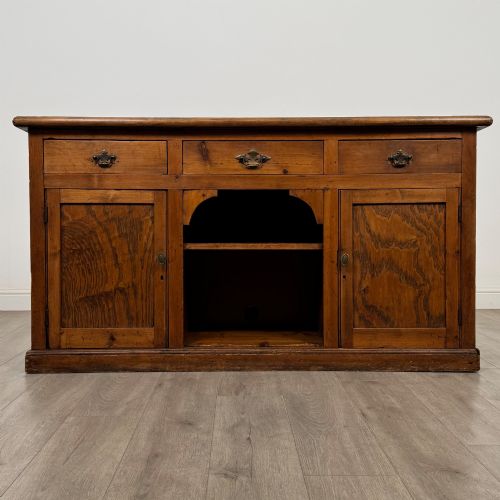
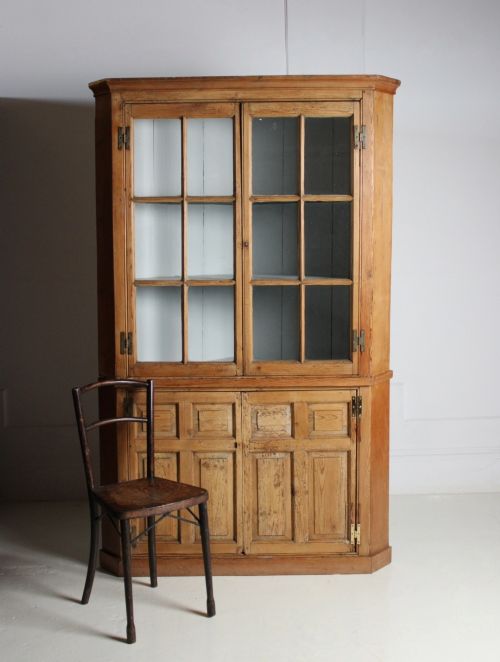
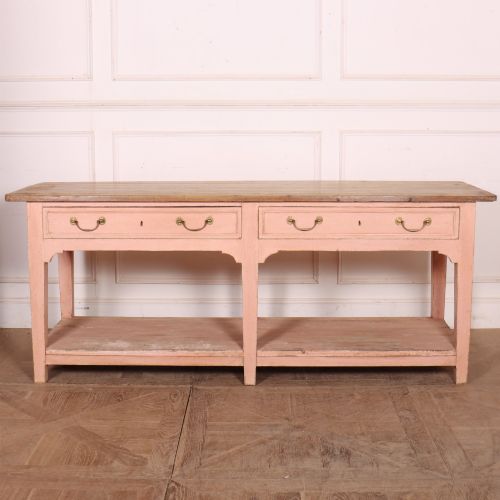
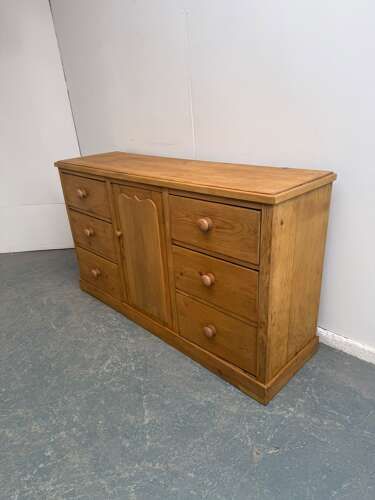
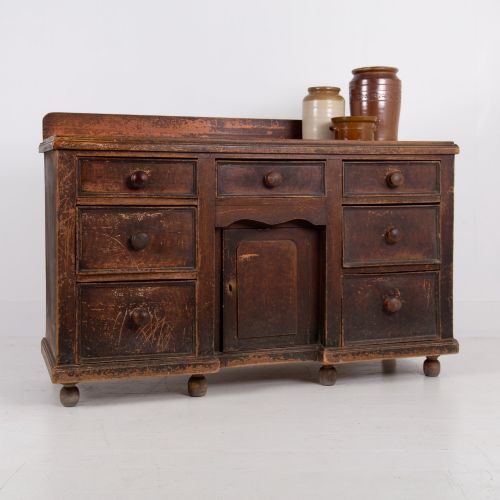

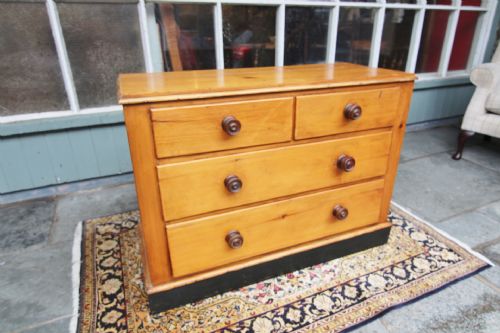


Wooden Farmhouse Dresser
These wooden farmhouse dresser options bring honest country utility to a room, offering sturdy storage built from honest timber.
Wooden Farmhouse Dresser
A wooden farmhouse dresser provides practical storage for domestic life through robust cupboards, drawers, and open potboards designed for daily use. You will most frequently meet nineteenth-century examples in solid pine, showing regional variations from English workshops to Scottish vernacular traditions.
The selection ranges from tall kitchen dresser cabinets with glazed top sections to low serving tables, potboard bases, and multi-drawer chests. These pieces originate from the Victorian era and the broader nineteenth century, reflecting the straightforward needs of rural households.
How they were made
Surfaces display either a waxed finish that preserves the natural grain or original paint that bears the marks of decades of working life. Construction methods prioritize durability, utilising straightforward joinery suited to country workshops.
Listings feature nineteenth-century pine and painted timber forms including potboard dresser bases, corner cupboards, and chests of drawers.
What varies in quality
Quality rests in the integrity of the timber, the preservation of original surfaces such as early paint, and the balance of proportions. Pieces retaining their original potboards and unreplaced brass fittings stand higher in standard.
Regional distinction also plays a role, with specific Scottish vernacular or English country pieces displaying distinctive construction traits. Simplicity of form combined with honest wear separates standard utility items from finer examples.
The Wooden Farmhouse Dresser Glossary
- Potboard
- An open lower shelf on a dresser base traditionally used for storing pots and heavy kitchen utensils. This lower tier sits just above the floor.
- Pine
- A soft timber widely utilised in country furniture for its accessibility and workability. It takes both wax finishes and paint readily.
- Dresser base
- The lower portion of a kitchen dresser featuring drawers and cupboards without the upper plate rack. These often function independently as sideboards or serving tables.
Wooden Farmhouse Dresser: Frequently Asked Questions
How do I identify a nineteenth-century pine piece?
Nineteenth-century pine furniture exhibits hand-cut joinery, timber shrinkage patterns, and signs of genuine age through surface wear.
Examining the drawer construction and hardware fixings helps confirm the period of manufacture.
Where were these dressers used?
These items served as the central storage and preparation units in farmhouse kitchens and domestic sculleries.
They held tableware, linens, and food stores while providing a sturdy surface for daily tasks.
Are painted finishes original?
Many pieces retain layers of historic paint applied during their working life in country homes.
Original paint surfaces show authentic wear patterns and craquelure that modern reproductions cannot replicate.