




Wooden Dressing Table Stool
These wooden dressing table stool examples are sturdy seats built to sit beneath a vanity mirror, combining functional daily use with period cabinetmaking.
Wooden Dressing Table Stool
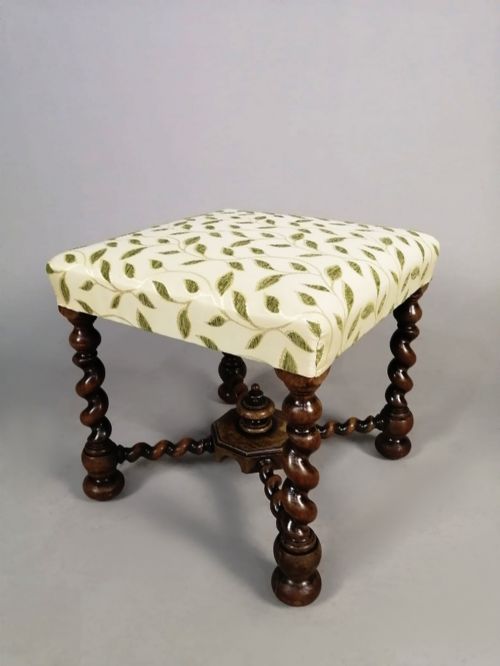
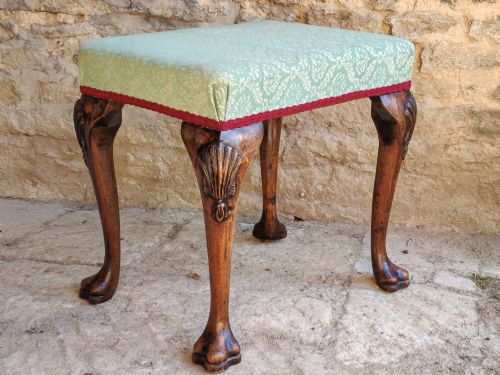
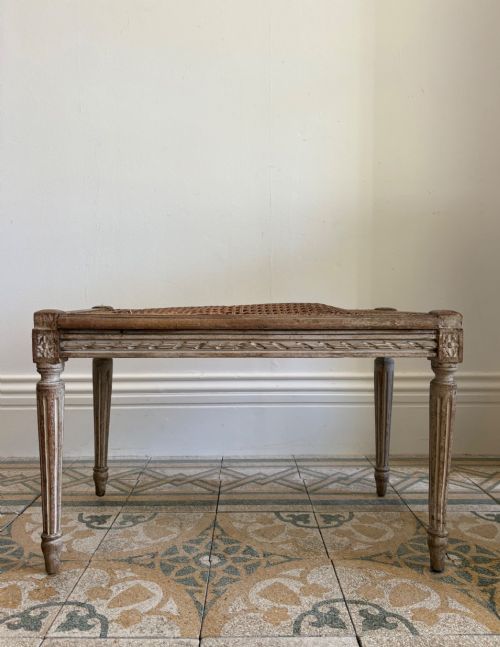
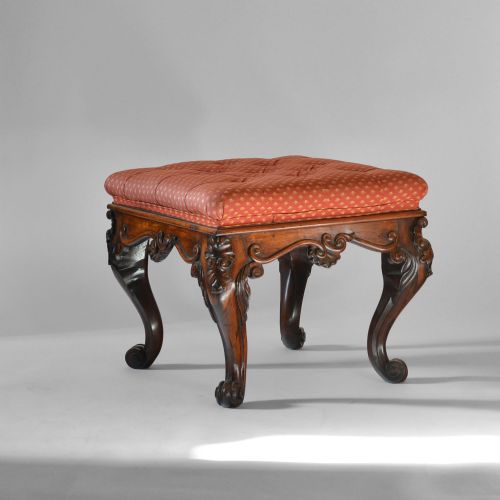
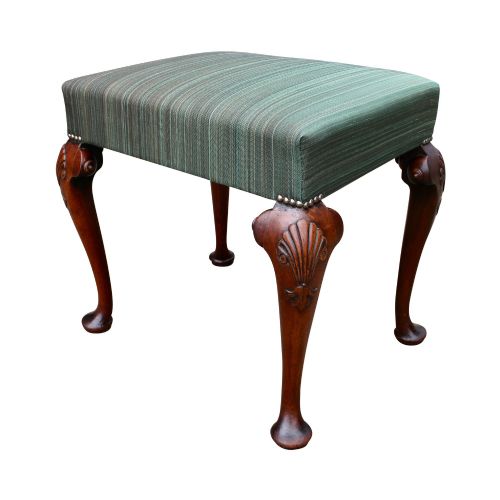
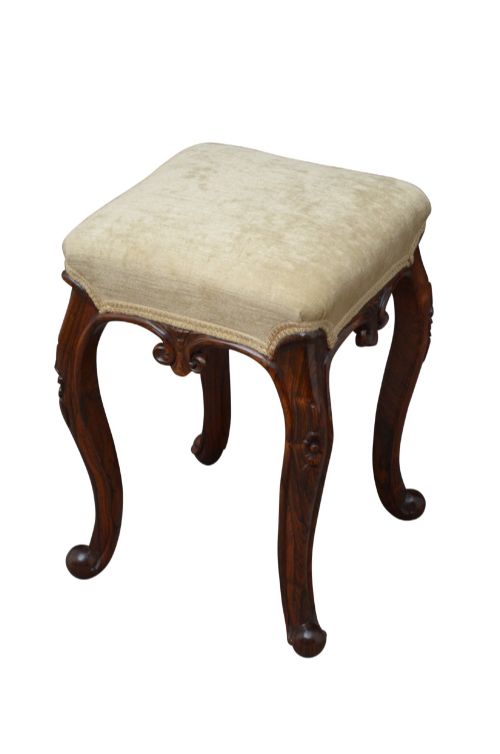
A wooden dressing table stool provides a dedicated seat for grooming routines, typically designed to slide neatly beneath a vanity or dressing chest. The pieces encountered here span from the Georgian era through the Victorian period, Edwardian times, and into the 1930s.
Makers utilised various timber frames, most frequently walnut and mahogany, alongside rosewood, oak, beech, and birds eye maple. Styles range from Queen Anne revival and Louis XV style to Arts and Crafts, Art Deco, and Tudor revival.
The physical forms include standalone oval and rectangular seats, cabriole leg designs, rise and fall mechanisms, and X-framed structures. Many examples incorporate upholstered tops covered in fabric, wool, needlepoint, or leather.
Materials and construction methods
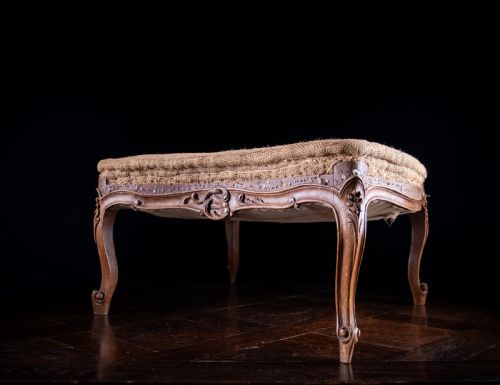
Carpenters constructed the primary frames using dense hardwoods like mahogany, walnut, and oak, often shaping the timber into cabriole legs or straight supports. Finer examples incorporate decorative elements such as carved ornamentation, inlay work, and gilding on beech or exotic woods like goncalo alves.
Upholstered tops utilise traditional stuffing methods secured over wooden bases, finished with textiles ranging from simple leather to intricate needlepoint and wool fabrics. Brass fittings occasionally appear on functional mechanisms, such as rise and fall designs intended for adjustable height.
Wooden Dressing Table Stool Retail Price Guide 2026
Typical asking prices for wooden dressing table stool among the pieces listed under this phrase on Sellingantiques today, from the lower quarter to the upper quarter. They describe what is for sale here now, not the wider market.
Listed designs encompass diverse stylistic influences, including Queen Anne revival, Louis XV style, Arts and Crafts, and Art Deco.
Distinguishing quality in period seating
The standard of timber selection and joinery divides standard production from superior pieces, with dense, well-figured walnut or mahogany showing finer grain definition. Hand-carved details on legs and frames display greater depth and precision than simpler, machine-routed or plain edges.
The integrity of the original frame construction and the quality of the upholstery materials determine the overall finish. Pieces retaining original textiles like period needlepoint or intact rise and fall mechanisms demonstrate higher preservation standards.
Rowley Gallery
The Wooden Dressing Table Stool Glossary
- Rise and fall
- A mechanical adjustment system allowing the seat height to be raised or lowered. This function frequently appears on combination pieces designed for dual use at a piano or dressing table.
- Needlepoint
- A type of canvas work embroidery executed with wool yarn to create patterned seat covers. It is commonly found on Victorian and early twentieth-century stools.
- X-framed
- A structural design where intersecting diagonal supports form an X shape beneath the seat. This configuration provides lateral strength and decorative visual weight to the base.
- Goncalo Alves
- A dense, exotic hardwood featuring striking contrasting grain patterns. Makers utilised this material for high-status Victorian occasional furniture and seating.
Wooden Dressing Table Stool: Frequently Asked Questions
What is a wooden dressing table stool used for?
These low seats provide comfortable seating during personal grooming and dressing routines. They are proportioned to fit directly under a vanity or dressing table when not in use.
Historically, they served a similar domestic purpose in bedrooms and boudoirs, often matching the wider suite of furniture in the room.
How do I identify the period of a stool?
Dating relies on examining the timber species, joinery techniques, and stylistic decoration of the frame. Victorian examples often feature heavy carved rosewood or walnut, while 1930s pieces lean toward streamlined Art Deco or oak Arts and Crafts forms.
Secondary details, such as the style of upholstery and the presence of hand-carving versus machine-turned elements, offer further clues to the decade of manufacture.
Can I use these stools with modern vanities?
Most period stools feature standard seating heights that fit comfortably beneath contemporary dressing tables. Checking the exact clearance height of both the seat and your vanity ensures a proper physical match.
Their compact footprint also allows them to function independently as extra seating in small spaces or bedrooms.
How should I care for antique wood and upholstery?
Maintaining the wood requires occasional cleaning with a dry cloth and the sparing application of traditional wax polish to nourish the grain. Direct sunlight and excessive moisture should be avoided to protect both the polished finish and the textile covering.
Upholstered sections benefit from gentle surface cleaning appropriate to the specific fabric type, whether that is leather, wool, or needlepoint.