



Wooden Dresser Mirror
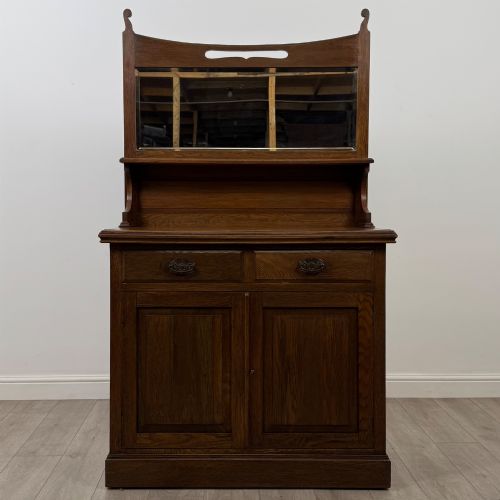
These wooden dresser mirror pieces bring period presence and practical reflection to a room, offering the proportion and timber warmth collectors value.
Wooden Dresser Mirror
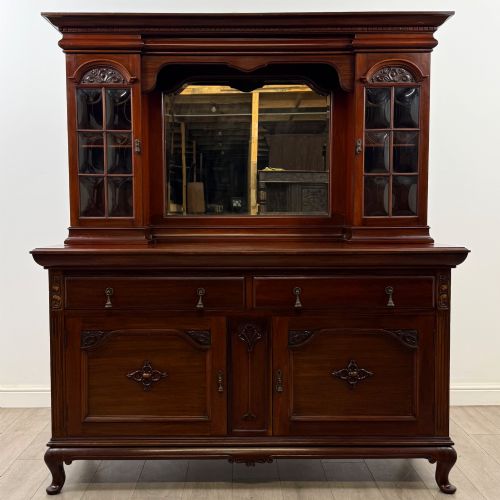
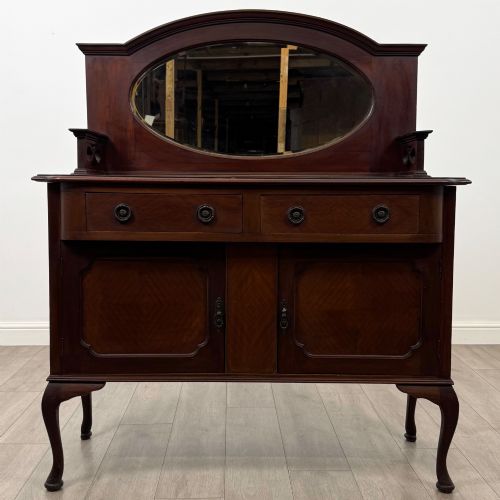
A wooden dresser mirror unites a supporting base or larger furniture carcass with an integrated glass plate, typically encountered across Victorian and Edwardian periods. Pieces range from substantial sideboards and side cabinets with mirror backs to dedicated dressing chests and hall stands.
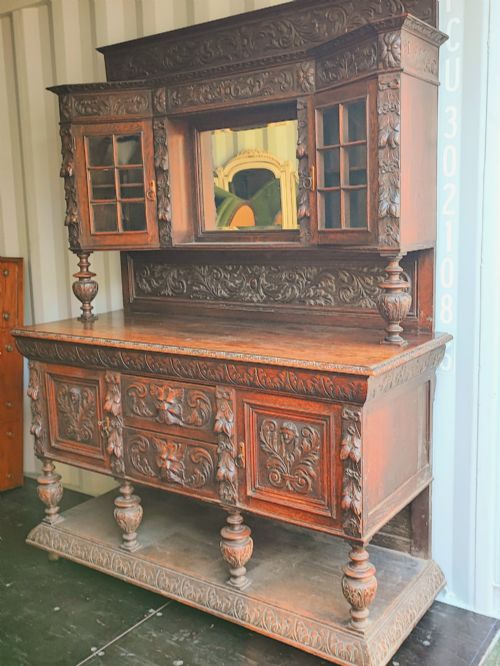
The selection reflects diverse workshop origins, spanning standard domestic output to distinctive Arts and Crafts, Aesthetic Movement, Art Nouveau, and Jacobean Revival designs. Construction employs woods such as mahogany, oak, walnut, ash, and satin walnut, matched with brass hardware and glass mirrors.
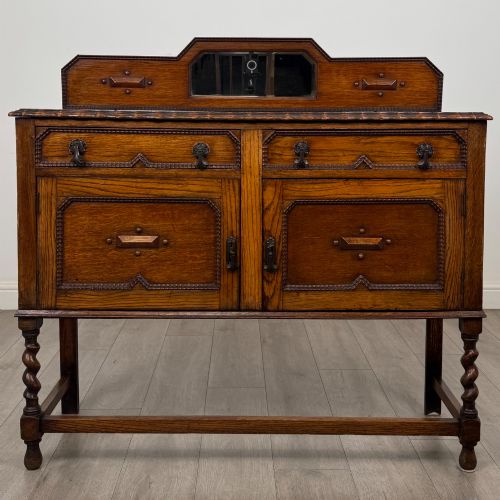
Buyers seeking a wooden dresser mirror will find configurations featuring oval or rectangular plates, carved panels, barley twist legs, and inlaid timber details. These forms served utilitarian functions in nineteenth and early twentieth-century interiors while anchoring larger furniture arrangements.
How They Were Made
Joinery techniques rely on traditional timber framing, utilising solid woods and veneers of mahogany, oak, walnut, ash, and satin walnut. Structural joints support heavy superstructures, particularly where an upright mirror back attaches to a sideboard or cabinet base.
Surface ornamentation incorporates hand carving, inlaid decorative motifs, and turned elements like barley twist legs. Brass fittings secure swinging mirror frames and cabinet doors, while glass mirror plates are set within rebated wooden surrounds.
Wooden Dresser Mirror Retail Price Guide 2026
Typical asking prices for wooden dresser mirror among the pieces listed under this phrase on Sellingantiques today, from the lower quarter to the upper quarter. They describe what is for sale here now, not the wider market.
Design styles present in the inventory encompass Arts and Crafts, Art Nouveau, Aesthetic Movement, and Jacobean Revival.
What Varies in Quality
The standard of a wooden dresser mirror is determined by the selection of cabinet timbers and the crispness of any carved or turned detailing. Finer examples display carefully figured mahogany, walnut, or oak, alongside balanced proportions between the lower storage unit and the upper mirror frame.
Construction integrity distinguishes workshop output, evident in the snugness of drawer dovetails and the stability of the mirror supports. The quality of the original glass plate and the precision of brass hardware further separate standard domestic pieces from high-end cabinet maker production.
Howard and Sons·Maple and Co
The Wooden Dresser Mirror Glossary
- Mirror Back
- An upright wooden frame containing a glass plate, attached to the rear of a sideboard, cabinet, or dressing chest. This element provided both reflection and visual height to nineteenth-century furniture.
- Barley Twist
- A turned column or leg resembling a twisting rope of barley. This decorative woodworking technique appears frequently on Edwardian and later supports.
- Inlay
- A decorative method where contrasting pieces of wood or other materials are inserted into recesses within a solid timber surface. It defines many Victorian and Edwardian decorative schemes.
- Sideboard
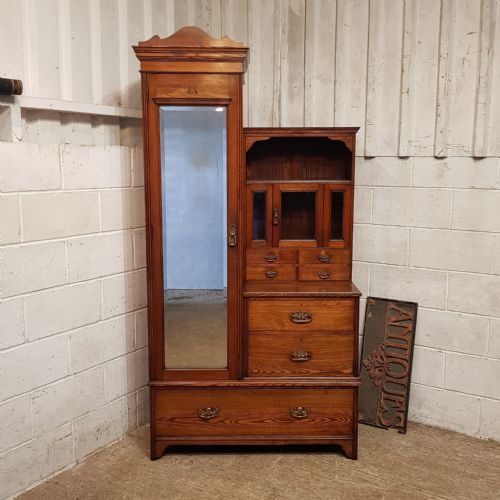
- A large dining room or living space cabinet used for storage and display. Many examples incorporate raised mirror backs and glazed cupboards.
- Arts and Crafts
- A design movement emphasising handcraftsmanship, simple forms, and natural materials. Pieces from this tradition avoid excessive machine ornamentation.
Wooden Dresser Mirror: Frequently Asked Questions
How do I date a wooden dresser mirror?
Dating relies on identifying timber choices, construction methods, and stylistic indicators such as Victorian carvings or Edwardian inlays. Hardware and mirror plate characteristics also help narrow the period.
Examining secondary woods inside drawers and the fixing methods for the mirror frame provides additional chronological context.
Were mirror backs removable?
Most mirror backs were secured to the lower base using threaded bolts and support struts to facilitate transport. They formed an integral part of the overall furniture design.
Removing them alters the intended visual balance and proportion of the piece.
What woods were commonly used?
Makers utilised a variety of domestic and imported timbers, with mahogany, oak, walnut, ash, and satin walnut appearing across the selection. Figured variations were reserved for primary display surfaces.
Secondary framing timbers often included pine or softer woods in concealed areas.
How do I care for the mirror glass?
Maintaining the glass involves gentle cleaning without harsh chemical agents that might damage surrounding wooden frames or historic silvering. Keeping the environment stable prevents moisture ingress behind the plate.
Inspecting the mirror backing helps protect fragile historical silvering from degradation.