
Wooden Dining Room Chairs
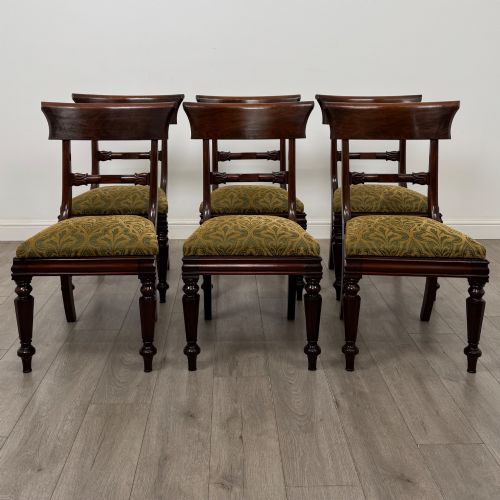
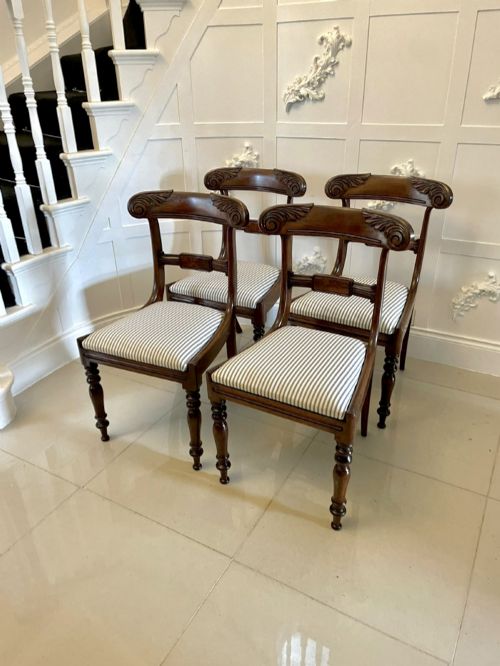
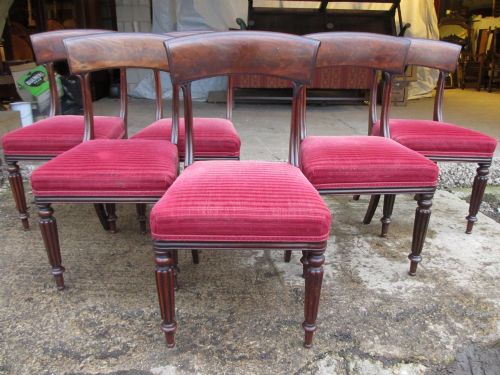
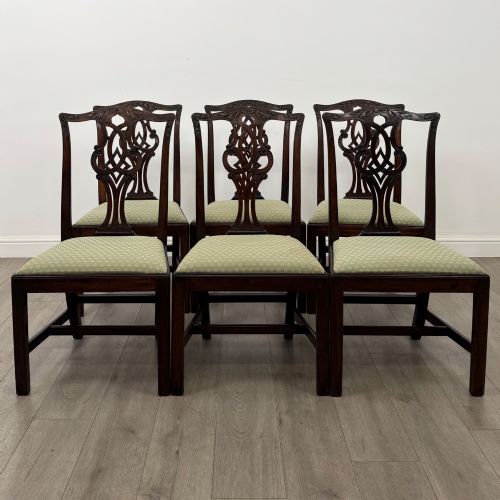
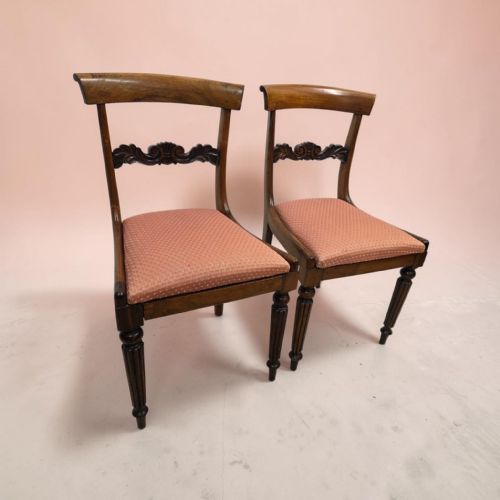
These wooden dining room chairs span the Georgian, Regency and Victorian periods, offering solid mahogany, oak and walnut frames built for daily dining.
Wooden Dining Room Chairs
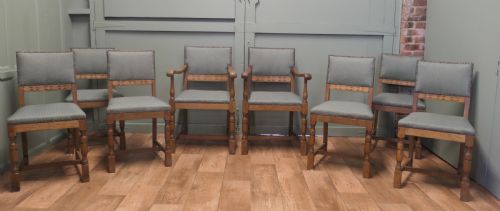
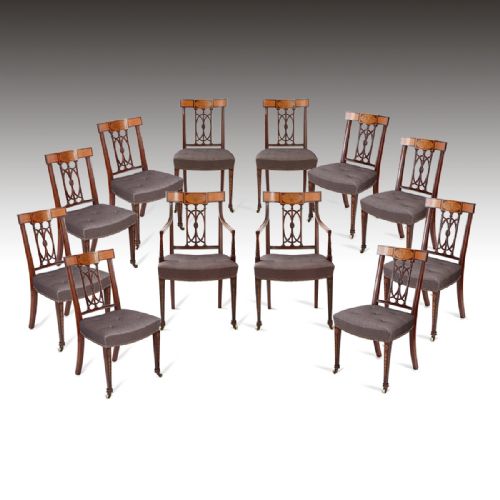
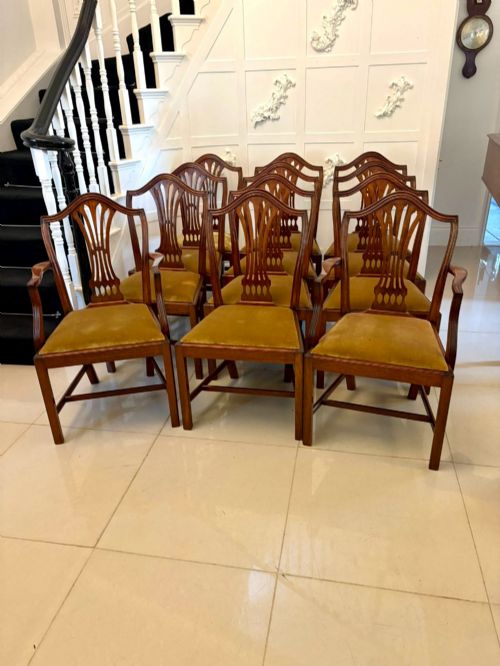
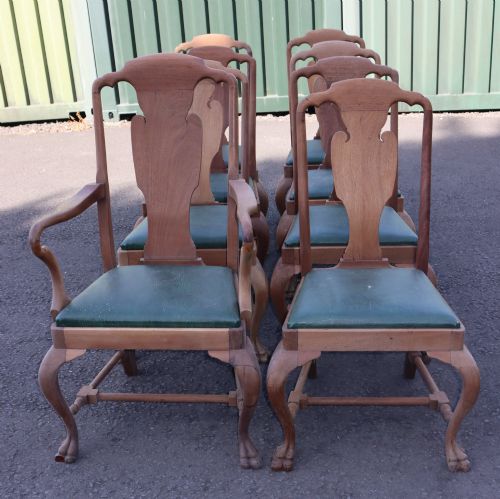
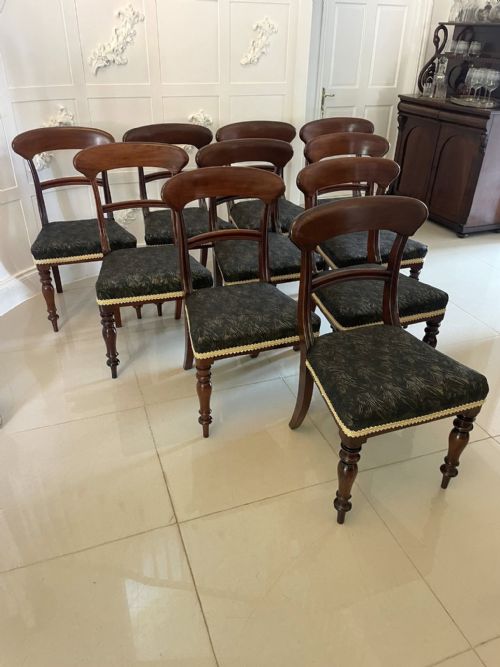
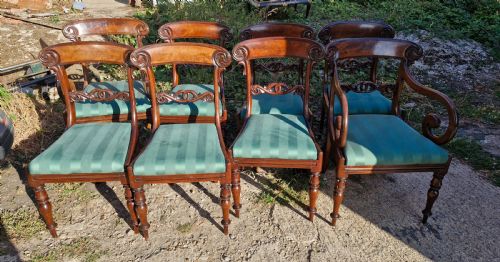
Wooden dining room chairs encompass sets and singles built across the Georgian, Regency, Victorian and Edwardian periods. Buyers encounter matching sets ranging from four to twelve pieces, often including carvers with arms alongside single chairs.
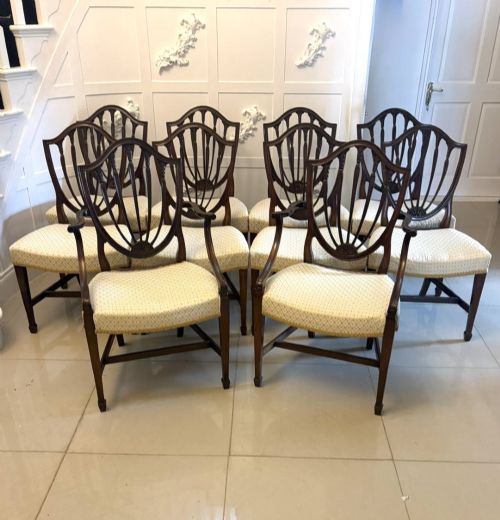
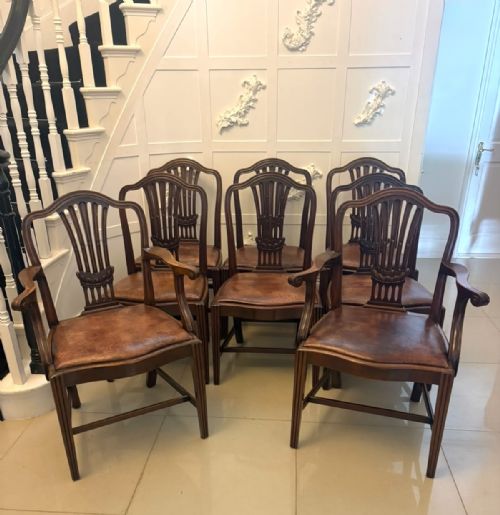
Mahogany forms the dominant wood across these offerings, complemented by oak, walnut, rosewood, elm and ash. Styles span Hepplewhite shield backs, balloon backs, and Arts and Crafts designs.
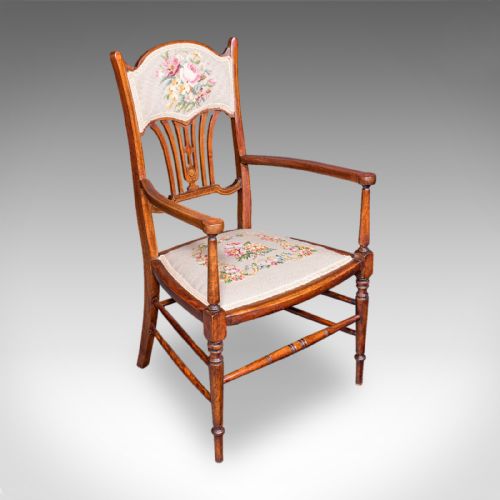
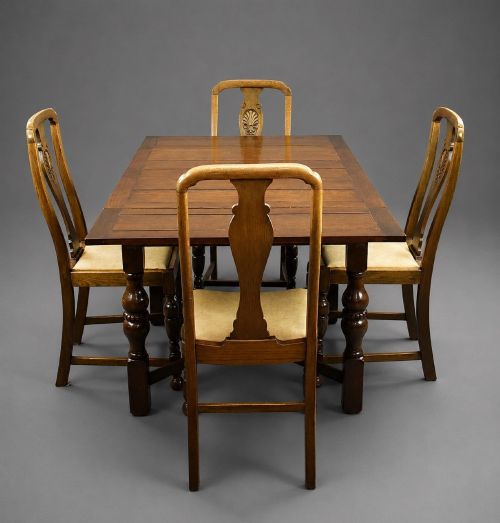
Individual pieces such as elbow chairs and morning room seats appear alongside large dining suites and tables. Construction relies on dense hardwoods suited to centuries of domestic use.
How they were made
Cabinetmakers utilised dense timbers like mahogany, oak and walnut, shaping frames through traditional joinery. Carved details such as shield backs, spear points and reeded legs demonstrate precision hand woodwork.
Upholstery incorporates textile, fabric, velvet and original tan leather secured over webbing and stuffing. Brass details appear on select pieces to reinforce structural points or provide decorative accents.
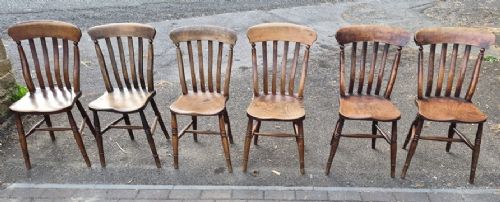
Harlequin sets bring together distinct elm and ash country chairs that share a room rather than a workshop.
What varies in quality
The standard of carving and the selection of timber dictate the distinction between everyday seating and formal dining room chairs. Fine sets exhibit crisp execution in shield backs and balloon frames, while lesser examples show simpler turnings.
Larger sets of ten or twelve matched chairs command greater consideration due to the difficulty of keeping complete gatherings intact over centuries. The integrity of the original wood grain and the preservation of period upholstery materials further separate ordinary items from superior examples.
Maple and Co·Lamb of Manchester
The Wooden Dining Room Chairs Glossary
- Carver
- An armchair designed with armrests, traditionally placed at the head of a dining table. These frequently match a set of single dining chairs.
- Balloon Back
- A rounded, oval-shaped chair back resembling a balloon, characteristic of Victorian seating design. This form provides ergonomic support through curved wooden members.
- Draw Leaf
- A table mechanism featuring sliding leaves tucked beneath the main top that pull out to extend the surface. These appear alongside matching dining chair sets.
- Harlequin Set
- A collection of chairs that share a general period, material or style but were not originally manufactured together as a single suite. They offer a gathered appearance rather than a strict uniform factory match.
Wooden Dining Room Chairs: Frequently Asked Questions
How many chairs come in a typical set?
Sets appear in counts ranging from four up to twelve matching pieces, frequently accompanied by one or two carvers with arms. Buyers find larger gatherings suited to formal dining rooms alongside smaller four-piece groupings.
Matching larger sets of eight or ten proves more scarce because individual chairs often dispersed or suffered damage over generations of daily use.
What woods were used for these chairs?
Mahogany remains the primary timber across Georgian, Regency and Victorian examples, valued for its rich grain and structural strength. Oak, walnut, rosewood, elm and ash also appear frequently in regional and period pieces.
Different timbers indicate distinct stylistic origins, such as golden oak in Arts and Crafts pieces or robust elm in Thames Valley country seating.
What is the difference between single chairs and carvers?
Single chairs feature an open frame without armrests, designed to sit neatly along the sides of a dining table. Carvers include integrated armrests and typically stand at the head and foot of the table.
Period dining suites often paired a larger group of single chairs with a matching pair of carvers for the hosts.
How do I identify a Hepplewhite style chair?
Hepplewhite style chairs are instantly recognised by their characteristic shield-shaped backs enclosing pierced wooden splats. They frequently incorporate tapered legs and delicate carved motifs typical of late eighteenth-century design.
Later Victorian and Edwardian makers revived this classic silhouette, producing quality interpretations that echo the Georgian aesthetic.