
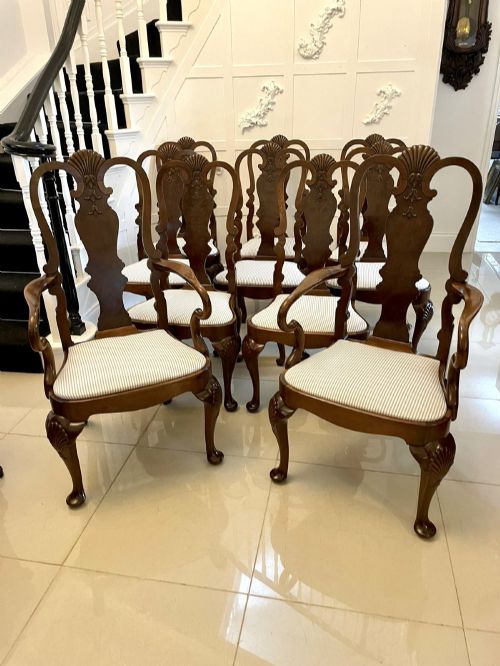
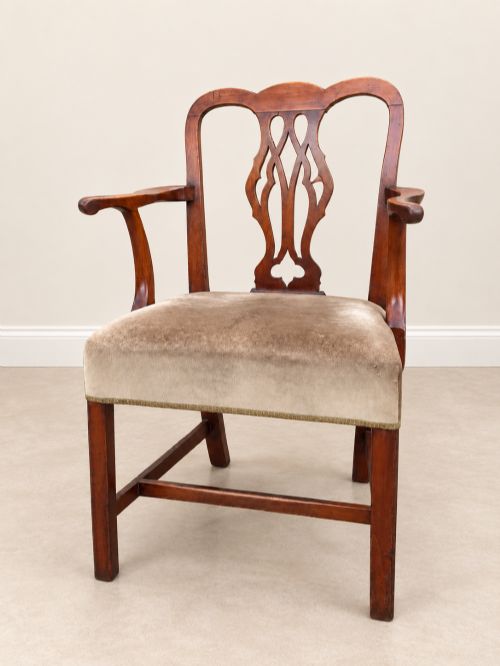
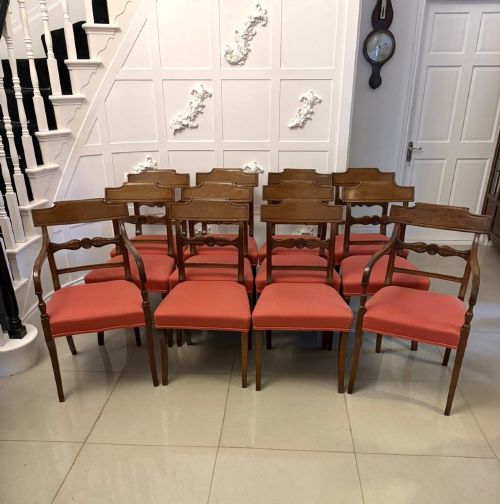
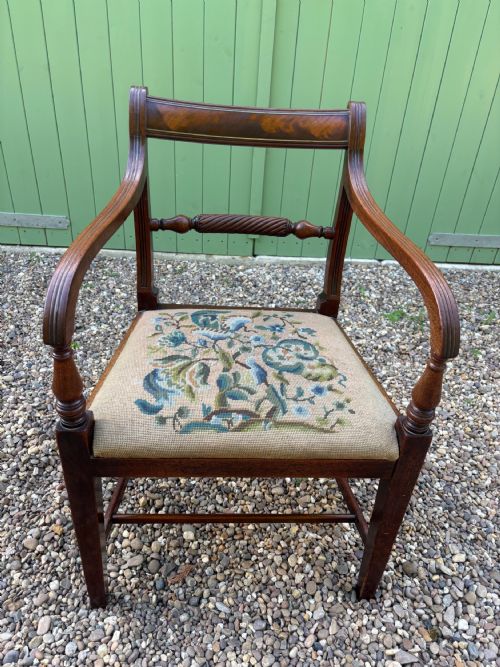
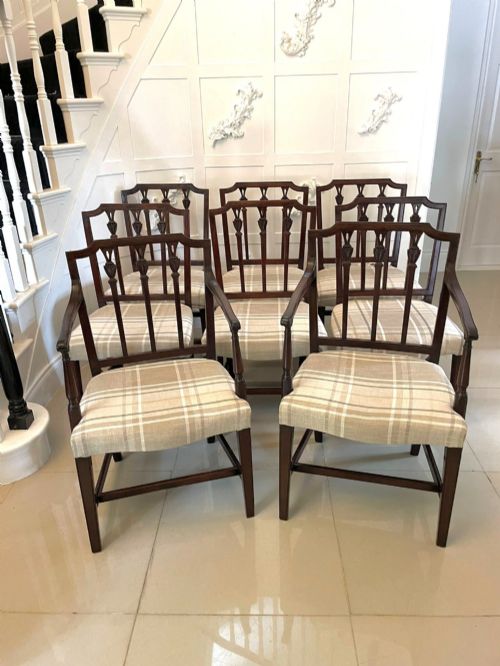
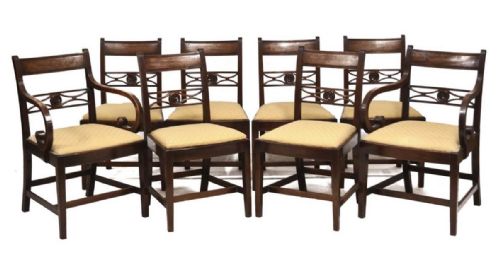
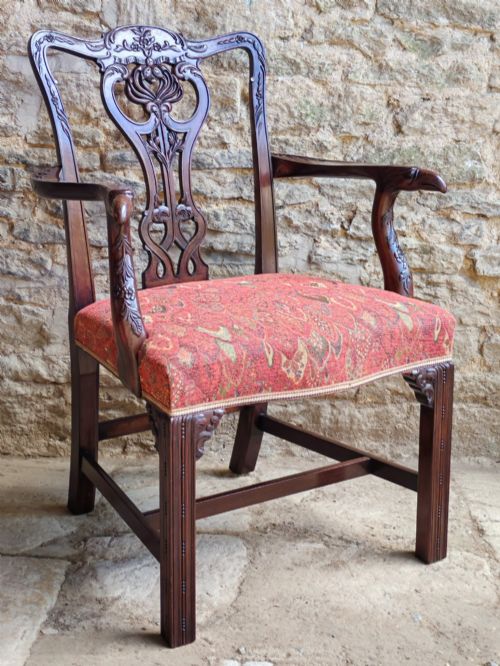

Wooden Dining Armchair
A wooden dining armchair brings solid timber structure and seated comfort to the table, spanning formal mahogany carvers to vernacular country Windsors.
Wooden Dining Armchair
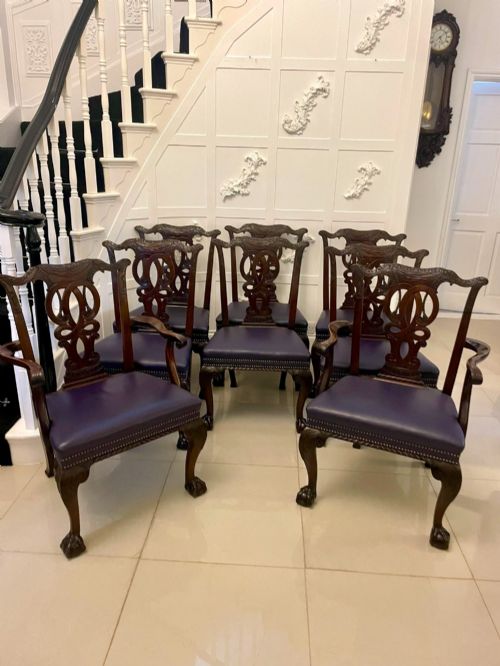
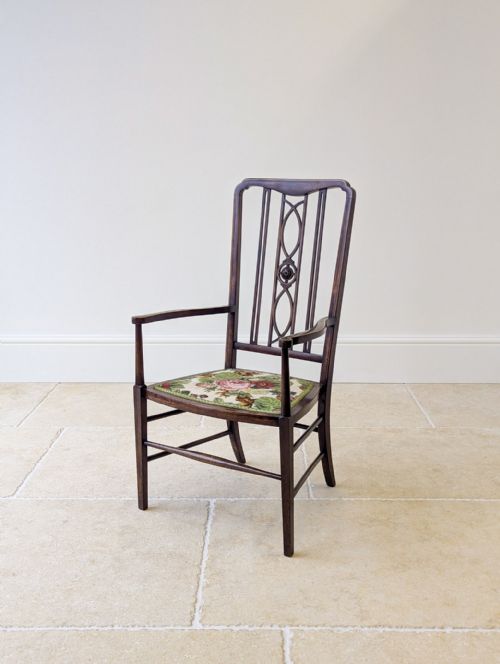
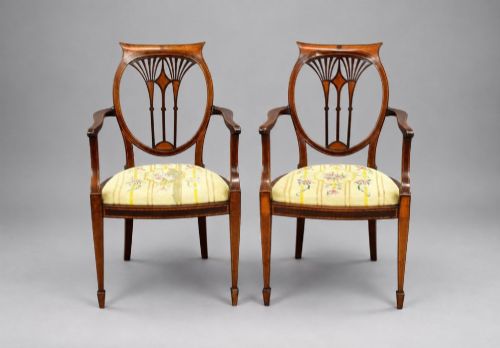
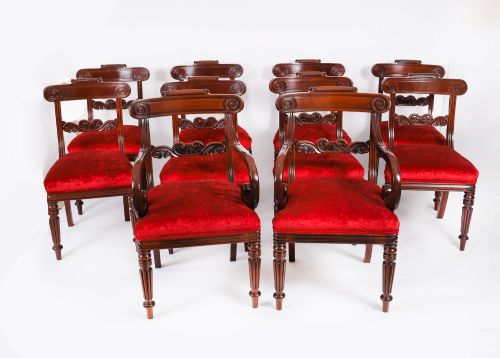
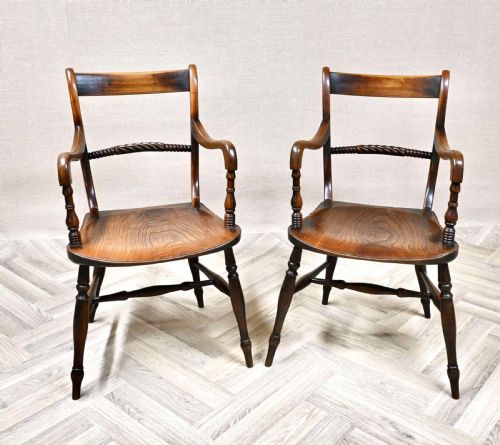
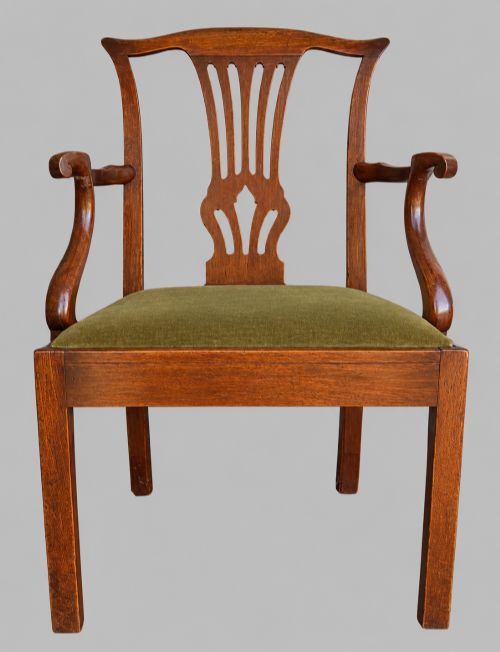
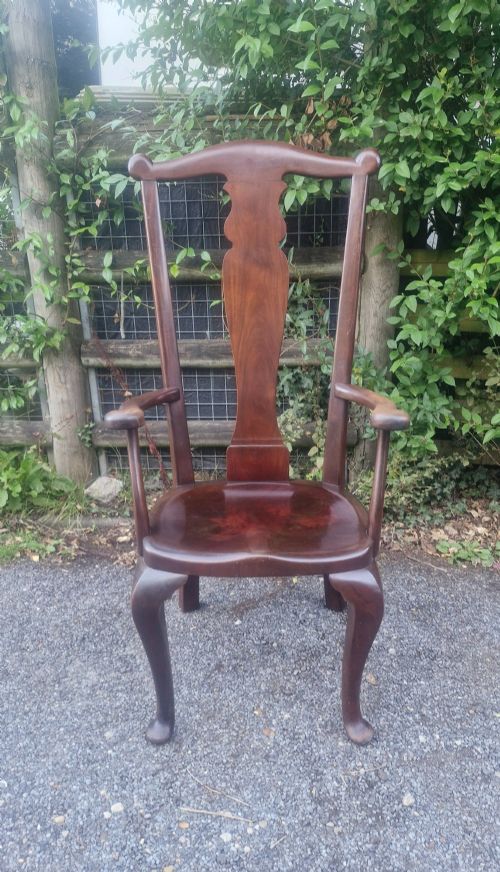
A wooden dining armchair provides structural arm support alongside standard seating at the dining table, often appearing individually or as the armed counterparts within a larger set of dining chairs. Buyers seeking a wooden dining armchair encounter pieces ranging from formal mahogany George III and Regency designs to vernacular elm and ash country Windsors.
The selections span several centuries of British cabinet-making and chair-making, drawing from Georgian, Victorian, Edwardian, and Arts and Crafts periods. Common configurations include open armchairs, elbow chairs, and high-back Windsor forms built for daily use.
Originating in formal urban workshops and rural West Country or Welsh cottage industries, these seats serve roles from principal dining positions to desk and morning room chairs.
Materials and construction
Craftsmen utilised native and imported hardwoods, pairing dense mahogany for formal dining sets with resilient elm, ash, beech, and yew for country Windsor construction. Timber selection dictated the strength of slender spindles, steam-bent hoops, and carved open splats.
Joinery techniques combined traditional mortise and tenon frames with turned components and saddle seats, while specific examples incorporated delicate inlay work or applied rush seating. Upholstered drop-in or fixed seats utilised fabric, velvet, and leather over webbing.
Makers shaped solid timber using drawknives, lathes, and chisels, relying on the natural grain properties of fruitwood, laburnum, and maple to reinforce structural stress points in arms and backrests.
Smokers bow armchairs provided stout tavern comfort, ensuring patrons stayed firmly anchored during long evenings of debate.
Gradations in quality
Quality rests upon the crispness of carved details, such as ropework, pierced splats, and shield backs, versus softer, worn detailing found on lesser or heavily restored examples. Superior cabinet-making displays tight joinery and well-figured timber selection.
Proportion and structural integrity separate standard utility seating from master-carved dining armchairs, with refined pieces maintaining balanced rake to the back legs and comfort in the arm height. Maker attribution through stamps or documented provenance elevates the standing of individual chairs.
Howard and Sons·Maple and Co·Gillows·Edward Barnsley
The Wooden Dining Armchair Glossary
- Windsor
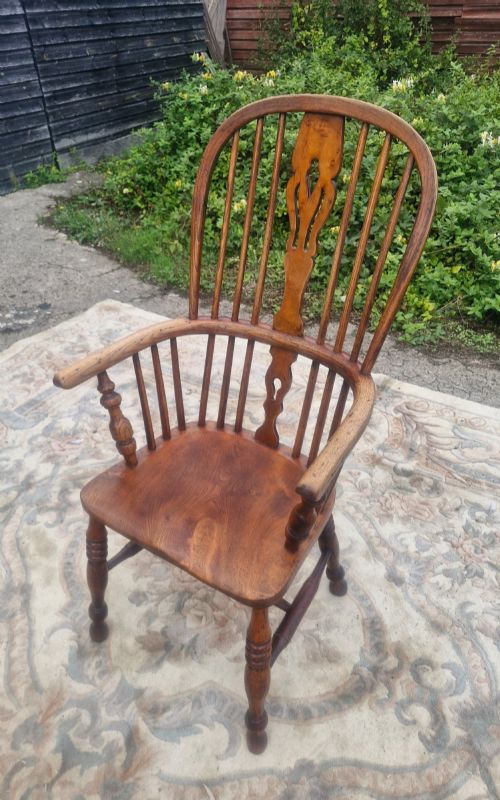
- A traditional wooden chair constructed with a solid contoured wooden seat into which the legs, back spindles, and bow are independently tenoned. These pieces often feature elm, ash, or yew timbers.
- Elbow chair
- An armchair featuring short or low arms designed to tuck neatly beneath a dining table or desk. This form was widely produced throughout the Georgian and Victorian eras.
- Splat
- The central vertical slat of wood within a chair backrest, frequently shaped, pierced, or carved in styles such as Chippendale or ladder-back. It provides lumbar support.
- Comb back
- A Windsor chair variation where the top rail resembles the spine of a comb, holding vertical spindles that extend upward from the arm bow.
Wooden Dining Armchair: Frequently Asked Questions
How do I match an armchair to single chairs?
Match armchairs to single chairs by observing the primary timber, period style, leg shape, and backrest design, such as matching a Chippendale splat or Regency reeding. Slight variations in height and arm design are common in assembled period dining sets.
Traditional dining suites often paired six or eight single chairs with two matching carver armchairs placed at the table ends. Focusing on wood species like mahogany or elm ensures visual continuity across the seating arrangement.
Were these armchairs used only for dining?
While designated as dining armchairs or carvers, these sturdy timber seats frequently served multiple domestic functions in drawing rooms, hallways, and studies. Their robust construction made them versatile additions throughout the home.
Many examples function equally well as desk armchairs, morning room seats, or fireside chairs depending on their height and upholstery style.
How do I care for antique wooden armchairs?
Maintain antique wooden frames by applying appropriate wax polish sparingly to nourish the timber and preserve the historic patina. Avoid placing chairs in direct sunlight or near heat sources to prevent timber shrinkage and splitting.
Inspect upholstered drop-in seats periodically to ensure internal webbing remains secure and fabric is protected from excessive wear.
How do I distinguish Georgian from Victorian chairs?
Georgian chairs generally display lighter proportions, finer hand-carved details, and native hardwoods like mahogany or yew produced during the eighteenth and early nineteenth centuries. They often feature restrained elegance and sophisticated joinery.
Victorian pieces tend to be heavier in scale, utilising deeper machine-assisted mouldings, bolder carved foliage, and occasionally richer upholstery schemes characteristic of the mid to late nineteenth century.