

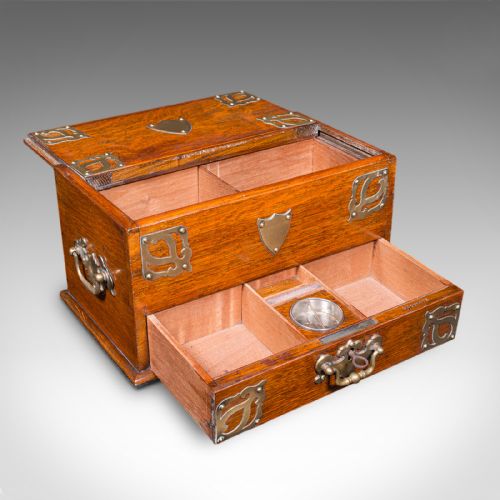


Wooden Desktop Caddy
These wooden desktop caddy examples bring order to desks through clever compartments and period craftsmanship.
Wooden Desktop Caddy
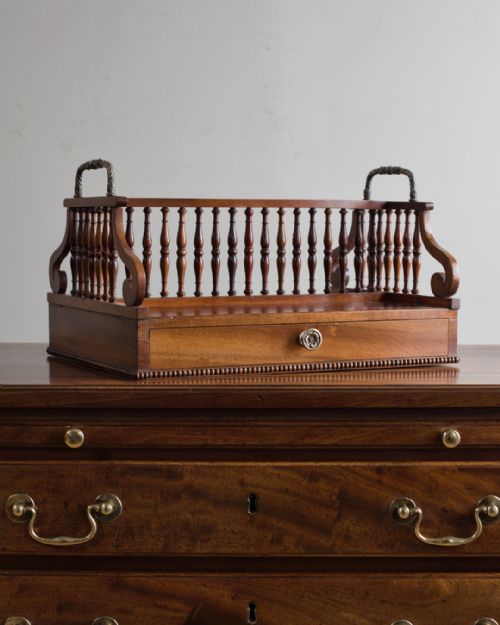
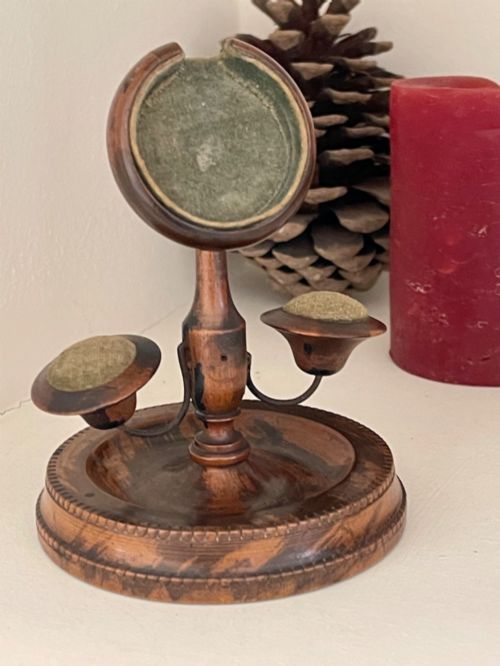
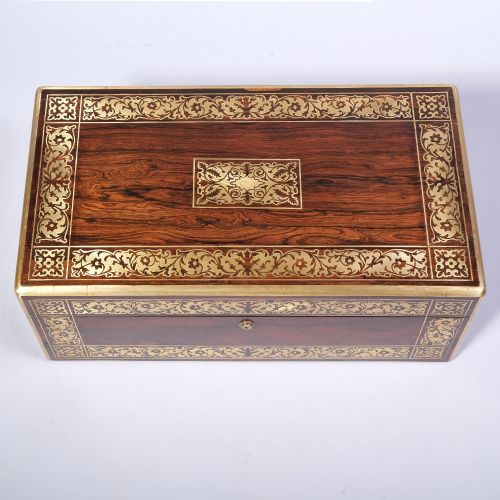
A wooden desktop caddy groups together functional containers and organisers designed to keep correspondence, writing equipment, and small personal items tidy on a desk or table. The selections found here span several centuries and styles, ranging from Georgian rosewood cabinets and Victorian stationery boxes to Edwardian smoker boxes and Art Deco book troughs.
How they were made
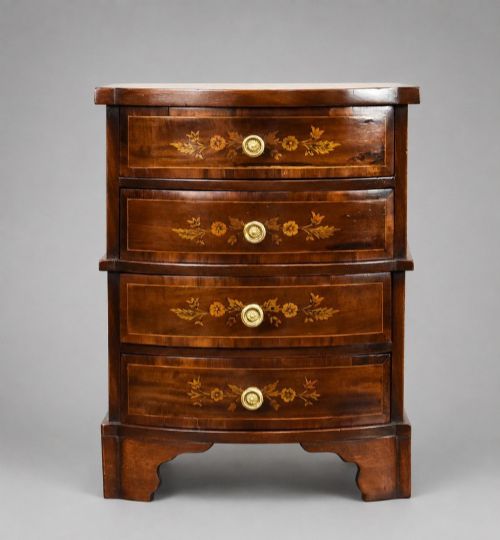
Cabinetmakers constructed these pieces using dense hardwoods such as mahogany, oak, rosewood, and walnut, often accentuating the surfaces with satinwood or pollard oak veneers. Structural decoration frequently incorporates brass mounts, hinges, and inlay, alongside delicate mother-of-pearl and bone detailing.
Internal layouts utilise turned wood compartments, glass inserts, and lined trays to hold inkwells, nibs, stamps, and letters securely. Selected examples feature marquetry patterns and domed top lids shaped from solid timber planks.
Wooden Desktop Caddy Retail Price Guide 2026
Typical asking prices for wooden desktop caddy among the pieces listed under this phrase on Sellingantiques today, from the lower quarter to the upper quarter. They describe what is for sale here now, not the wider market.
Current listings span the eighteenth, nineteenth, and early twentieth centuries, featuring oak, mahogany, rosewood, and satinwood.
What varies in quality
Superior execution shows in the precision of the joinery and the selection of figured timber veneers like burr walnut or grained mahogany. Better examples maintain crisp inlay work and retain functional internal partitions without modification.
Finer pieces demonstrate considered proportion and hardware integration, where brass handles, escutcheons, and hinges complement rather than overwhelm the primary wood. The handling of secondary timbers inside drawers and compartments also indicates the maker's attention to detail.
The Wooden Desktop Caddy Glossary
- Stationery box
- A desk accessory built to hold writing paper and envelopes upright within fitted interior dividers. These items often feature sloping lids or folding front panels.
- Marquetry
- The art of applying pieces of veneer to a structure to form decorative patterns and pictures. Craftsmen select contrasting woods to create pictorial depth.
- Escutcheon
- A flat plate surrounding a keyhole that protects the surrounding wood from wear. They are typically cast in brass.
- Treen
- Small handmade wooden domestic objects. The term encompasses turned and carved items intended for everyday utility.
Wooden Desktop Caddy: Frequently Asked Questions
What is a wooden desktop caddy used for?
These containers held letters, writing paper, stamps, and small desktop accessories in studies and offices. They kept loose papers organised before the widespread use of modern filing systems.
Today, they serve a similar desktop function or act as decorative storage for small collections and modern stationery items.
How do I date a wooden desktop caddy?
Dating relies on identifying the prevailing furniture styles, construction methods, and timber choices visible in the piece. Georgian and Regency pieces often showcase rosewood and inlay, while Victorian examples frequently use oak, walnut, or heavy brass mounts.
Later Edwardian and Art Deco iterations introduce streamlined shapes, simpler geometric inlays, and oak or mahogany bodies influenced by twentieth-century design shifts.
Are these pieces suitable for daily use?
Most items remain robust enough for holding modern correspondence, pens, and small desk accessories. The hinges, lids, and internal dividers function as originally intended.
Careful placement away from direct sunlight and heat sources protects the polished wood surfaces and delicate veneers from drying out.
What woods were commonly used?
Cabinetmakers selected durable hardwoods such as mahogany, oak, and walnut for the primary structural carcases. Decorative finishes frequently employed exotic veneers like rosewood, satinwood, and burr walnut.
Internal compartments sometimes incorporated secondary softwoods or turned elements to separate specific writing implements.