


Wooden Decorative Vessel
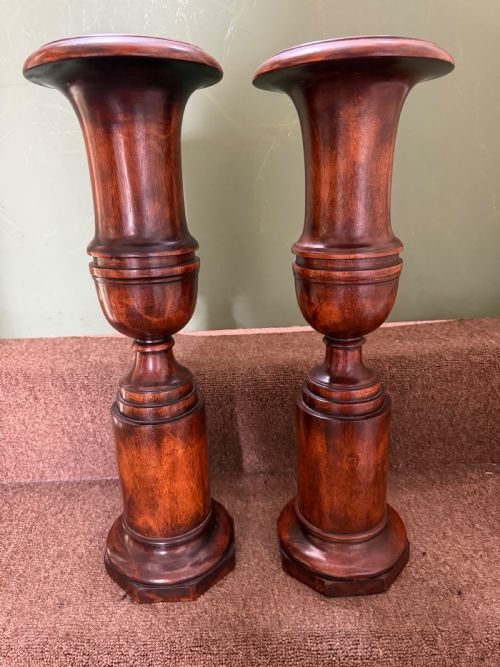
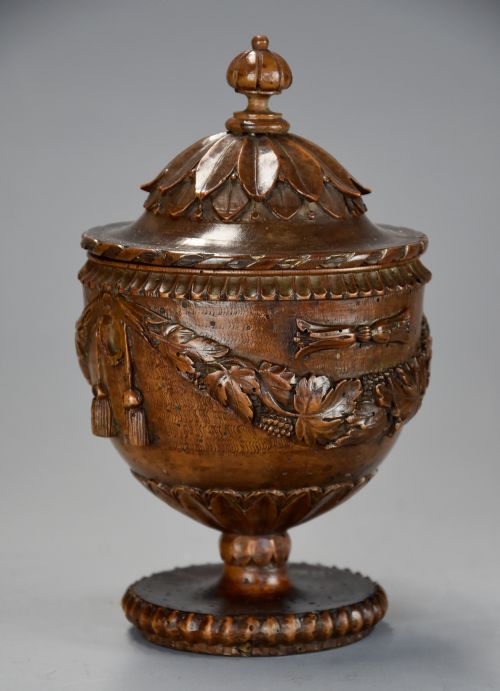
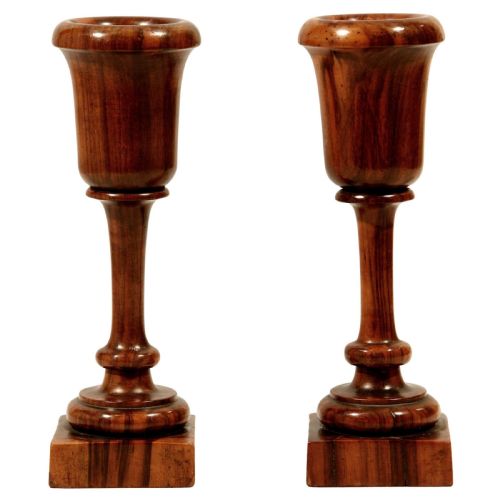
These wooden decorative vessel pieces bring tactile warmth to an interior through turned walnut, carved lignum vitae, and robust oak.
Wooden Decorative Vessel
A wooden decorative vessel encompasses turned urns, spill vases, bowls, and butter tubs created across the eighteenth, nineteenth, and early twentieth centuries. These objects range from neoclassical walnut pieces to rustic country butter tubs and primitive folk art forms.
Buyers encountering this group will most frequently find turned treen, spill vases, and utilitarian vessels adapted for display. These pieces demonstrate the enduring appeal of traditional woodworking traditions across Georgian, Victorian, and Arts and Crafts periods.
Materials and construction
Craftsmen utilised dense hardwoods including walnut, lignum vitae, oak, and yew wood, often turning them on a lathe to create balanced urns and vases. Some examples employ specimen wood construction or cooperative techniques with iron bands.
Carving and hollowing methods produced items such as dug out tree trunks and table snuff boxes, whilst surface finishing developed deep patinas over decades of handling and age.
Several vessels began life as humble butter tubs or dug out tree trunks before finding retirement on collector display shelves.
Judging quality in turned and carved treen
Quality rests in the crispness of the turning, the harmony of proportion, and the choice of timber. Finely carved neoclassical details and rich natural patinas elevate certain pieces above standard utilitarian items.
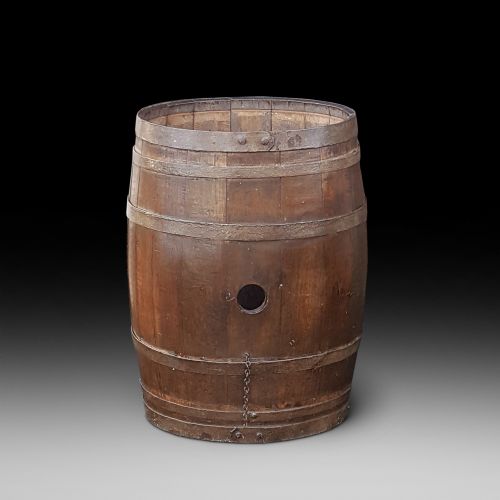
The integrity of the timber, whether a solid turned goblet or a coopered barrel, dictates the long term stability and visual presence of the object within a room.
The Wooden Decorative Vessel Glossary
- Treen
- Small handmade wooden objects for domestic and decorative use. This term embraces everything from spill vases to small bowls.
- Lignum Vitae
- An exceptionally dense and heavy hardwood known for its oily nature and dark grain. It was frequently used for turned nineteenth century vases and vessels.
- Coopered
- Constructed from wooden staves bound together with metal hoops, much like a traditional barrel or cask. This technique provided structural strength for larger containers.
- Spill Vase
- A tall slender container designed to hold thin wooden spills used for lighting candles and fires. They often take a turned urn or goblet form.
Wooden Decorative Vessel: Frequently Asked Questions
What is a wooden decorative vessel used for today?
These pieces serve primarily as decorative objects that add texture, history, and organic form to modern interiors. Collectors display them on mantelpieces, tables, and shelves to highlight their rich patinas and traditional craftsmanship.
Historically, many of these items held domestic utilities such as snuff, butter, or spills for lighting fires. Today, their functional origins are secondary to their sculptural qualities as antique treen and turned woodwork.
How do I care for antique wooden vessels?
Keep wooden vessels away from direct sunlight, radiators, and rapid changes in temperature to prevent the timber from splitting or warping. Dust them gently with a dry cloth.
Avoid applying modern polishes or oils unless specifically required, as natural patinas develop over generations through handling. Allowing the wood to breathe preserves its historic surface character.
How can I tell the period of a wooden vessel?
Dating relies on identifying the prevailing style, such as neoclassical urns from the eighteenth and nineteenth centuries or Arts and Crafts designs from around nineteen hundred. Tool marks, timber selection, and construction methods also offer clues to the era of manufacture.
For instance, coopered barrels with iron bands and dug out tree trunks often point towards nineteenth or early twentieth-century vernacular traditions. Examining the depth of the patina helps confirm the age of the piece.
What is treen?
Treen refers to small, functional wooden domestic and decorative items made by hand before the widespread industrialisation of household goods. It includes items like bowls, spoons, snuff boxes, and spill vases.
These objects were shaped by turners and woodworkers using regional hardwoods like oak, walnut, and boxwood. Their modest utility combined with skilled craftsmanship makes them highly collectable today.