



Wooden Cylinder Bureau
These wooden cylinder bureau pieces provide concealed writing surfaces beneath curved covers, prized for their mechanics and fine cabinet timber.
Wooden Cylinder Bureau
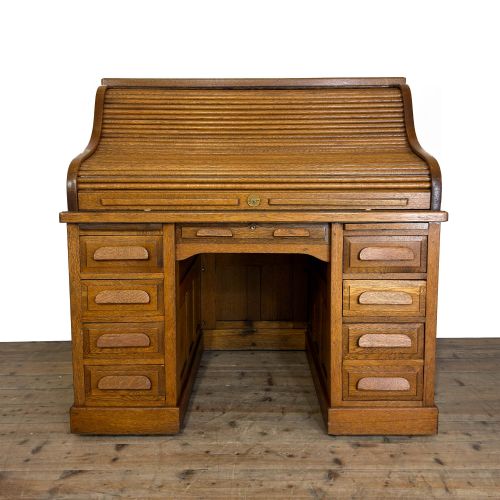
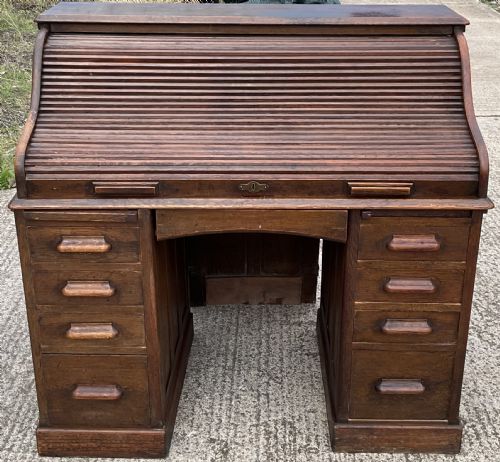
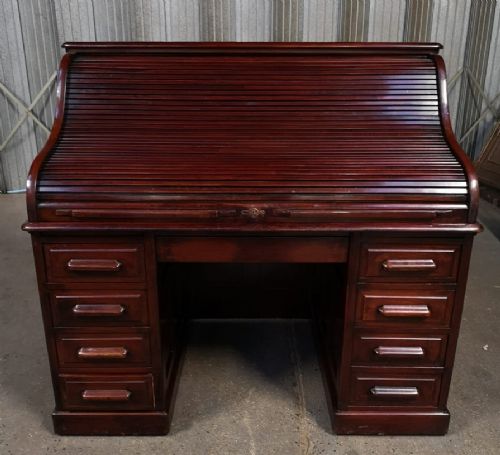
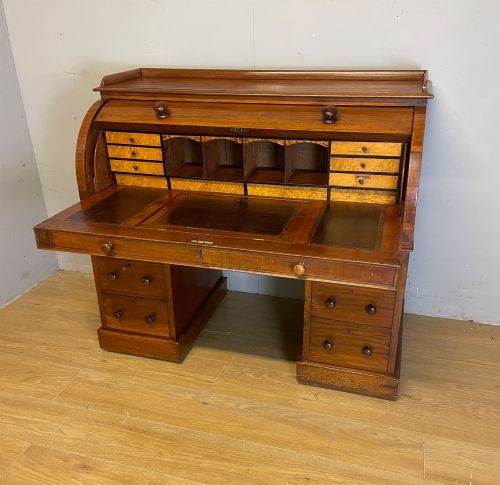
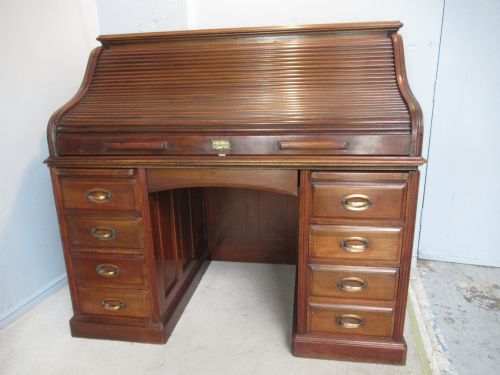
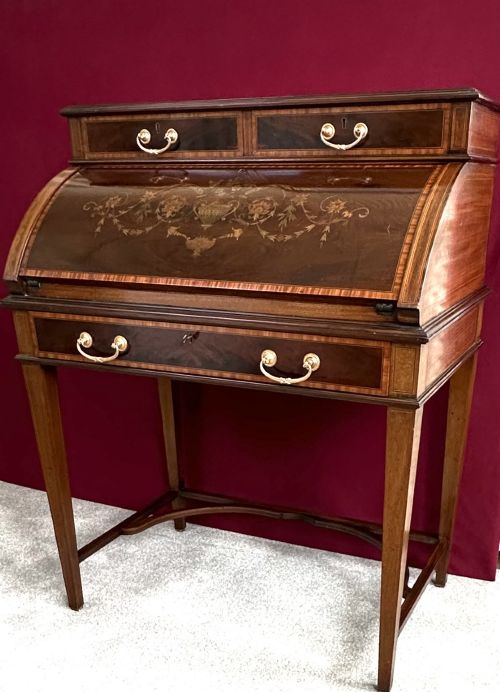
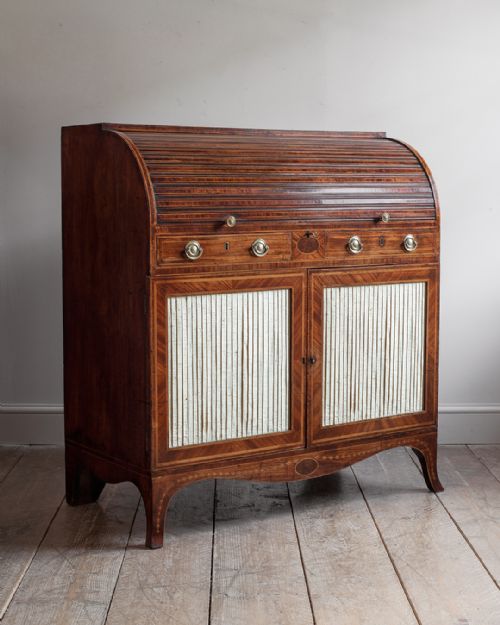
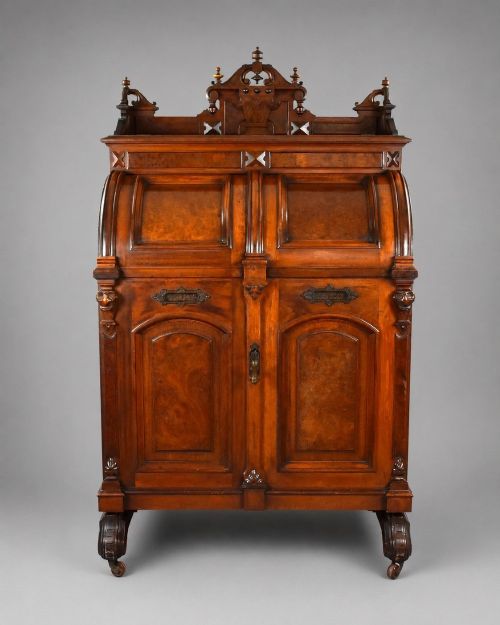
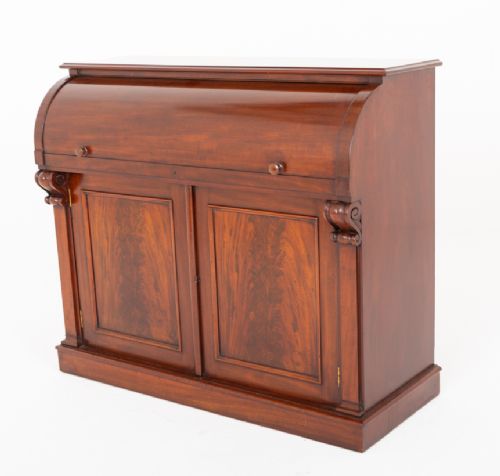
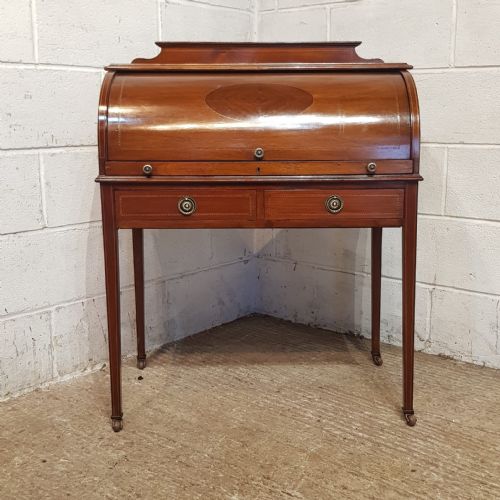
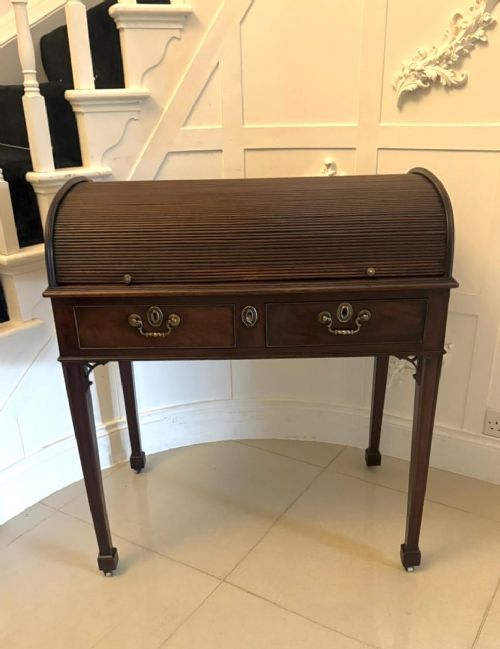
A wooden cylinder bureau combines a traditional desk with a curved roll, tambour, or barrel enclosure that conceals the writing surface and interior compartments when closed. Buyers seek these items for their clever mechanical action and the neatness they bring to a study.
The selections span Georgian, Victorian, and Edwardian eras, alongside stylistic revivals and international pieces such as Japanese Yosegi and Dutch marquetry. Mahogany, oak, and walnut dominate the offerings, occasionally enhanced by satinwood, maple, or burr walnut veneers.
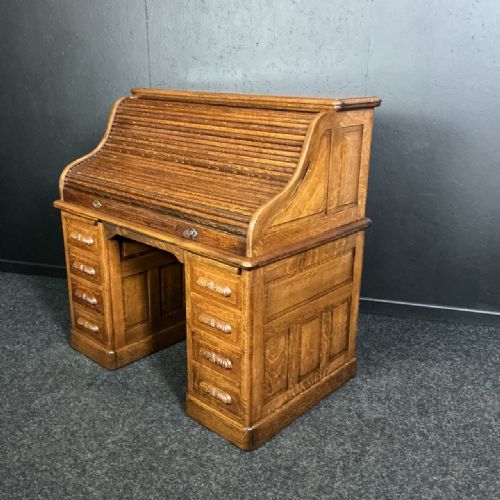
Forms range from compact household desks to large twin pedestal cylinder desks and tall bureau cabinets featuring glazed bookcases. Most examples adhere to classic British aesthetic traditions, though continental and revival interpretations appear regularly.
How they were made
Cabinet makers constructed these desks using solid timbers like oak and mahogany, alongside decorative veneers including walnut, satinwood, and maple. The curved cylinder or tambour fronts required precise joinery to ensure the slats or solid panels glided smoothly within their tracks.
Secondary details involved brass fittings for handles and locks, interior glass doors on taller cabinet versions, and intricate marquetry or inlay work. The internal compartments typically incorporated small drawers, pigeonholes, and pull-out writing slides lined with leather or fabric.
Wooden Cylinder Bureau Retail Price Guide 2026
Typical asking prices for wooden cylinder bureau among the pieces listed under this phrase on Sellingantiques today, from the lower quarter to the upper quarter. They describe what is for sale here now, not the wider market.
Some desks hide tiny secret compartments behind dummy drawers, waiting for future finders.
What varies in quality
Quality rests upon the precision of the cylinder mechanism and the stability of the timber over time. Superior pieces exhibit smooth action in the roll-top or tambour tracks without binding or sagging.
The choice of materials and depth of cabinetwork distinguish standard utilitarian desks from exhibition pieces. Finer iterations showcase matched veneers, intricate brass hardware, and well-organized internal pigeonholes constructed with traditional dovetail joints.
Wiggers
The Wooden Cylinder Bureau Glossary
- Cylinder desk
- A writing desk featuring a quarter-circle or half-cylinder wooden cover that rolls back to reveal the writing surface and internal fittings.
- Tambour
- A flexible shutter made of narrow vertical strips of wood glued to a canvas backing, allowing it to slide around a curved track.
- Pedestal desk
- A heavy freestanding desk supported by two pedestals of drawers or cupboards beneath the main writing surface.
- Marquetry
- Decorative patterns formed by the insertion of different woods, veneers, or shell into a solid wood matrix.
- George III
- The stylistic period spanning the long reign of the British monarch from seventeen sixty to eighteen twenty, noted for refined proportions and classical restraint.
Wooden Cylinder Bureau: Frequently Asked Questions
How do cylinder desks work?
The curved wooden shutter slides along a recessed groove to cover the writing surface and pigeonholes. Pulling the writing slide forward often retracts the cylinder automatically in certain mechanical designs.
This system kept confidential correspondence secure and out of sight when not in use without requiring separate locks for every internal drawer.
What is the difference between a roll top and a cylinder desk?
A cylinder desk typically uses a solid curved wooden panel that moves in a smooth arc. A roll top desk utilises a tambour shutter made of many small slats.
Both forms achieve the same purpose of concealing the desk interior, but the solid cylinder represents a more traditional cabinet-making challenge.
How should I care for a wooden bureau?
Keep the desk away from direct heat sources and strong sunlight to prevent the timber veneers from drying out or cracking. Regular dusting with a dry cloth and occasional application of appropriate furniture wax maintains the finish.
Avoid excess moisture on the writing surfaces, particularly where leather or fabric inserts are present.
How do I identify the period of a bureau?
Examine the timber selection, construction methods inside the small drawers, and the overall design style. Georgian and Regency pieces show different proportions and cabinet techniques compared to later Victorian and Edwardian examples.
Hardware styles and secondary woods inside the drawers also offer reliable clues to the decade of manufacture.