

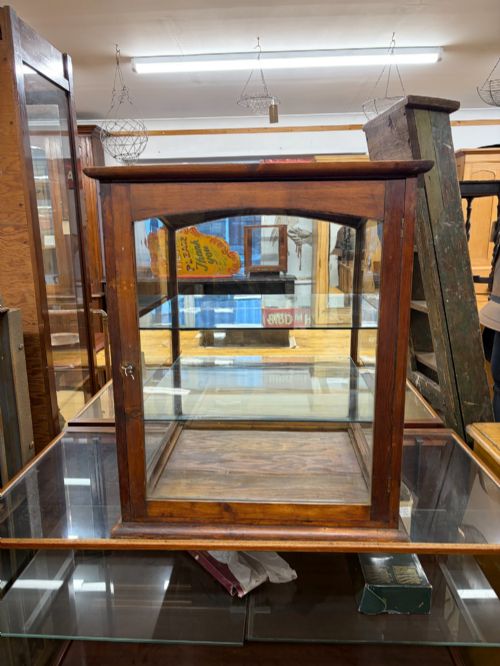






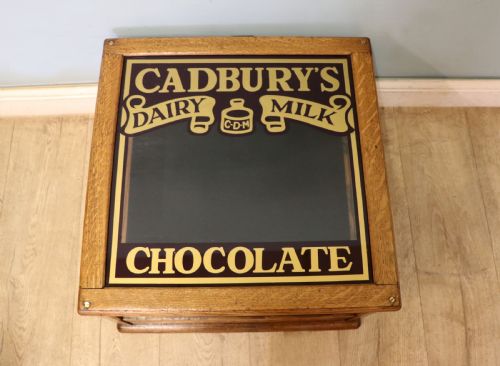


Wooden Counter Display Cabinet
These wooden counter display cabinet examples bring tangible retail history into a room, offering glazed protection for small collections.
Wooden Counter Display Cabinet
A wooden counter display cabinet stands on a shop counter or table, designed to place merchandise directly in front of the customer. The pieces seen here span Victorian, Edwardian, and Art Deco periods, alongside commercial and early twentieth-century designs.
The form encompasses specialised shop display cabinets, haberdashery cases, advertising dispensers, and apothecary boxes. Versions range from compact mahogany display cases to larger brass-framed display counters and specialised tabletop display cabinets.
Commercial heritage runs deep through these items, often bearing advertising for chocolate, soap, sewing cottons, and pencils. A wooden counter display cabinet frequently retains original branding or signage relating to its commercial past.
How they were made
Construction relies on timber framing, primarily utilising mahogany, oak, cedar, and polished wood. Glass panels form the viewing areas, allowing goods to remain visible while protected.
Metal elements such as brass framing provide structural support and decorative trim. Paper and felt frequently line the interior bases, serving as a backdrop for the items displayed.
Wooden Counter Display Cabinet Retail Price Guide 2026
Typical asking prices for wooden counter display cabinet among the pieces listed under this phrase on Sellingantiques today, from the lower quarter to the upper quarter. They describe what is for sale here now, not the wider market.
Listings feature woods including mahogany, oak, cedar, and general polished wood, alongside glass, brass, paper, and felt.
What varies in quality
The caliber of a wooden counter display cabinet rests on the choice of timber and the sophistication of its joinery. Finer examples display carefully selected mahogany or oak grain paired with robust brass hardware.
Saml Elliott And Sons
The Wooden Counter Display Cabinet Glossary
- Haberdashery cabinet
- A compartmentalized storage and display unit originally used for sewing supplies and small drapery goods. These often feature multiple shallow drawers with glass fronts.
- Countertop display
- A showcase scaled specifically to sit upon a retail counter rather than stand independently on the floor. It maximises eye-level engagement with shoppers.
- Dispensing cabinet
- A specialised enclosure incorporating a mechanical or gravity-fed mechanism to distribute products like soap or chocolate. They combine storage with direct point-of-sale utility.
- Apothecary box
- A lidded or glazed container designed for medicines, chemicals, or medical instruments. They frequently utilise fine hardwoods and internal partitions.
- Brass-framed
- Construction style utilising metal extrusions or sheets to hold glass panels securely in place. This method provides structural rigidity while minimising the visual weight of the frame.
Wooden Counter Display Cabinet: Frequently Asked Questions
What were wooden counter display cabinets used for?
Merchants used these glazed enclosures on shop counters to showcase small goods while protecting them from dust and handling. Items ranged from sewing cottons and chocolate to soap and writing materials.
By placing merchandise at eye level directly before the customer, retailers encouraged impulse purchases. The glass protection kept valuable or delicate stock secure while maintaining full visibility.
How do I date a wooden counter display cabinet?
Dating relies upon stylistic markers such as Victorian mahogany framing, Edwardian proportions, or Art Deco geometric lines. Commercial branding and advertising typography also point toward specific decades.
Timber choice and construction techniques further indicate age, with older pieces displaying traditional hand-cut joinery. Sign-written advertisements often reflect the active commercial lifespan of the item.
Where should I place a display cabinet at home?
These cabinets suit tabletops, sideboards, or desks where their glazed sides can catch ambient light. They function well in studies, living rooms, or hallways to exhibit small collections.
Placing a cabinet away from direct sunlight protects both the timber finish and any paper or fabric elements inside. Their modest countertop footprint allows them to fit easily onto existing furniture.
Can I use these cabinets for modern collections?
The interior space and glass panels make these cabinets ideal for housing small modern collectibles, pocket watches, or curiosities. Felt or paper linings cushion the items securely.
Using an antique shop showcase in a contemporary interior highlights the contrast between old utility and modern display. The glass provides dust-free protection for fragile objects.