




Wooden Corner Washstand
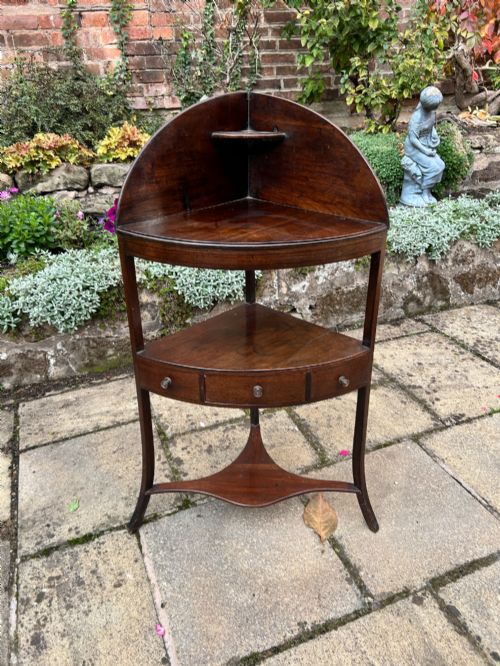
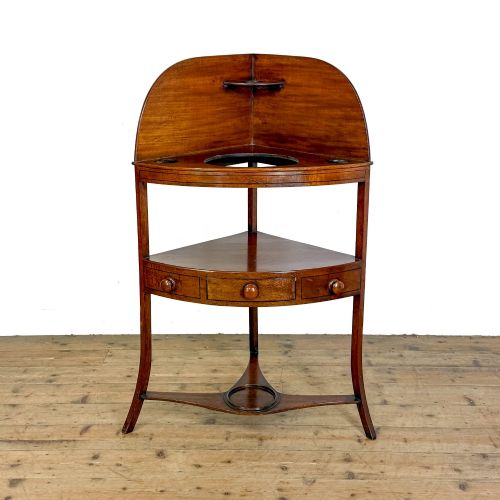
These wooden corner washstands are practical Georgian and Regency pieces designed to fit neatly into a room, offering both a surface and storage for daily grooming.
Wooden Corner Washstand
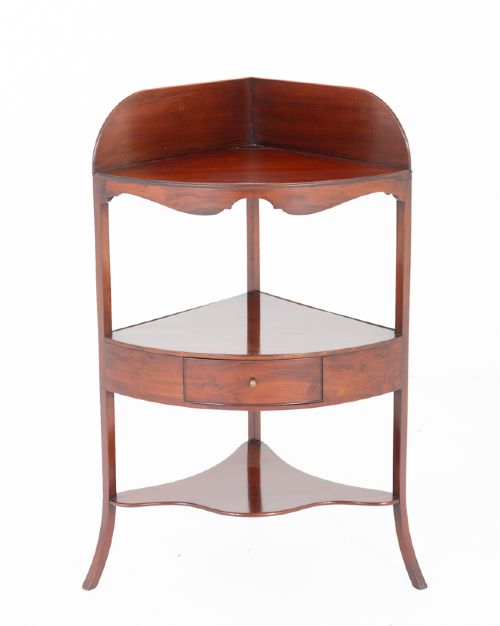
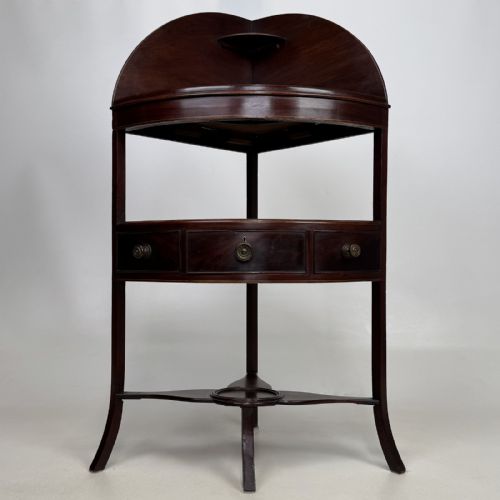
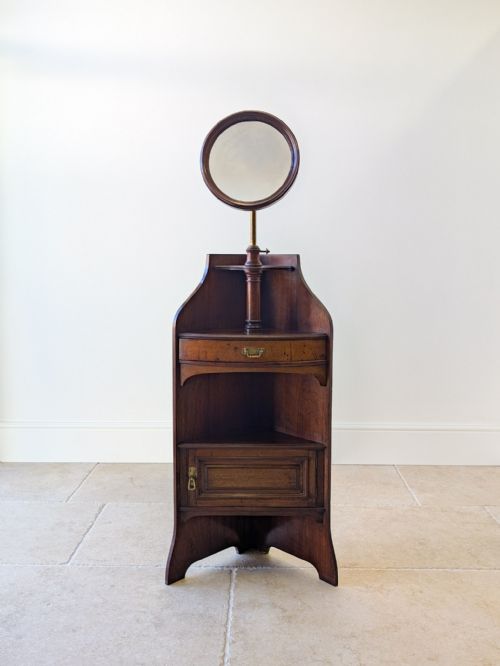
A wooden corner washstand is a clever space-saving furniture form designed during the Georgian and Regency periods to sit snugly into the corner of a room. Most examples found here take the form of corner stands, basin stands, and occasionally wig stands or shaving stands dating from the eighteenth and nineteenth centuries.
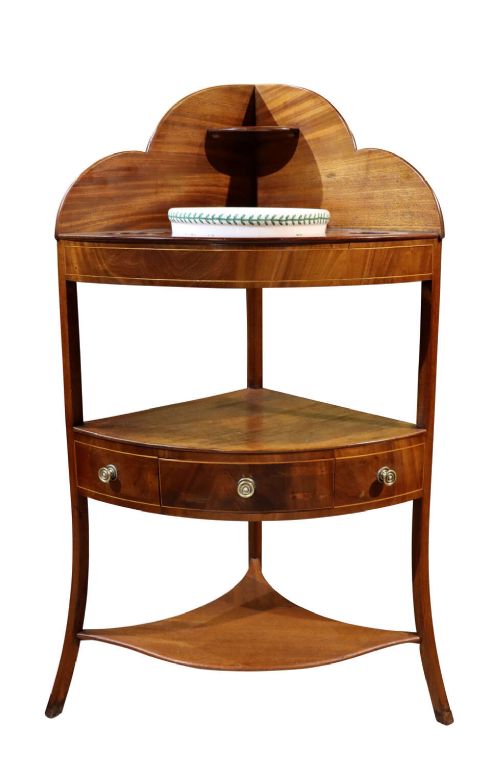
The versions you are most likely to meet on this page are mahogany corner washstands featuring raised galleries to protect the walls from splashes. These functional antiques often present themselves as occasional lamp or plant tables in modern homes, adapting their original purpose to new uses.
Makers of these items focused on clever triangular construction that utilised awkward spaces efficiently. The surviving pieces show a clear lineage from the eighteenth century through to eighteen hundred and the Regency era, maintaining their characteristic corner footprint.
Materials and construction methods
Cabinet makers relied heavily on mahogany as the primary timber for these corner washstands, often selecting richly grained boards for the visible surfaces. This sturdy wood provided the structural integrity needed for supporting heavy basins and daily use.
Detailing was achieved through contrasting boxwood inlay, adding subtle linear decoration to the mahogany frames. Brass fittings and glass elements appear as functional or decorative components, completing the construction of these utilitarian items.
Wooden Corner Washstand Retail Price Guide 2026
Typical asking prices for wooden corner washstand among the pieces listed under this phrase on Sellingantiques today, from the lower quarter to the upper quarter. They describe what is for sale here now, not the wider market.
Several of these washing stands have quietly retired from splashing duties to spend their dotage holding potted ferns and reading lamps.
Factors that separate the finest examples
Quality in a wooden corner washstand rests on the crispness of the carpentry and the selection of the mahogany timber. Superior pieces display refined boxwood inlay and well-preserved raised galleries that have not been trimmed down over the years.
The presence of original brass hardware and untouched drawer linings elevates an example above ordinary utility versions. Better workshop standards are evident in the tight joinery of the triangular framework and the balanced proportions of the stand.
The Wooden Corner Washstand Glossary
- Raised gallery
- A low wooden upstand fixed around the top edges of the washstand to prevent water or items from sliding off the back. It protects the wall surface from splashes during washing.
- Boxwood inlay
- A contrasting pale hardwood inserted into recesses cut into the darker mahogany surface. This technique creates delicate geometric borders and lines.
- Basin stand
- A specialised form of furniture designed specifically to hold a wash bowl and water jug. Many corner washstands fall into this functional category.
- Wig stand
- A smaller pedestal or stand featuring a shaped top designed to support a gentleman's powdered wig. These items share the compact proportions seen in corner washstands.
- Regency
- An English design period spanning the early nineteenth century. Furniture from this era often incorporates clean architectural lines and classical restraint.
Wooden Corner Washstand: Frequently Asked Questions
What is a wooden corner washstand?
A wooden corner washstand is a triangular antique table designed to fit into the corner of a room for personal grooming. They typically feature raised galleries and cut-outs for basins.
Most examples date from the Georgian and Regency periods, constructed in mahogany with occasional boxwood inlay.
How were these stands used originally?
These pieces served as personal washing stations in bedrooms before plumbed bathrooms became common. The top tier held a ceramic basin and pitcher, while lower shelves accommodated soap and water.
Some variations included small drawers or enclosed cupboards beneath the basin ring to store shaving gear and grooming accessories.
How can I use one in a modern home?
Their triangular footprint allows these stands to occupy empty room corners without blocking walking paths. They make excellent lamp tables, plant stands, or corner display surfaces.
The enclosed lower sections also provide practical storage in hallways, living rooms, or bedrooms.
How do I distinguish Georgian from Regency stands?
Georgian stands generally exhibit classic eighteenth-century proportions with restrained carving or simple boxwood stringing. They reflect the dominant aesthetic of the George III era.
Regency examples tend to show slightly heavier classical influences from around eighteen hundred onwards, occasionally featuring bolder grain patterns in the mahogany.