

Wooden Commode Cupboard
A wooden commode cupboard is a functional bedroom or bedside storage piece designed to conceal chamber pots or personal items behind closed doors.
Wooden Commode Cupboard
A wooden commode cupboard brings compact enclosed storage to a bedroom, taking the form of a bedside table, nightstand or small cabinet. When searching for a wooden commode cupboard, buyers encounter pieces spanning the eighteenth and nineteenth centuries, alongside revival styles from the early twentieth century.
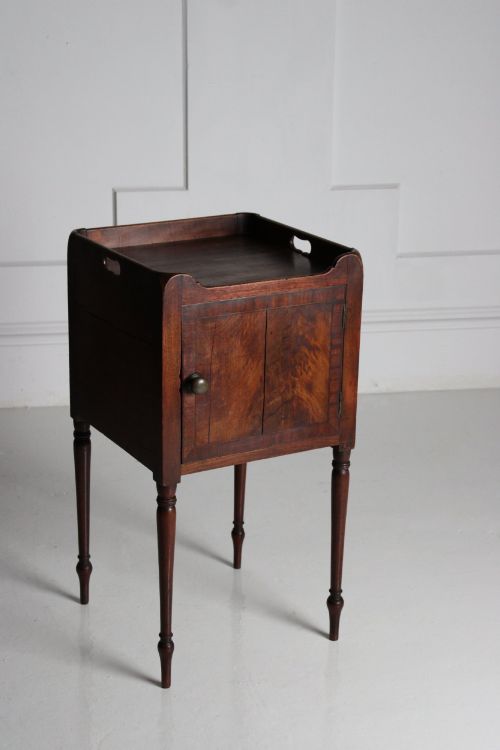
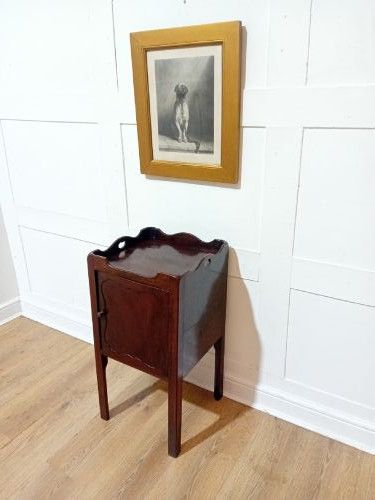
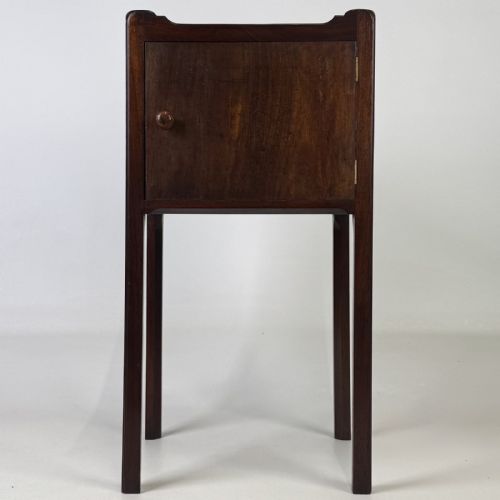
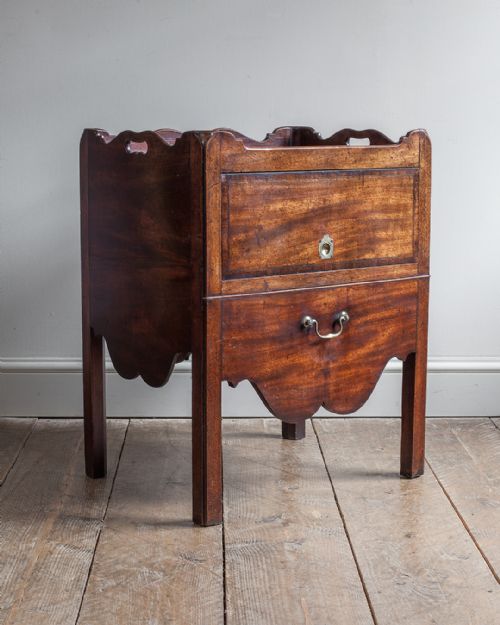
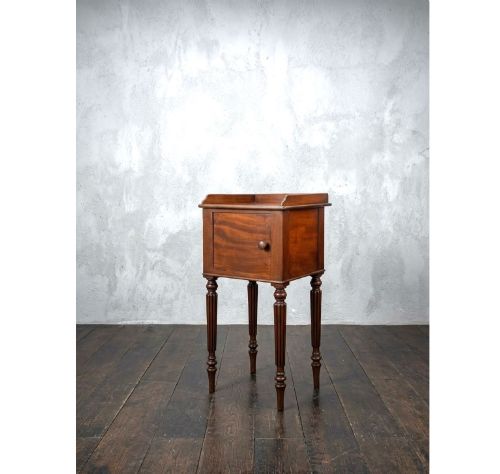
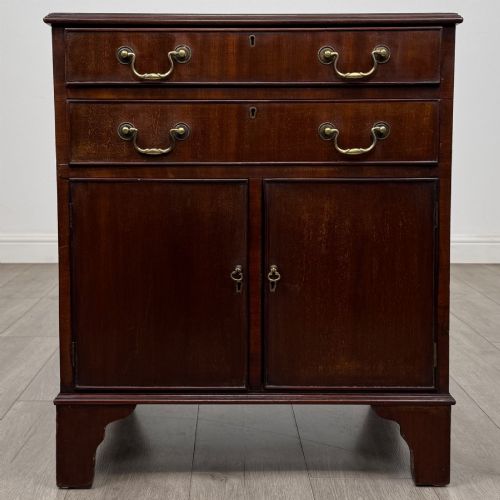
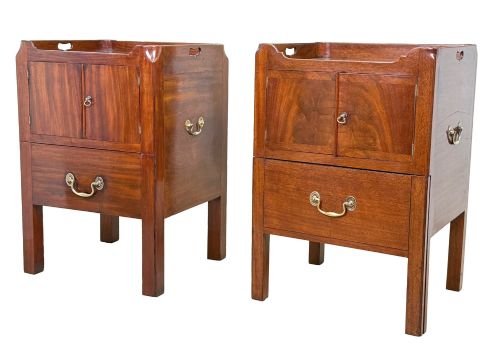
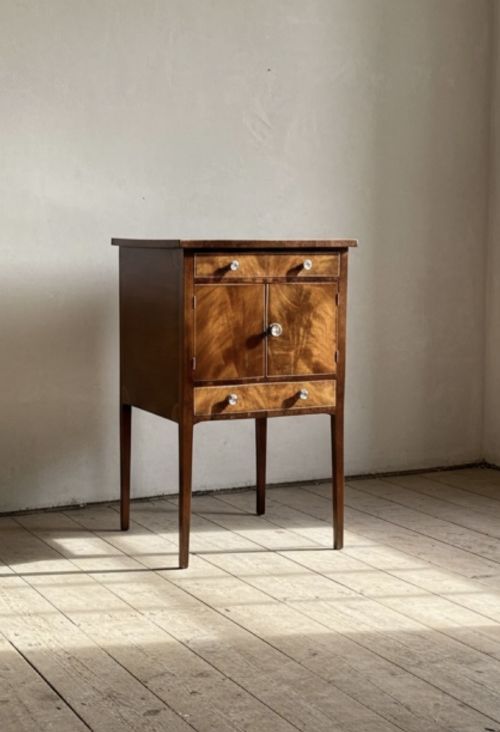
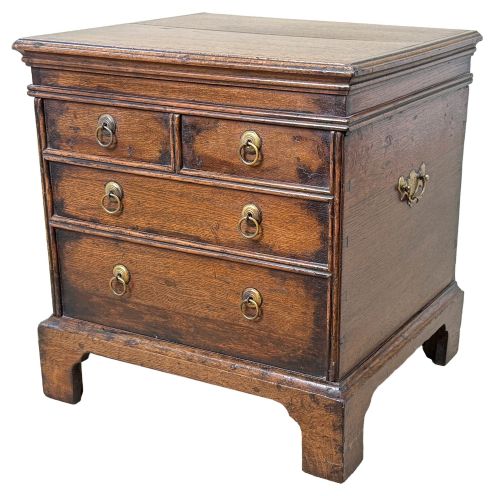
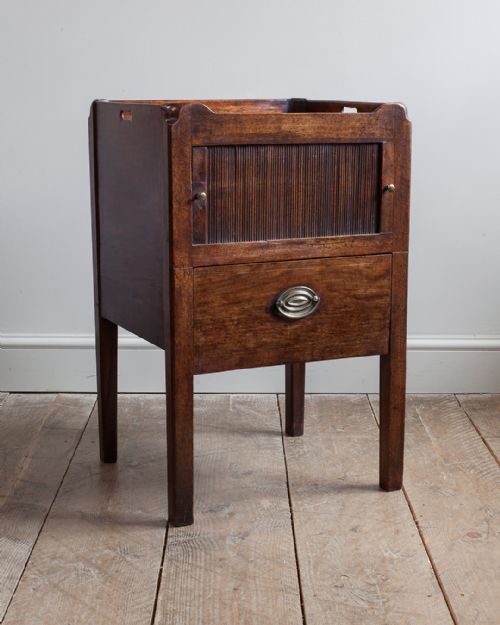
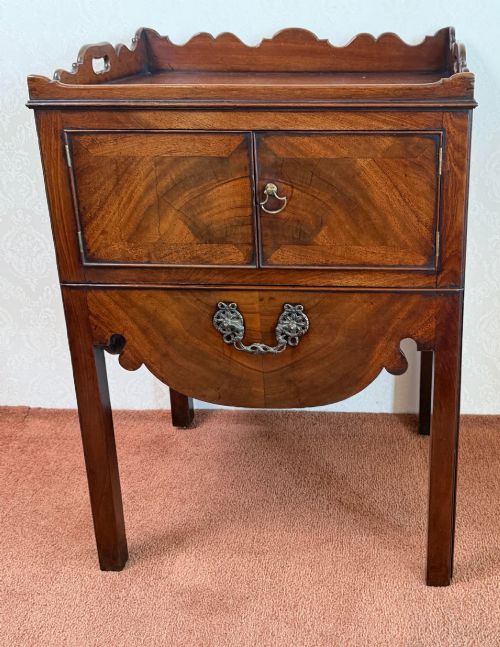
Georgian and Victorian examples dominate the selection, appearing frequently in mahogany, walnut and oak. These range from simple tray-top bedside tables to cylindrical cupboards, side cabinets and pieces featuring faux drawers.
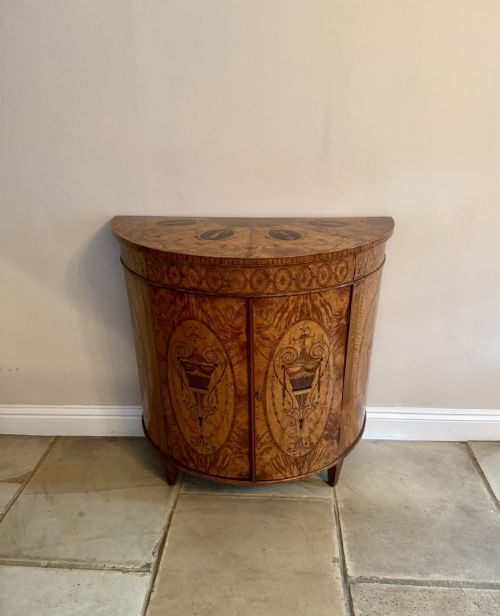
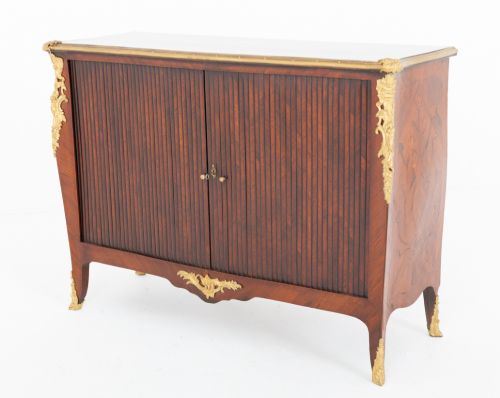
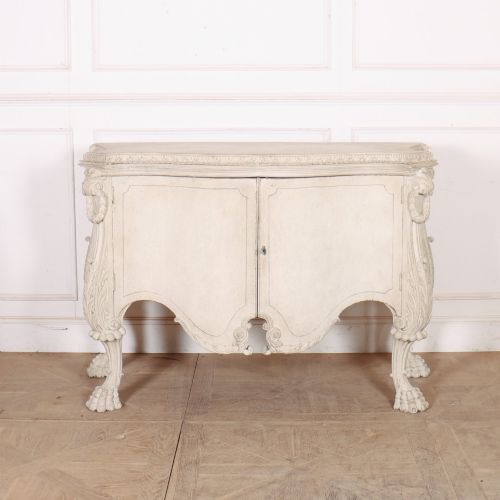
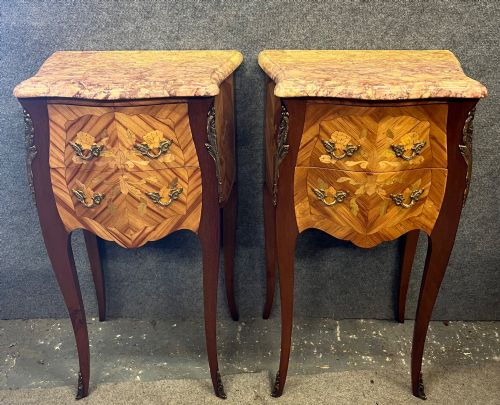
Regional variations and revival pieces introduce satinwood, kingwood, marble tops and marquetry inlay into the selection. Buyers find both single cabinets and matched pairs suitable for bedside use.
Materials and construction
Cabinetmakers constructed these cupboards primarily in timber, relying heavily on mahogany, walnut and oak as the foundational structural woods. Finer examples utilise decorative veneers, crossbanding and marquetry inlay of satinwood and kingwood to enhance the surface appearance.
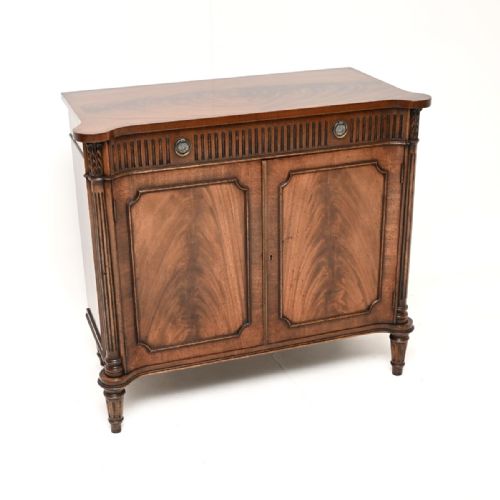
Hardware details such as brass handles and fixtures complement the woodwork, while specific variants incorporate fitted marble tops. Construction methods encompass bracket feet, tray tops, cylindrical bodies and serpentine fronts.
Wooden Commode Cupboard Retail Price Guide 2026
Typical asking prices for wooden commode cupboard among the pieces listed under this phrase on Sellingantiques today, from the lower quarter to the upper quarter. They describe what is for sale here now, not the wider market.
Listings feature timber choices spanning mahogany, walnut, oak, satinwood and kingwood, paired with marble and brass elements.
Judging quality
Quality rests upon the selection of timber, the precision of the cabinetmaker's joinery and the integrity of decorative elements like crossbanding and marquetry. Superior pieces exhibit well-figured grain, such as flame mahogany or figured walnut, integrated harmoniously into the overall form.
Gillows
The Wooden Commode Cupboard Glossary
- Commode cupboard
- A low cabinet or chest designed originally to house a chamber pot, later evolving into general bedside storage. These pieces typically feature a cupboard door enclosing a shelf or compartment.
- Tray top
- A tabletop finished with a raised rim or gallery around the edges to prevent items from rolling off. This feature is particularly common on eighteenth-century bedside tables.
- Cylindrical cupboard
- A cabinet built with a rounded, circular body enclosing storage space behind a curved door. This form appears in Regency and Victorian designs.
- Crossbanding
- A decorative border technique where strips of veneer are laid perpendicular to the grain of the central panel. It frames the surfaces of drawers and cabinet doors.
- Marquetry
- The art of creating decorative patterns by fitting together small pieces of tinted wood, shell or ivory veneer. It appears on revival and continental pieces in the selection.
Wooden Commode Cupboard: Frequently Asked Questions
What is a wooden commode cupboard?
A wooden commode cupboard is a small enclosed storage unit historically used beside a bed to house a chamber pot or wash basin.
Today, these pieces serve as bedside tables, nightstands or small side cabinets for modern living spaces.
How do I date a wooden commode cupboard?
Dating relies on examining the primary timber, construction methods, hardware and stylistic cues such as serpentine fronts or bracket feet.
Georgian and Victorian periods show distinct shifts in proportions and decorative veneers like flame mahogany or satinwood.
Where were these cupboards placed?
These cupboards were designed primarily for the bedroom, functioning as bedside nightstands or private washstand enclosures.
Their compact dimensions allow them to fit easily into smaller rooms as lamp tables or side storage.
What woods were used?
Cabinetmakers utilised sturdy hardwoods including mahogany, walnut and oak for the primary carcase and structural elements of the cupboards.
Finer decorative surfaces frequently incorporate satinwood, kingwood and marquetry veneers alongside brass hardware and marble tops.