


Wooden Coffee Table Tray
A wooden coffee table tray brings portable service together with a low surface, spanning British folding stands and inlaid Eastern designs.
Wooden Coffee Table Tray
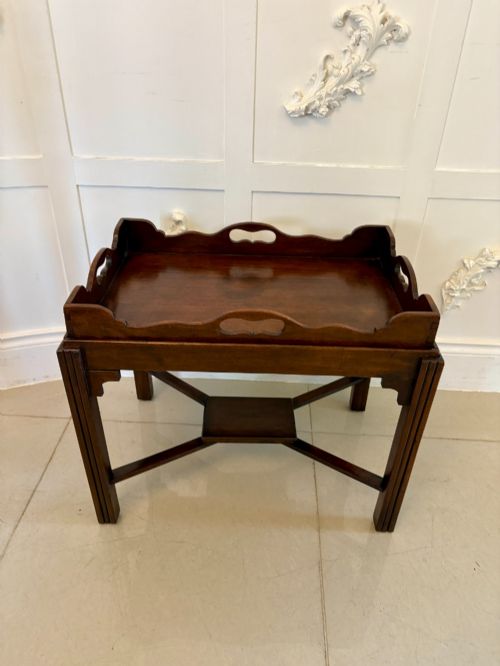
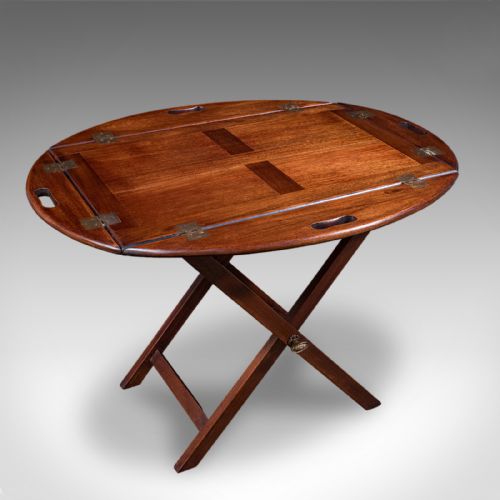
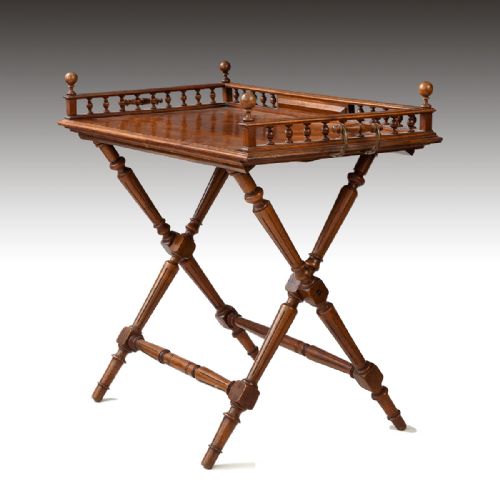
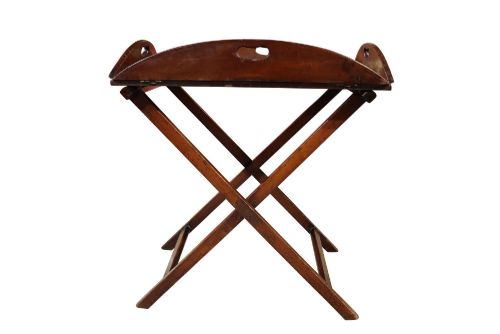
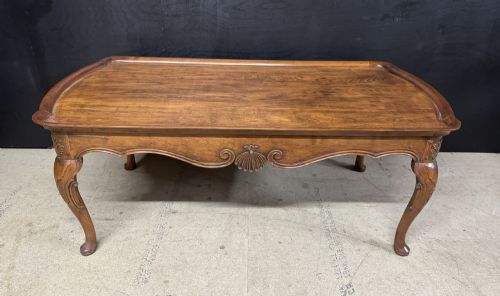
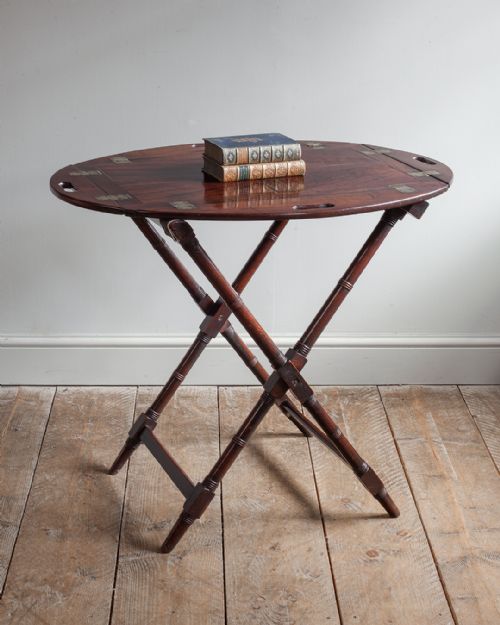
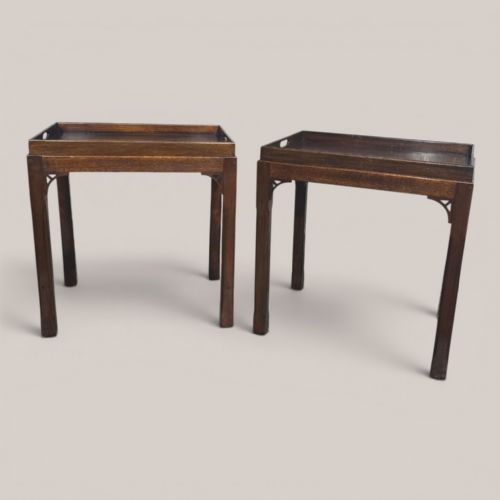
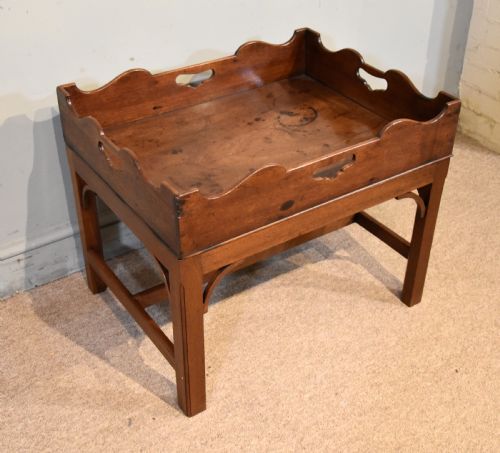
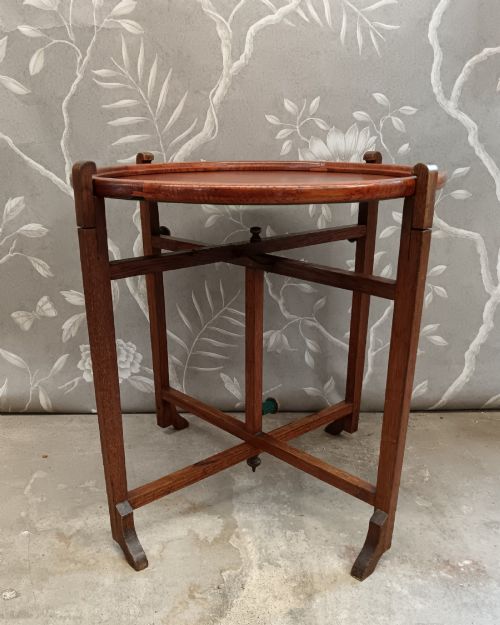
A wooden coffee table tray combines a removable serving surface with a dedicated support, appearing as a tray top table or a traditional butler's tray resting upon a folding stand. These pieces emerge across periods from the 18th century through the Edwardian era and the 1930s, reflecting shifts in domestic hospitality.
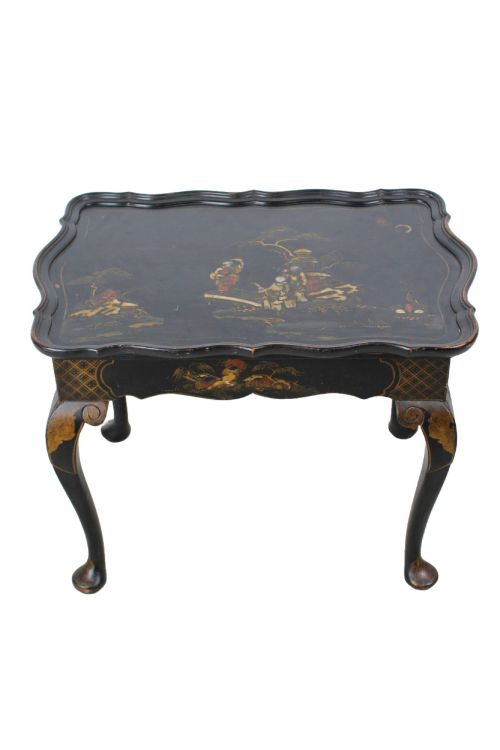
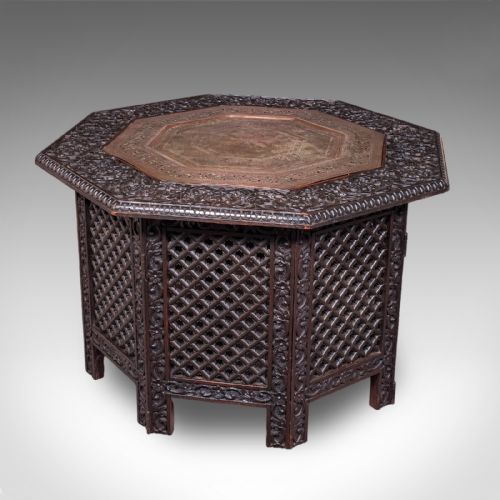
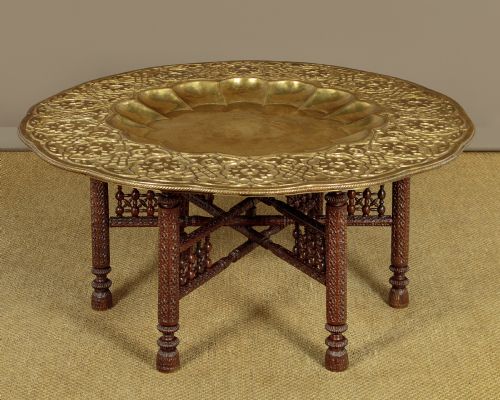
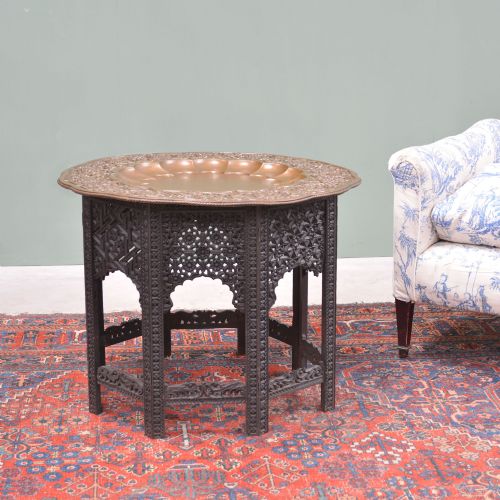
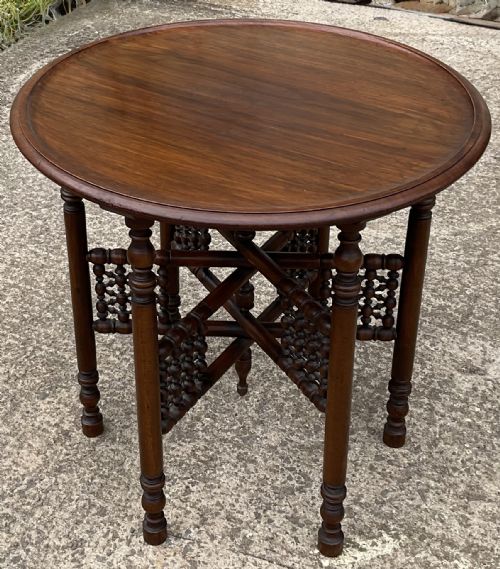
The most frequent variants on this page are mahogany or walnut butler's trays on X-frame stands alongside Anglo-Indian and Persian brass-inlaid hardwood folding tables. Buyers also encounter occasional tables, side tables, and simple galleried trays adapted for modern coffee table use.
Origins stretch from English workshops utilising native timbers to international centres producing intricate marquetry, carved surfaces, and copper insets. Each piece balances the practical utility of a serving tray with the stable proportions of a low table.
Materials and technique
Cabinetmakers constructed the English framework using dense hardwoods such as mahogany, walnut, oak, and teak, often employing drop-flap hinges and raised gallery edges to secure items during transport. Stands were typically built as folding or fixed supports tailored to the dimensions of the specific tray.
Eastern examples relied on richly grained hardwoods like teak and regional alternatives, ornamented with intricate hand-carving or detailed brass and copper insets. Artisans hammered and etched metal sheets to create elaborate floral or geometric panels fitted flush into the wooden tops.
Listings feature traditional mahogany and walnut alongside exotic hardwoods like teak, paired with brass and copper insets.
Craftsmanship and condition
Quality rests upon the crispness of the timber joinery, the integrity of the hinged drop-flaps, and the retention of original stands rather than later replacements. Finer examples display select wood veneers, precise marquetry, or deep, hand-chased metal insets rather than superficial surface decoration.
Proportion and stability separate standard utility items from superior decorative works. A well-balanced stand that securely locks or supports the tray without wobble indicates careful historical construction.
The Wooden Coffee Table Tray Glossary
- Butler's tray
- A portable rectangular tray with hinged or fixed sides designed for carrying service items, usually mounted on a folding wooden stand.
- Gallery
- A raised wooden border running around the perimeter of a tray top to prevent objects from sliding off during movement.
- Drop-flap
- A hinged section on the side of a tray that lowers for serving or lifts to create a larger surface area.
- Anglo-Indian
- A descriptive term for furniture made in India during the British period, combining local carving traditions with European forms.
- Marquetry
- Decorative patterns formed by fitting together thin veneers of different coloured woods into a wooden surface.
Wooden Coffee Table Tray: Frequently Asked Questions
What is a butler's tray table?
A butler's tray table consists of a removable wooden tray resting upon a folding or fixed stand, historically used in large houses for serving food and drinks.
The design allowed servants to carry the tray directly from the kitchens to the entertaining rooms before mounting it onto the support frame.
How do I care for antique wood and metal?
Maintain the timber surfaces with traditional beeswax and a soft cloth, avoiding excessive moisture or direct heat sources that can warp older woods.
For copper or brass insets, clean gently with a dry microfiber cloth to preserve the natural patina accumulated over the decades.
Are the trays removable from the stands?
Most traditional butler's trays lift straight off their folding stands, allowing the support to fold flat for compact storage when not in use.
Some decorative or inlaid variants feature fixed tops where the tray and the base are constructed as a single cohesive table.
How do I date a wooden tray table?
Dating relies on timber selection, structural fixings, and stylistic markers such as Georgian proportions or Edwardian Chinoiserie painting.
Hand-cut dovetails, original brass hinges, and the specific wear patterns on the stand underside offer reliable clues to the period of origin.