
Wooden Coat Peg Rack
A wooden coat peg rack organises hallways while bringing authentic period timber and functional metalwork into daily domestic life.
Wooden Coat Peg Rack
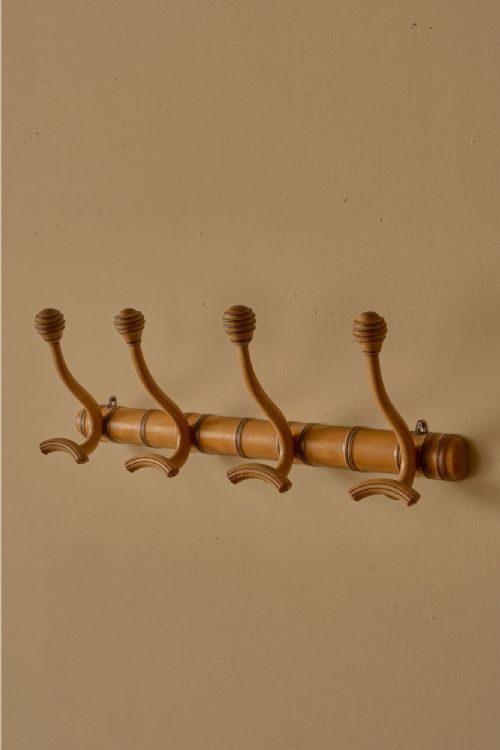
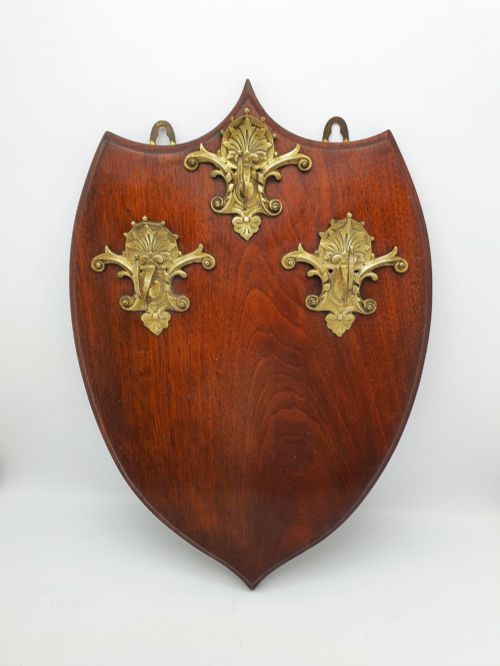
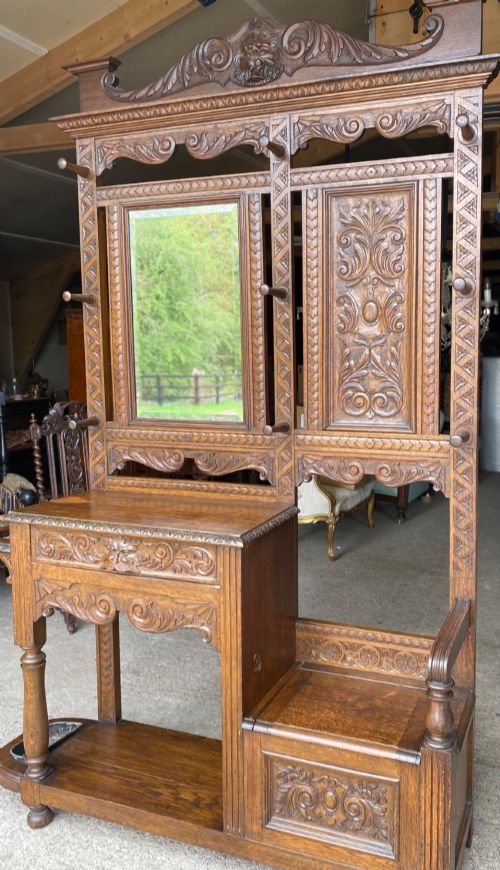
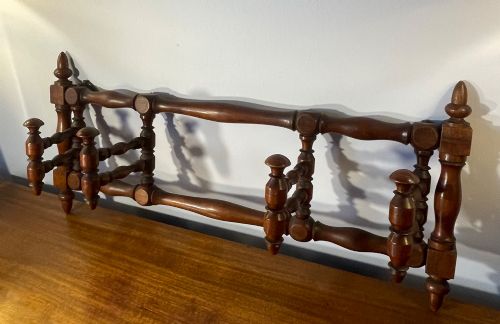
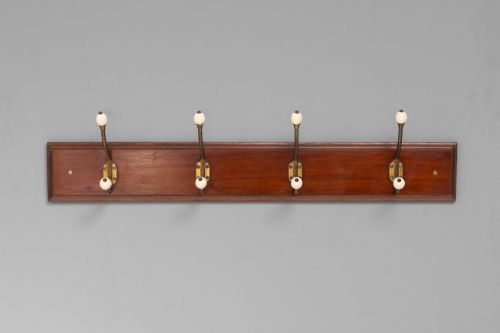
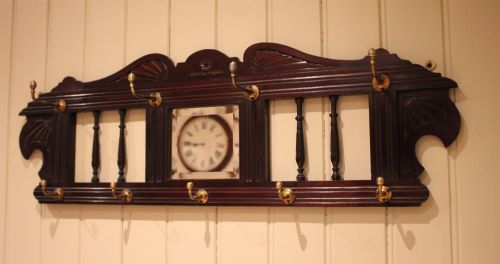
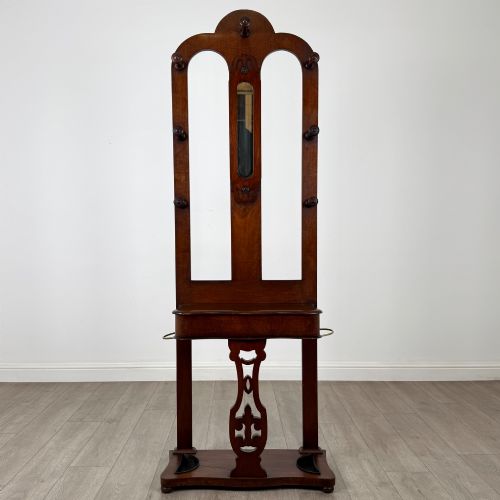
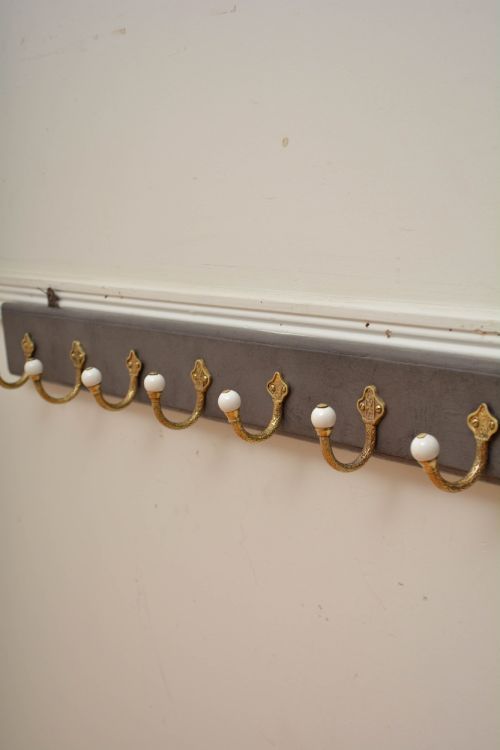
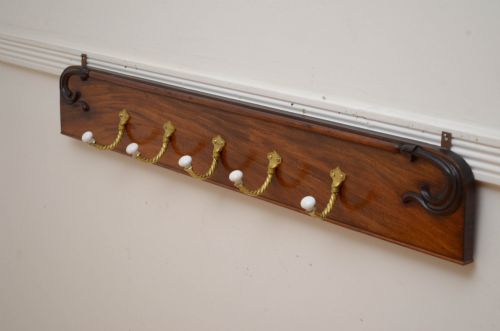
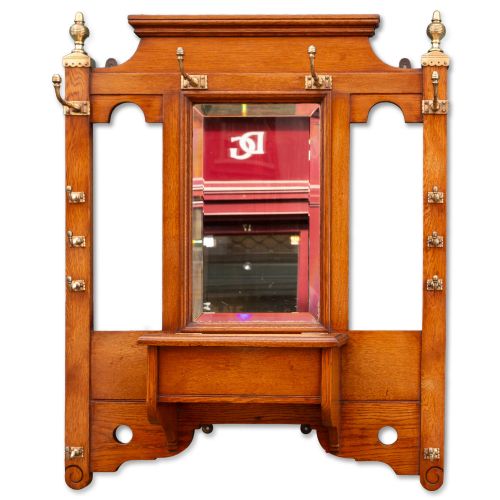
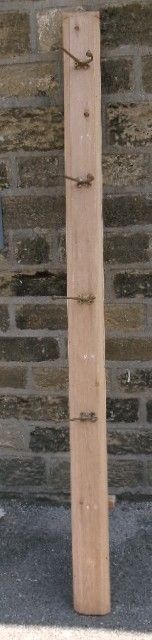
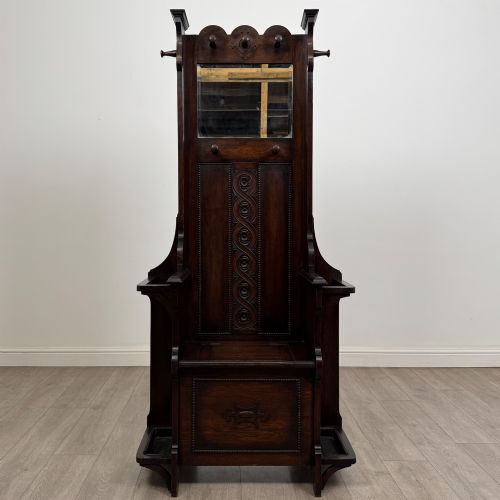
A wooden coat peg rack provides a practical hanging solution for entryways and cloakrooms, combining a sturdy timber backboard with functional hooks. These pieces range from simple wall-mounted rails to elaborate hall stands featuring integrated mirrors and umbrella holders.
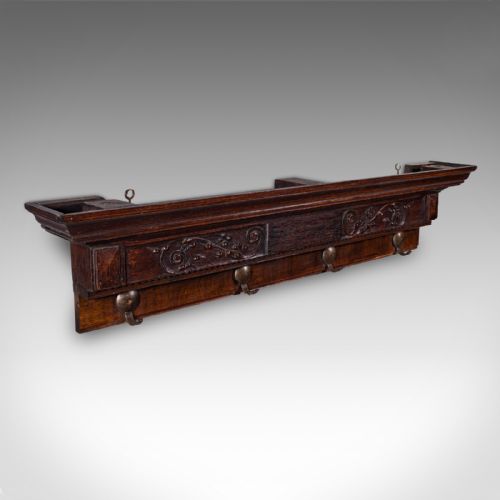
Buyers searching for a wooden coat peg rack will frequently encounter Victorian and Edwardian examples fashioned from oak, mahogany, or pine. Wall-mounted variants with brass or ceramic hooks appear alongside substantial floor-standing pieces from the nineteenth and early twentieth centuries.
Materials and Construction
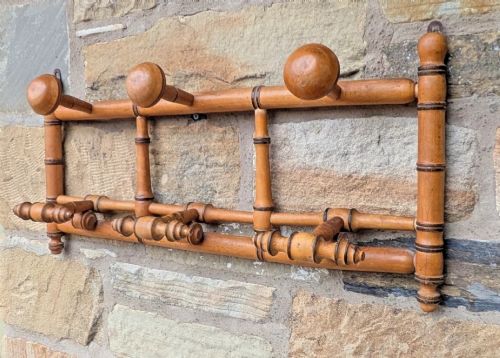
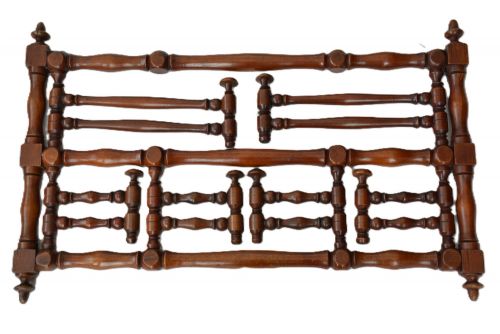
Craftsmen built these racks using solid hardwoods such as oak, mahogany, walnut, and beech, often mounting them on long timber backboards designed to bear weight securely against a wall. Bentwood techniques also shaped flexible timbers like beech into curved rails and hooks.
A carved chamois goat peers steadily from a nineteenth-century wall, ready to guard your hats.
Assessing Quality and Execution
Superior examples distinguish themselves through the selection of dense, richly figured timbers and the integrity of their structural joinery. Hand-carving and specialised styling, such as Aesthetic Movement details or Black Forest animal motifs, indicate finer workshop production.
The Wooden Coat Peg Rack Glossary
- Bentwood
- A technique of steaming and bending timber, notably beech, to create curved structural shapes and frames.
- Backboard
- The horizontal or vertical wooden plank that supports the weight of the hooks and secures the rack to the wall.
- Hall Stand
- A larger hallway furniture piece combining a coat rack, hat hooks, umbrella holders, and frequently a central mirror.
- Aesthetic Movement
- A late nineteenth-century design style emphasising visual beauty and artistic craftsmanship over traditional narrative themes.
- Black Forest
- A nineteenth-century carving style originating in Central Europe, known for highly detailed naturalistic animal and foliage motifs.
Wooden Coat Peg Rack: Frequently Asked Questions
Where should I hang a wooden coat peg rack?
These racks suit entrance halls, boot rooms, and kitchens where hats, coats, and daily accessories require accessible storage. Mounting them securely into wall studs ensures they safely support heavy winter garments.
Positioning the rack at an appropriate height allows family members and guests to reach the hooks comfortably while keeping the floor clear.
How do I date an antique coat rack?
Dating relies on examining the timber species, screw types, hook materials, and overall stylistic influences such as Victorian or Arts and Crafts. Simpler pine boards often date to the nineteenth century, while elaborate carved pieces point towards specific regional workshops.
Original fixings and backboard construction methods also provide reliable clues regarding the period of manufacture.
Are wall-mounted racks strong enough for heavy coats?
Solid oak and mahogany backboards fixed properly to a wall easily bear the weight of heavy winter coats and cloaks. The strength depends primarily on the screws and wall anchors used during installation rather than the timber itself.
Spreading the weight across multiple fixing points prevents strain on individual screws.
What is the difference between a rack and a hall stand?
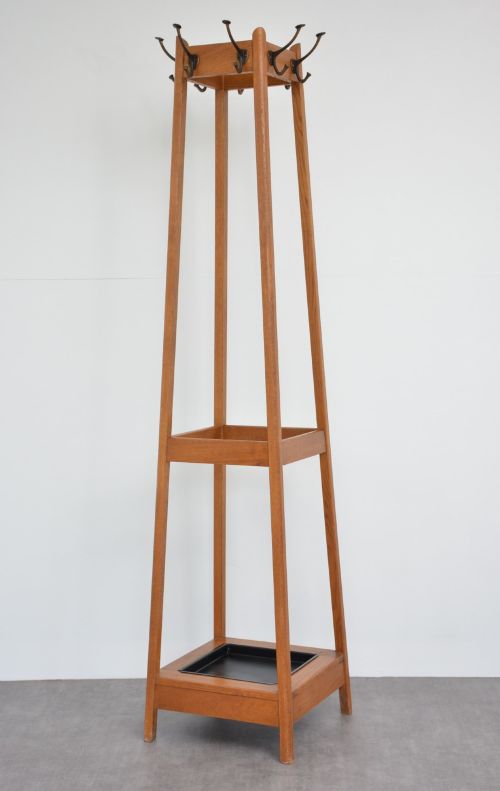
A coat peg rack is typically a wall-mounted wooden board fitted with hooks for hanging garments and hats. A hall stand is a larger, floor-standing piece of furniture that incorporates the coat hooks alongside mirrors, umbrella stands, and glove boxes.
Both items served the same welcoming function in period entrance halls but occupy different amounts of floor space.