

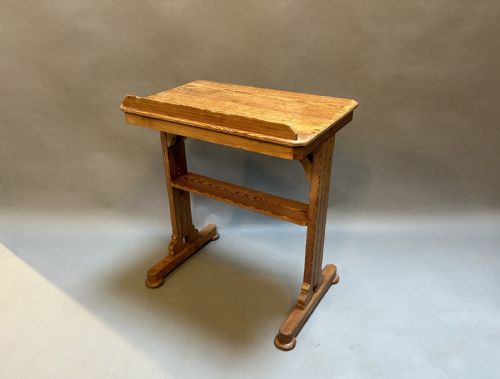


Wooden Church Pulpit
These wooden church pulpit examples and allied reading stands offer commanding focal points for ecclesiastical spaces and larger domestic interiors alike.
Wooden Church Pulpit
When someone searches for a wooden church pulpit, they are looking at architectural furniture designed for liturgical delivery, alongside related reading stands and lecterns. The pieces found here span the nineteenth century, the Victorian era, nineteen hundred, and nineteen thirty, encompassing both ecclesiastical and domestic utility contexts.
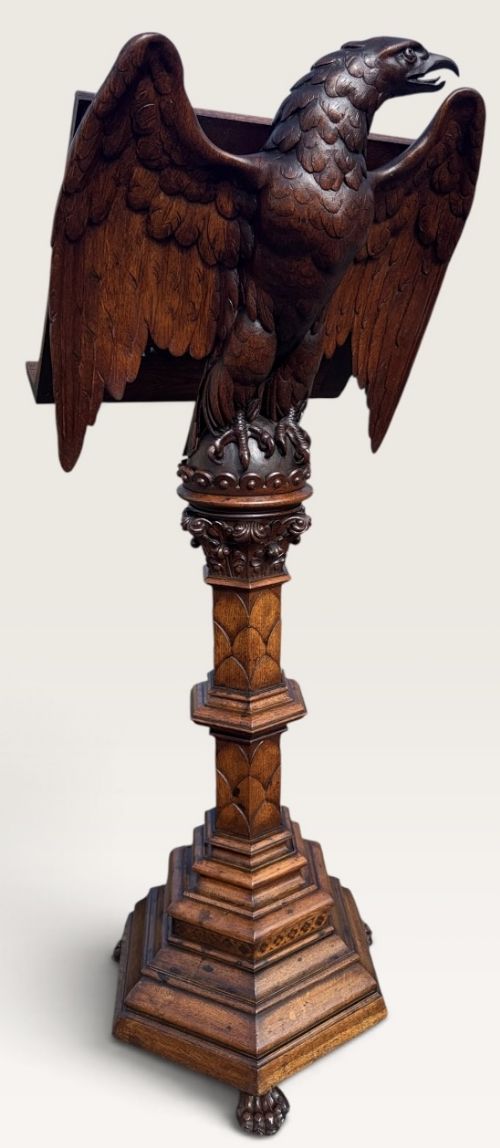
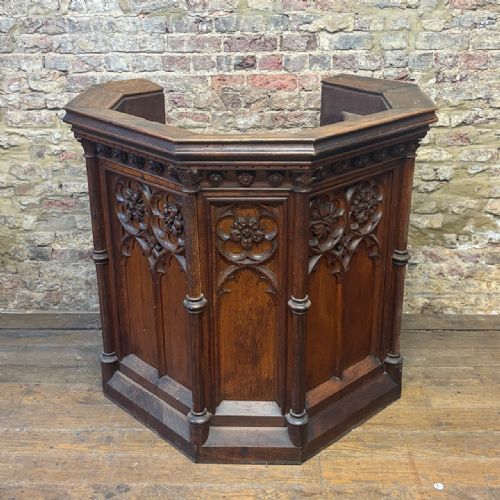
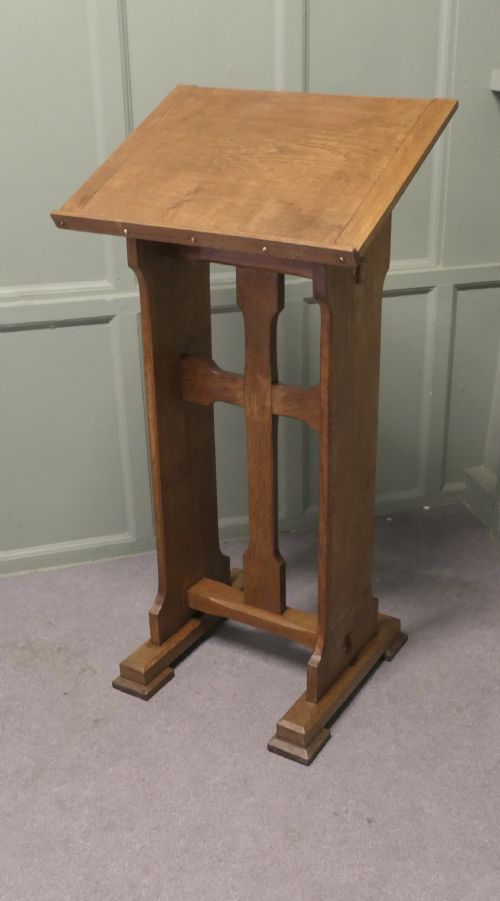
The versions most commonly met on this page are carved oak lecterns, often featuring eagle designs, alongside church pulpits executed in the Gothic Revival style. Plain pine and mixed oak and pine tables also appear, reflecting both grand ecclesiastical workshops and simpler early twentieth century utility furniture.
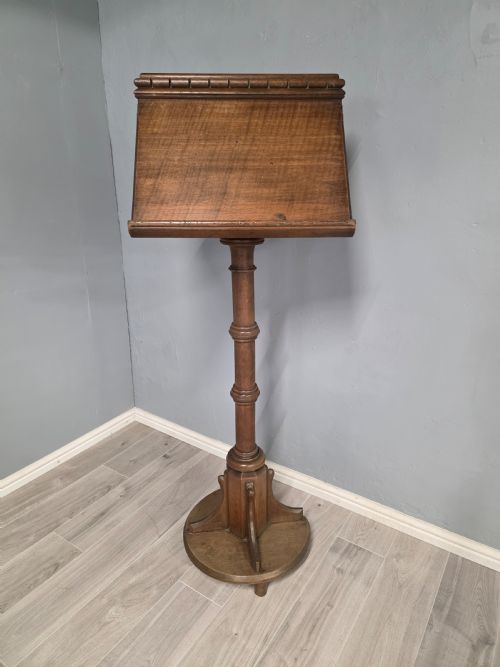
Forms extend beyond traditional pulpits to encompass podiums, restaurant reception greeters, and music stands. These objects bridge historical church interiors and modern functional spaces, maintaining their architectural presence across changing eras.
How they were made
Construction relies primarily on solid oak and pine timbers, selected for structural stability and the capacity to take deep, intricate carving. Wood is frequently combined with brass and iron fixtures to secure joints and support reading platforms.
Carving defines the decorative vocabulary, particularly within the Gothic Revival and Victorian Gothic Revival traditions. Master carpenters shaped dense timber into sculptural eagle forms and architectural tracery using traditional hand chisels and joinery techniques.
Wooden Church Pulpit Retail Price Guide 2026
Typical asking prices for wooden church pulpit among the pieces listed under this phrase on Sellingantiques today, from the lower quarter to the upper quarter. They describe what is for sale here now, not the wider market.
Listings span the nineteenth century to nineteen thirty, with oak as the primary material alongside pine, brass, and iron.
What varies in quality
Depth and precision of the hand carving separate standard utilitarian reading stands from exceptional sculptural works, particularly in the rendering of feathered details on eagle lecterns. The choice of timber also dictates quality, with dense golden oak commanding greater presence than plainer pine constructions.
Structural integrity and architectural proportion govern the overall calibre of each piece, distinguishing monumental church furnishings from lighter utility tables. Surviving surface finishes and the crispness of nineteenth century Gothic ornamentation further indicate the standard of workshop execution.
The Wooden Church Pulpit Glossary
- Gothic Revival
- An architectural and decorative style drawing inspiration from medieval forms, featuring pointed arches and rich ornamentation. This aesthetic dominates nineteenth century ecclesiastical furnishings.
- Lectern
- A tall desk with a slanted top designed to hold a book for reading aloud to an assembly. These items often incorporate carved animal supports.
- Podium
- A raised platform or stand utilised for public speaking and reception duties. Examples in oak serve modern hospitality spaces.
- Ecclesiastical
- Relating to the Christian Church or its clergy, describing objects created specifically for religious ceremonies. Such pieces carry distinct historical provenance.
- Golden Oak
- A specific warm timber tone and finish favoured during the late nineteenth and early twentieth centuries. It highlights the natural grain of the wood.
Wooden Church Pulpit: Frequently Asked Questions
How were wooden church pulpits originally used?
These elevated structures provided a dedicated architectural space for clergy to deliver sermons and read scriptures to the congregation. Their height and central placement ensured the speaker could be heard clearly throughout the nave.
Smaller reading stands and eagle lecterns served adjacent liturgical functions, holding heavy Bibles and service books at a comfortable angle for recitation.
Can I use a church lectern in a modern home?
These architectural pieces adapt well to contemporary settings, serving as striking focal points in large hallways or studies. Tall stands also function practically as reading desks or music holders.
Commercial spaces utilise similar podiums as reception greeters, blending historical character with everyday utility in hospitality environments.
What woods were used in these pieces?
Oak is the predominant timber found in these listings, valued for its strength and suitability for deep carving. Pine also appears, often in simpler utility pieces or combined with oak for internal structure.
Metal elements such as brass and iron occasionally reinforce joints, hinges, and reading ledges against daily wear.
How do I identify the Victorian Gothic style?
This style incorporates medieval architectural motifs such as pointed arches, quatrefoils, and heavy structural mouldings adapted during the nineteenth century. Carved wooden elements display deep relief and theological symbolism.
Proportions remain grand and imposing, reflecting the architectural ambitions of Victorian church building and restoration programmes.