



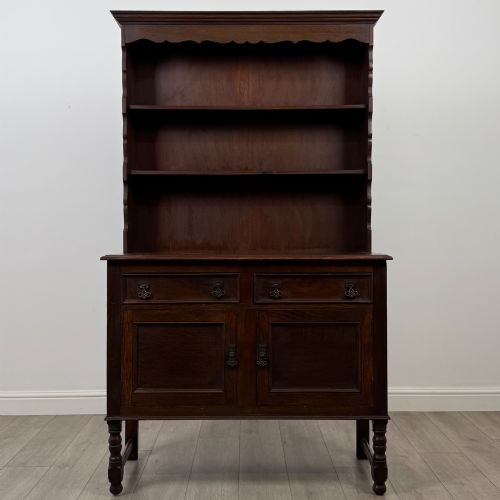
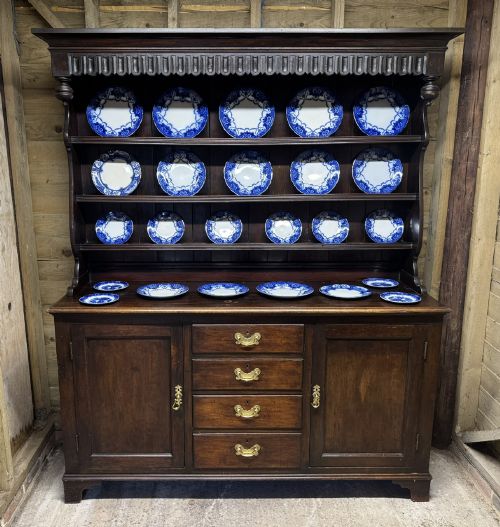
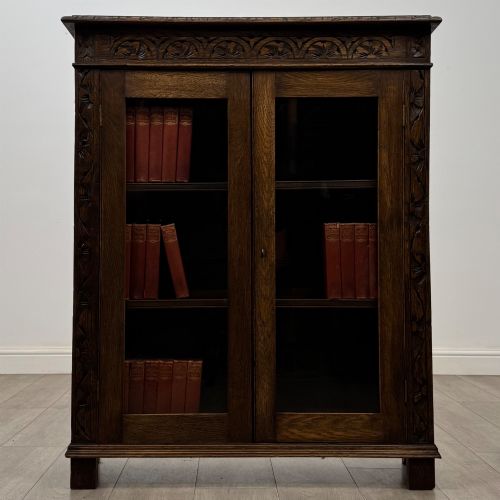


Wooden China Cupboard
A wooden china cupboard brings warmth and glass-fronted display to a room, housing porcelain safely behind timber framing.
Wooden China Cupboard
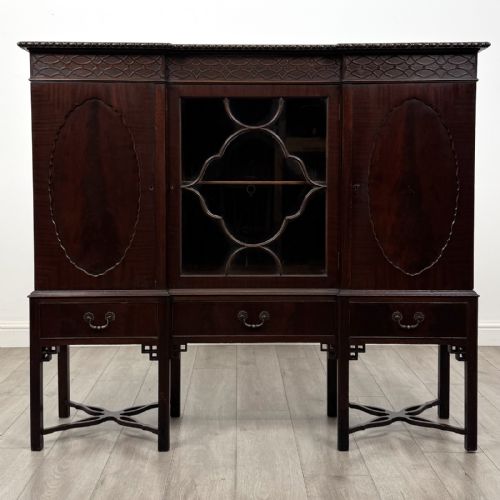
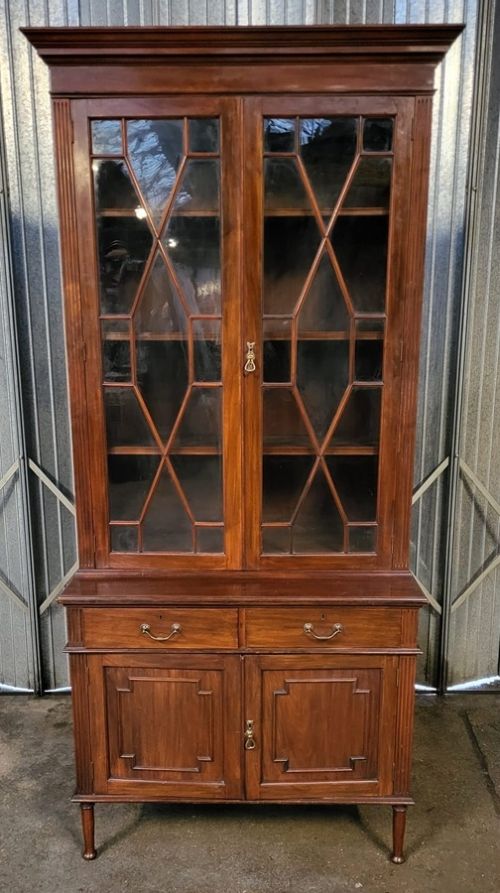
When searching for a wooden china cupboard, collectors encounter a variety of forms including display cabinets, breakfront bookcases, kitchen dressers, and vitrines. These storage items combine wooden carcasses with glass doors or open shelving designed to showcase ceramic collections.
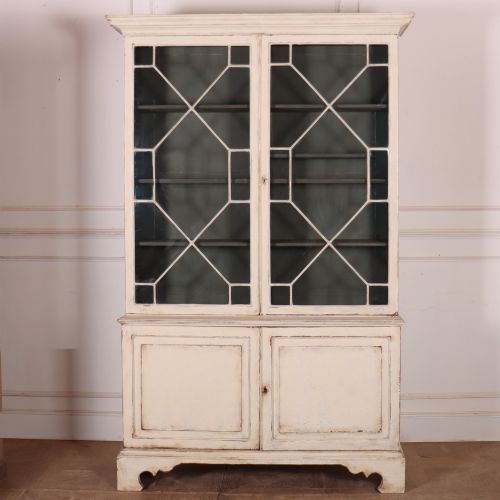
The pieces on this page span several distinct periods, most notably the Edwardian era and the Victorian period, alongside Georgian examples and eighteenth-century country furniture. Mahogany, oak, and satinwood dominate the construction, often enhanced by inlay or painted finishes.
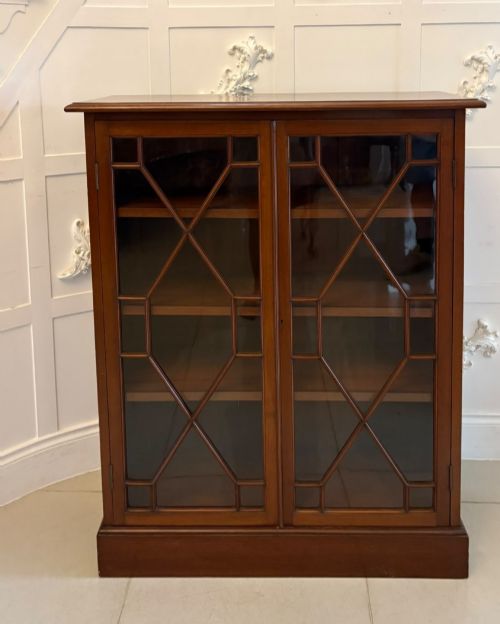
Buyers are most likely to meet Edwardian mahogany display cabinets and Victorian oak or mahogany glazed bookcases on this page. These versions reflect domestic requirements for visible storage and display that grew during the nineteenth and early twentieth centuries.
How they were made
Cabinet makers utilised solid timbers such as oak and mahogany for the structural carcasses, frequently employing finely grained satinwood for decorative veneers. Brass hardware provides hinges and handles on opening doors and drawers.
Glazing bars divide the glass panels of display doors into geometric patterns, while marquetry inlay and painted finishes decorate the surfaces of Edwardian and Georgian revival pieces. Carved details appear on Victorian oak frames and eighteenth-century country pieces alike.
Wooden China Cupboard Retail Price Guide 2026
Typical asking prices for wooden china cupboard among the pieces listed under this phrase on Sellingantiques today, from the lower quarter to the upper quarter. They describe what is for sale here now, not the wider market.
Some Edwardian display cabinets contain mirrored backs designed to make a modest collection of china look twice as large.
What varies in quality
The selection of timber grain and the precision of marquetry inlay separate standard domestic furniture from finer workshop output. Crispness in carved wooden details and the subtlety of brass fittings indicate the standard of original manufacture.
Proportion and architectural balance define the upper tiers of these cupboards, particularly in breakfront bookcases and satinwood display cabinets. The integration of glazed panels within solid wooden frames requires careful joinery that remains stable over centuries.
S and H Jewell London·Warings
The Wooden China Cupboard Glossary
- Breakfront
- A cabinet design where the central section projects forward from the flanking wings. This architectural arrangement creates depth and visual variety in large bookcases.
- Vitrine
- A glass-sided display cabinet used primarily for showing porcelain and small decorative objects. These freestanding cases often feature glazed doors on multiple sides.
- Marquetry
- Decorative woodwork where thin slices of various coloured wood are fitted together to form pictorial patterns. Craftsmen apply these designs to cabinet doors and friezes.
- Serpentine
- A curved furniture front shaped in a gentle wave, concave at the centre and convex at the ends. This contour requires skilled carpentry to execute correctly in solid timber.
- Welsh Dresser
- A traditional kitchen and dining room form featuring lower cupboards or drawers surmounted by open plate racks or enclosed shelving. Oak remains the predominant timber for these regional pieces.
Wooden China Cupboard: Frequently Asked Questions
What is a wooden china cupboard?
A wooden china cupboard is a cabinet built from timber with glass doors or open shelves, designed to store and display porcelain and tableware.
These pieces range from tall Edwardian display cabinets to eighteenth-century kitchen dressers and nineteenth-century glazed bookcases.
How do I date a wooden china cupboard?
Dating relies on observing the timber species, construction methods, hardware, and prevailing design styles such as Sheraton Revival or Victorian carving.
Secondary woods, backboards, and the thickness of glass panes also provide physical evidence of the period of manufacture.
Where were these cupboards used?
These cupboards were placed in dining rooms, libraries, and kitchens to hold household china, books, and provisions.
Formal display cabinets sat in reception rooms for best tableware, while kitchen dressers served daily culinary needs.
How do I care for wooden china furniture?
Maintenance involves keeping wooden surfaces clean with appropriate furniture wax and protecting timber from direct sunlight and extreme temperature changes.
Glass panels require standard cleaning while brass hardware benefits from gentle dusting without harsh chemical polishes.