


Wooden Canterbury Holder
These wooden canterbury holder examples span Georgian elegance to Edwardian utility, offering divided storage for folios, newspapers and sheet music.
Wooden Canterbury Holder
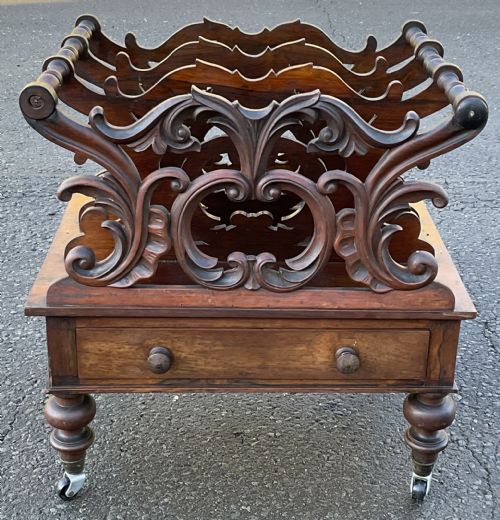
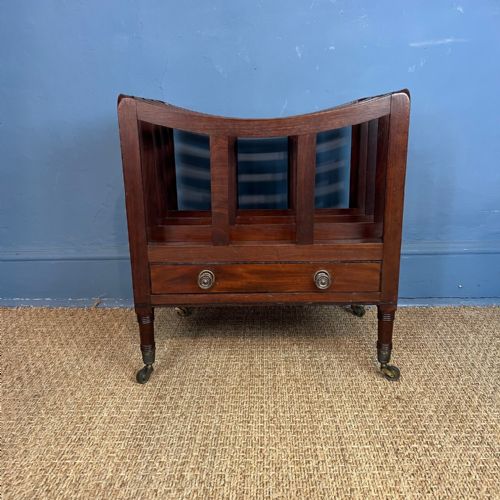
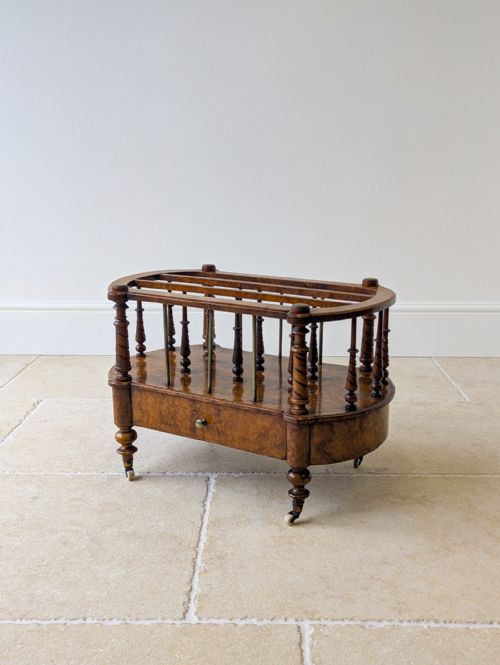
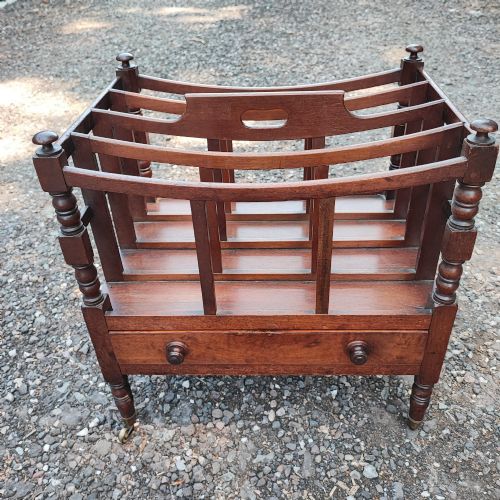
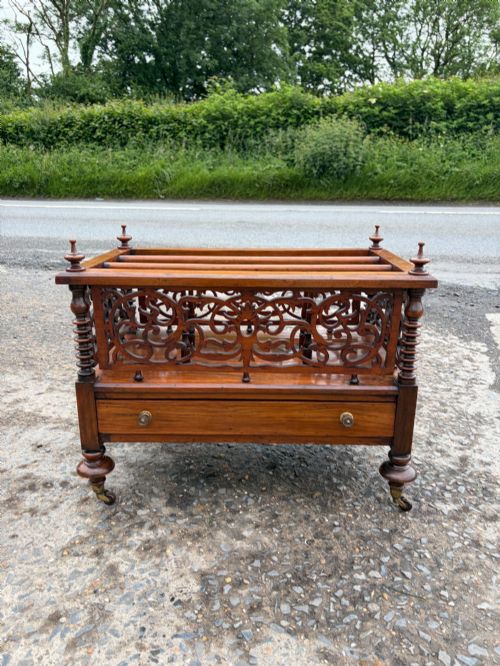
A wooden canterbury holder provides partitioned storage originally designed for sheet music, folios, newspapers and books. The pieces on this page span from the Georgian and Regency periods through to Victorian, Edwardian and early twentieth-century examples.
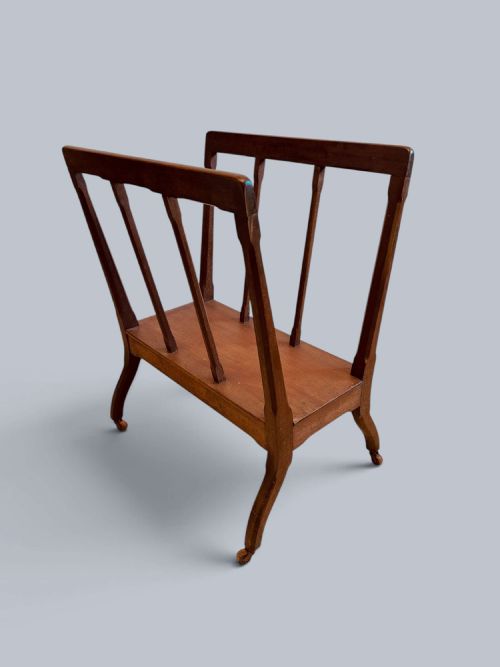
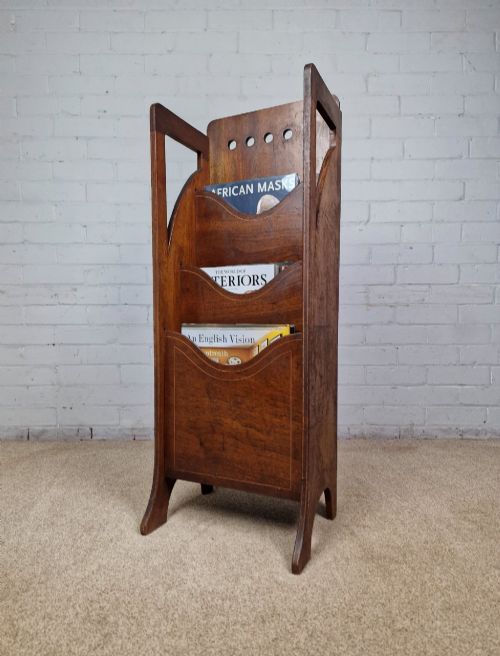
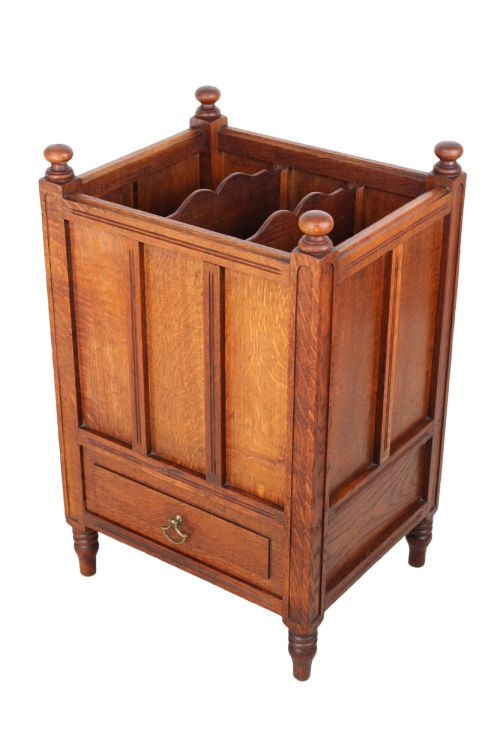
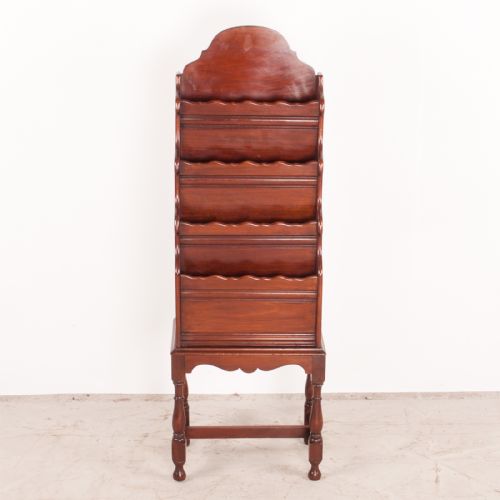
Mahogany is the material most frequently encountered among these pieces, alongside walnut, burr walnut, rosewood, oak and satinwood. Forms range from boat-shaped designs and four-division stands to folio display units and magazine racks combined with occasional tables.
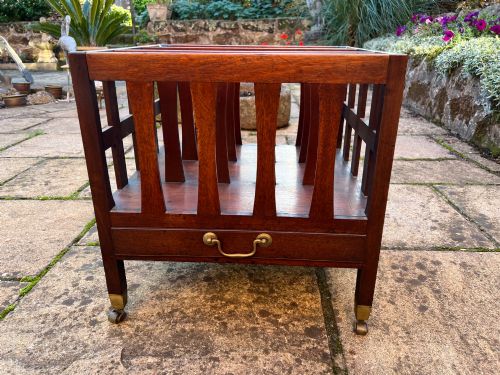
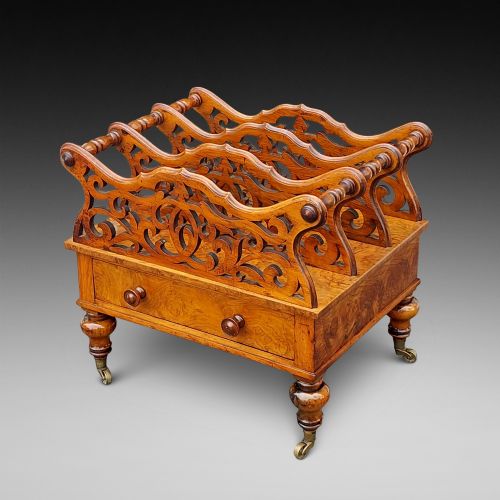
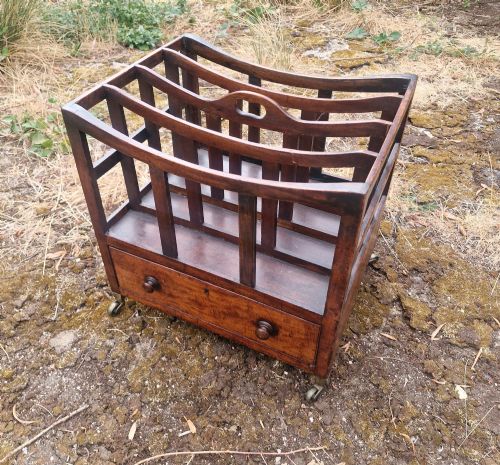
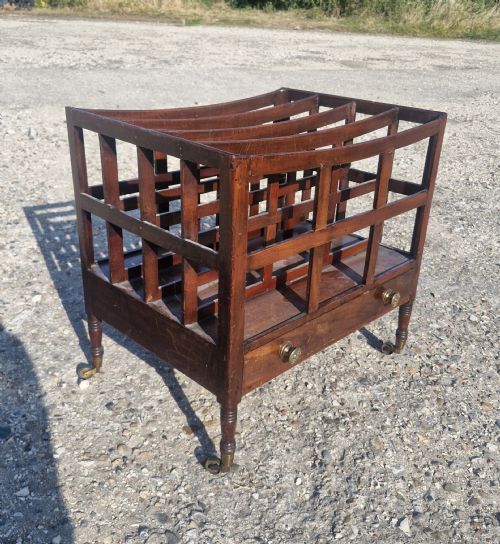
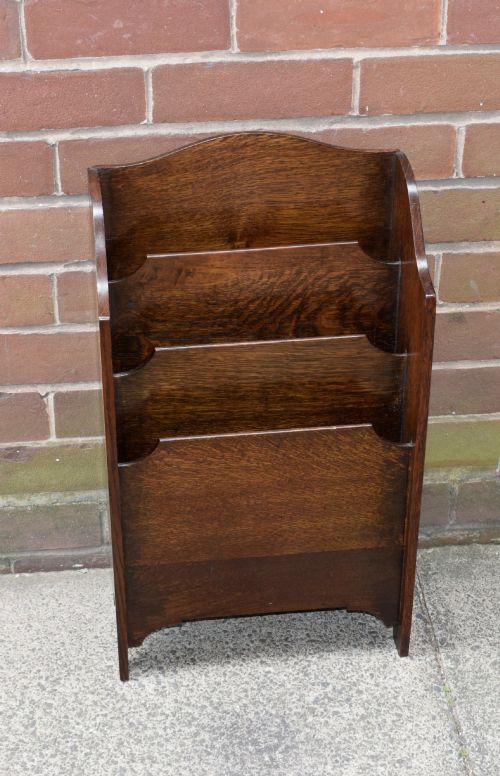
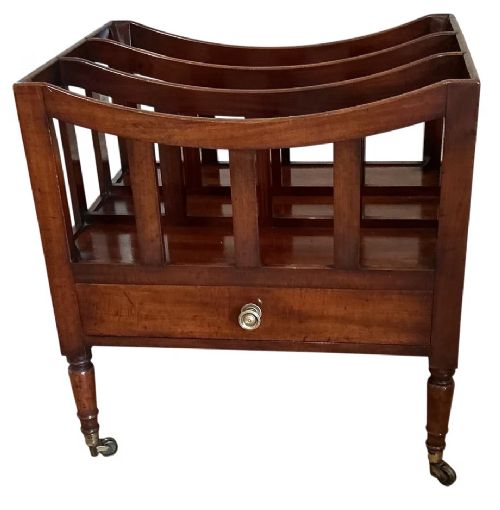
The version a buyer meets most often on this page is the nineteenth-century mahogany canterbury featuring slatted partitions above a drawer and low legs with castors. Alongside these traditional forms appear Arts and Crafts oak magazine racks and Edwardian sheet music cabinets.
How they were made
Cabinetmakers constructed these pieces primarily in mahogany, walnut and rosewood, often utilising figured veneers such as burr walnut or satinwood for decorative surfaces. Boxwood inlay appears on specific styles, adding linear contrast to the timber framing.
Joinery techniques focus on sturdy partitions and slatted vertical divisions designed to hold papers upright without warping the wood. Many pieces incorporate turned legs fitted with brass castors to allow the stand to move easily across the floor.
Wooden Canterbury Holder Retail Price Guide 2026
Typical asking prices for wooden canterbury holder among the pieces listed under this phrase on Sellingantiques today, from the lower quarter to the upper quarter. They describe what is for sale here now, not the wider market.
Early makers occasionally doubled up functions, attaching music stands and drawers to ensure every sheet stayed firmly put.
What varies in quality
Quality in these pieces rests upon the selection of timber, such as figured walnut or dense Cuban mahogany, and the crispness of any inlaid boxwood or carved detail. Finer examples display meticulous attention to the joinery of the vertical divisions and the integration of functional drawers.
Proportion and stability separate standard utility items from exceptional workshop output. Pieces raised on elegant turned legs with original castors demonstrate a higher degree of finished design than simpler variant racks.
Finnigans
The Wooden Canterbury Holder Glossary
- Canterbury
- A low stand with upright divisions used originally for holding music sheets and folios. It frequently includes a drawer in the base.
- Folio stand
- A piece of furniture designed to display large books, prints or unbound sheets. These stands often feature adjustable supports.
- Burr walnut
- Timber taken from a walnut tree outgrowth, yielding highly figured patterns with swirling grain. Cabinetmakers prized it for veneering prominent surfaces.
- Boat-shaped
- A curved hull-like profile seen on certain Regency furniture pieces. This outline softens the rectangular geometry of standard storage stands.
- Castor
- A small wheel fitted to the base of a leg to aid mobility. Brass versions appear frequently on nineteenth-century stands.
Wooden Canterbury Holder: Frequently Asked Questions
What is a wooden canterbury holder used for?
These stands were originally created to hold sheet music, unbound books and musical folios near a piano or seating area.
Today they serve equally well as domestic storage for newspapers, magazines and contemporary periodicals.
How do I date a wooden canterbury holder?
Dating relies on identifying timber choices, stylistic markers and construction methods associated with specific eras like Regency or Victorian.
Georgian and Regency pieces often feature clean mahogany lines, while later Victorian examples showcase burr walnut veneer and heavier turned supports.
Are these stands sturdy enough for daily use?
Most examples are constructed from solid hardwoods like mahogany and oak, built to withstand the weight of books and papers.
Care should be taken with veneered surfaces on walnut models to avoid moisture damage and excessive daily strain.