


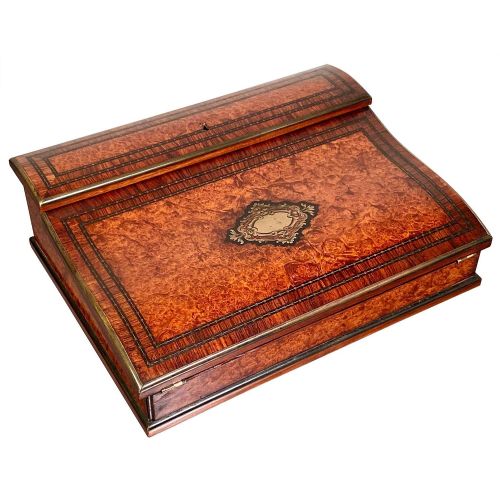

Wooden Campaign Slope Box
A wooden campaign slope box is a portable writing desk designed for travel, offering fold-out surfaces and compartments that appeal to collectors of military and colonial antiquities.
Wooden Campaign Slope Box
When searching for a wooden campaign slope box, you encounter portable desks and writing boxes spanning the Georgian, Regency, and Victorian periods. These pieces functioned as mobile writing stations for officers and travellers, opening to reveal angled writing surfaces and stationery storage.
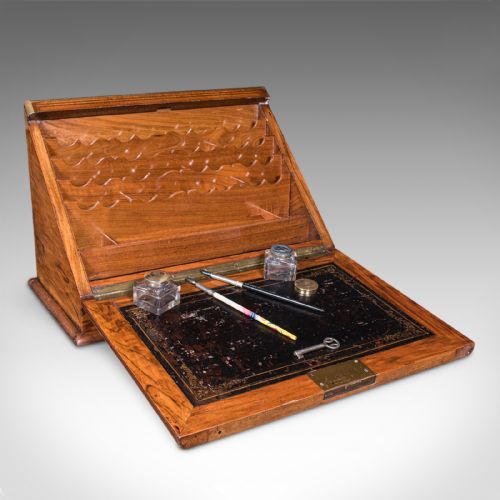
The inventory on this page consists predominantly of Victorian and 19th-century examples, alongside earlier Georgian and Regency specimens. Formats range from standard writing slopes and correspondence boxes to larger stations featuring secret drawers and book rests.
How They Were Made
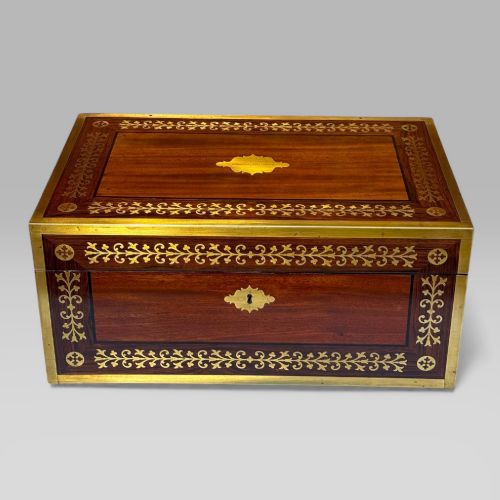
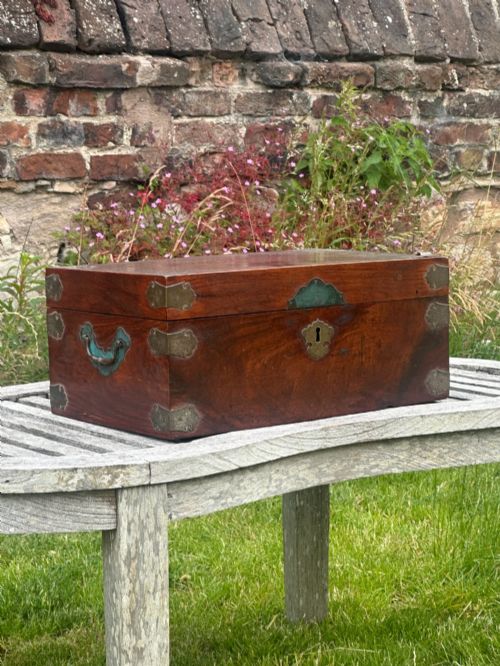
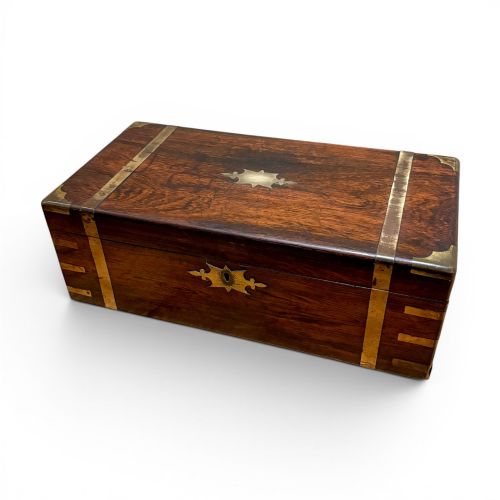
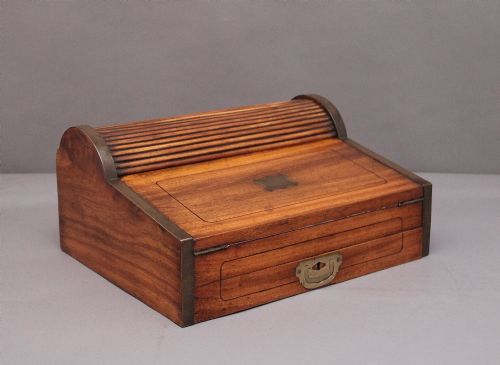
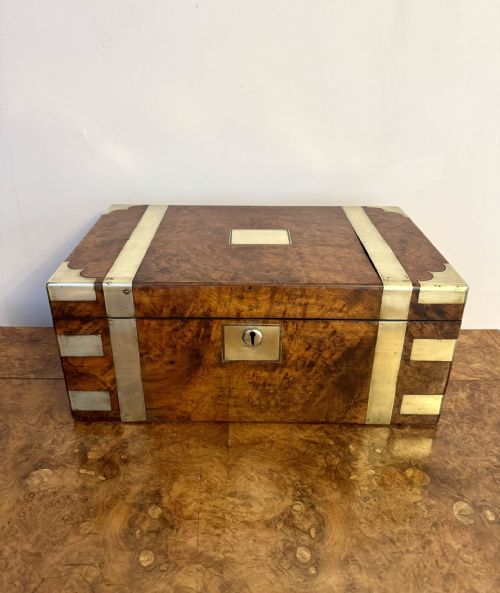
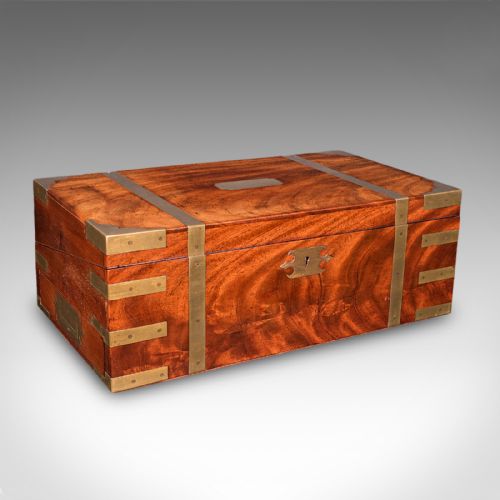
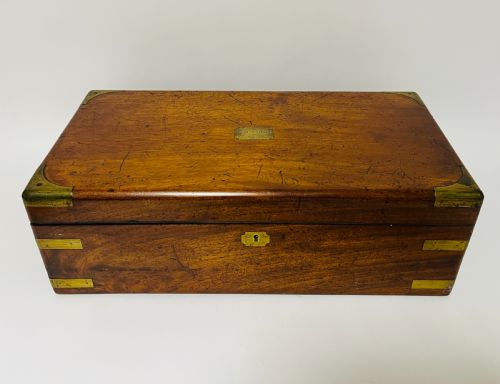
Cabinet makers utilised dense hardwoods such as mahogany, rosewood, walnut, burr walnut, coromandel, camphor wood, and padouk to withstand travel. These timbers were selected for both durability and rich figuring, often enhanced by brass corner mounts and strapwork.
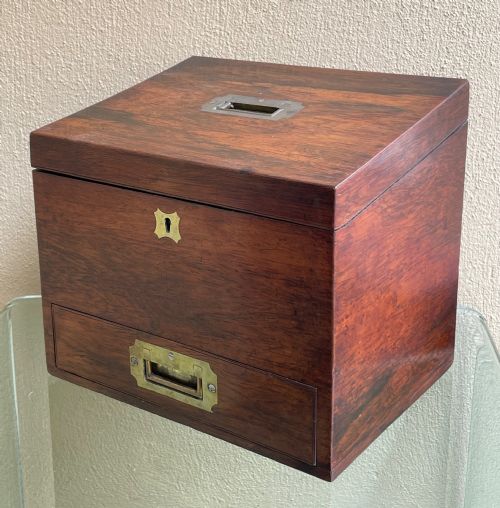
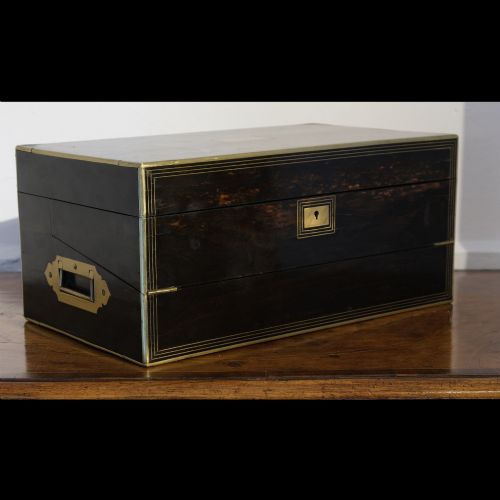
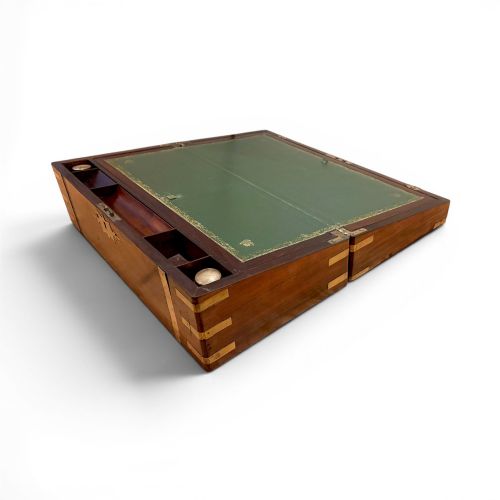
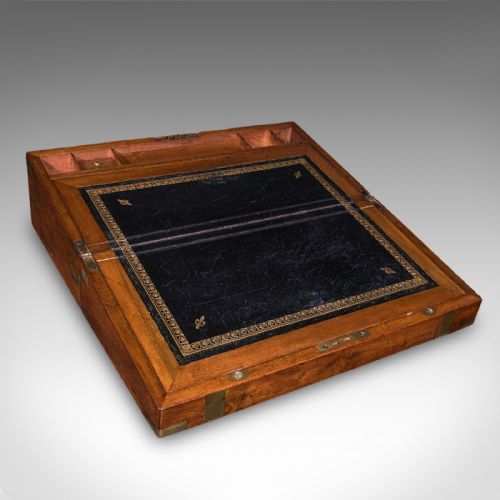
Construction incorporated folding mechanisms, secret compartments, and flush-fitting brass handles designed for transport. Interiors frequently combined secondary timbers with leather writing surfaces and fitted partitions for inkwells and pens.
Listings feature woods including camphor wood, padouk, rosewood, walnut, and mahogany across Georgian, Regency, and Victorian periods.
What Varies in Quality
Quality rests upon the selection of timber veneers, the precision of the brass inlay, and the complexity of the internal fittings such as secret drawers or brass locks. Elaborate examples include candle sconces, sovereign sections, or metamorphic mechanisms rather than simple folding ledges.
The Wooden Campaign Slope Box Glossary
- Campaign slope
- A portable writing desk built with folding surfaces and flush hardware intended for military or travel use. These boxes opened to create a stable writing slant on a lap or camp table.
- Secret drawers
- Concealed compartments hidden behind false panels or accessed via clever spring mechanisms within the box. Cabinet makers utilised these spaces to store confidential papers and valuables.
- Brass bound
- Edges and corners reinforced with brass strapping and corner pieces attached with small screws. This reinforcement protected the wooden frame from knocks sustained during transport.
- Bramah lock
- A high-security cylindrical lock patented by Joseph Bramah in the late eighteenth century, commonly found on superior quality boxes. These locks required a specialised cylindrical key to operate.
- Lap desk
- A compact variant of the writing slope designed to rest directly upon the user's knees. They share the hinged sloping writing surface and internal compartment layout of larger boxes.
Wooden Campaign Slope Box: Frequently Asked Questions
What is a wooden campaign slope box?
A wooden campaign slope box is a portable writing desk designed for travel during the eighteenth and nineteenth centuries. These items fold open to provide an angled writing surface and storage for paper, ink, and pens.
Officers, diplomats, and travellers used them to maintain correspondence while away from permanent writing furniture. Their robust construction and clever internal compartments made them essential mobile desks.
How were campaign boxes used?
Owners placed these boxes on camp tables or across their knees to write letters, sign documents, and store valuable papers. The hinged lid folded down to create the slanted writing platform.
Inside, dedicated compartments held inkwells, sanders, and wax seals, while hidden drawers secured personal items and currency. Many double as reading desks or correspondence cases.
How do I date a writing slope?
Dating relies upon timber choices, brass hardware styles, and construction methods. Georgian and Regency pieces often feature rosewood or mahogany with fine brass inlay, while Victorian examples frequently showcase walnut, burr walnut, or ebony.
Makers' marks, lock types such as Bramah patents, and overall design evolution also assist in determining the period of manufacture.
What woods are typical for these boxes?
Cabinet makers utilised durable hardwoods capable of enduring travel conditions. Mahogany, rosewood, and walnut appear frequently across the listings.
Exotic and colonial timbers such as camphor wood, padouk, coromandel, and pollard oak also feature, selected for their distinct grain patterns and resilience.