



Wooden Cafe Chairs
Wooden cafe chairs bring instant character to a room, offering the resilient practicality of bentwood and bistro designs spanning the Edwardian era to the mid-century.
Wooden Cafe Chairs
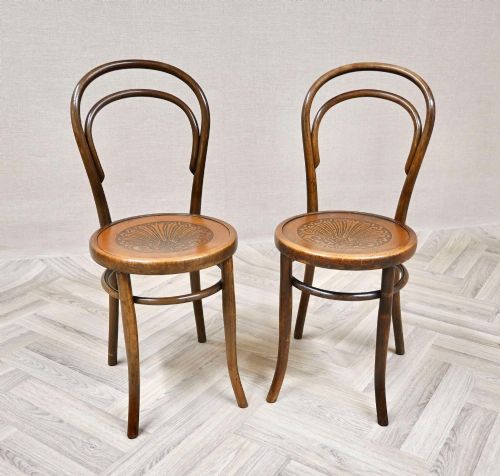
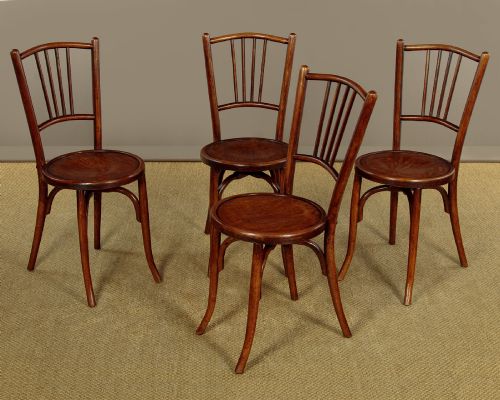
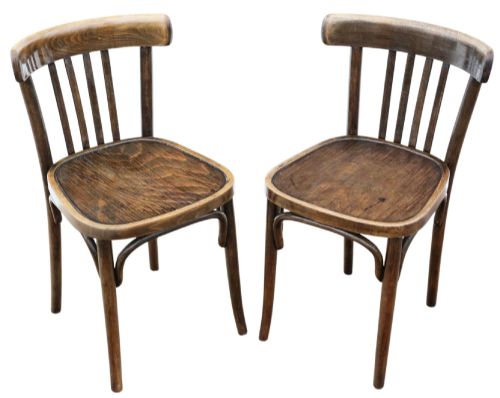
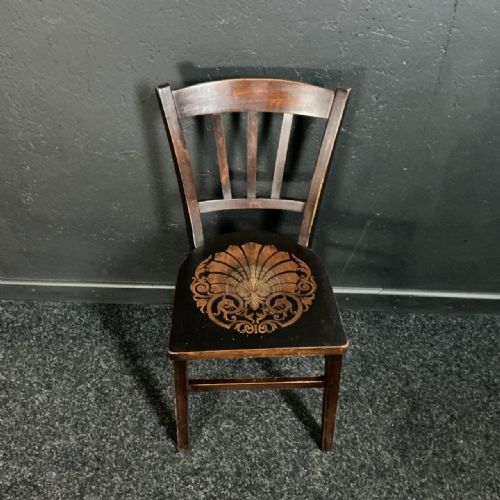
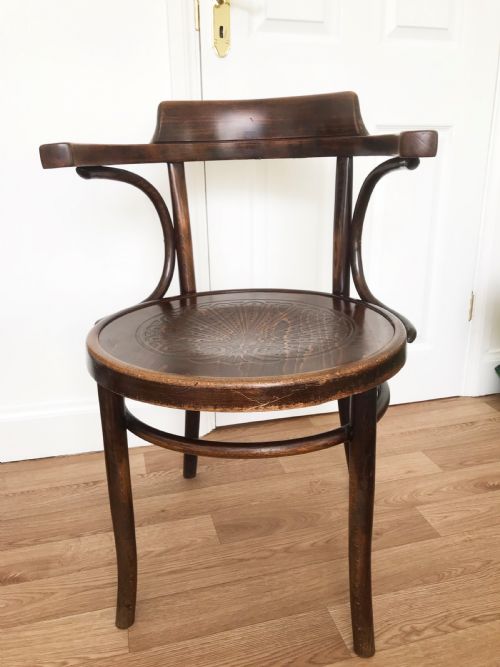
When you search for wooden cafe chairs, you encounter seating built for commercial hospitality and domestic dining across the late Victorian, Edwardian, and twentieth-century periods. The examples listed here predominantly take the form of bentwood side chairs, carvers, and armchairs designed for European bistros and cafes.
You are most likely to meet beech and beechwood frames shaped through steam-bent techniques, often appearing in matched sets, pairs, or individual pieces. These range from early Thonet productions to later twentieth-century interpretations originating from makers such as Codina and Yugoslavian workshops.
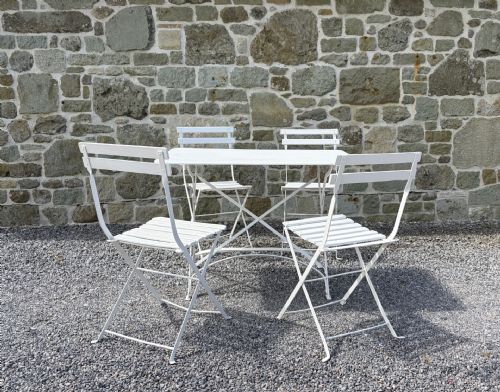
Alongside standard dining chairs, the selection includes garden dining sets combining iron and wood, as well as desk chairs equipped with cushions. Their enduring appeal lies in lightweight durability and simple silhouettes that suit both traditional and contemporary interiors.
How they were made
The construction of these chairs relies on solid beech and timber subjected to steam heat, which softens the grain and allows craftsmen to bend the wood into graceful curves without breaking the fibres. Plywood is frequently utilised for seats, often pressed with decorative perforation patterns.
Metal components appear where structural reinforcement is required, particularly in hybrid garden sets that pair iron frames with wooden slats. Stained wood finishes protect the material while highlighting the natural grain of the bentwood loops and rails.
Wooden Cafe Chairs Retail Price Guide 2026
Typical asking prices for wooden cafe chairs among the pieces listed under this phrase on Sellingantiques today, from the lower quarter to the upper quarter. They describe what is for sale here now, not the wider market.
Several chairs survived decades of clattering coffee cups and hurried waiters at the famous Cafe Royal in London.
What varies in quality
Quality in these chairs rests upon the integrity of the steam-bent frame and the precision of the joinery connecting the backrest to the seat. Earlier pieces from prominent workshops display refined curvature and tighter tolerances in the steam-bent components.
The choice of timber and the complexity of the seat design also differentiate the output, from simple solid panels to pressed plywood seats bearing intricate embossed motifs. Sets that retain their original manufacturer marks or stamps carry distinct provenance.
Thonet·Codina
The Wooden Cafe Chairs Glossary
- Bentwood
- Wood that has been shaped by steam application and mechanical pressure. This technique allows for continuous flowing curves characteristic of nineteenth and twentieth-century cafe seating.
- Bistro chair
- A lightweight dining chair traditionally deployed in French cafes and public houses. These seating options prioritise easy stacking and daily commercial usage.
- Carver
- An armchair featuring structural armrests integrated into the back design. Such chairs frequently served at the head of a dining table or behind a desk.
- Plywood
- Engineered wood manufactured from thin sheets of wood veneer glued together. This material provides stable, crack-resistant seat bases for heavy-use chairs.
Wooden Cafe Chairs: Frequently Asked Questions
Are wooden cafe chairs sturdy enough for daily dining?
These chairs were originally engineered for bustling commercial cafes and bistros, meaning their steam-bent beech construction is inherently resilient.
Today, they handle daily family meals with ease, provided the joints remain tight and well-maintained.
How do I identify a Thonet bentwood chair?
Authentic pieces often bear paper labels, ink stamps, or branded signatures on the underside of the wooden seat base.
Stylistic markers include precise steam-bent loops and balanced proportions developed during the late Victorian and Edwardian periods.
Can I mix different sets of bistro chairs around one table?
Combining mismatched styles such as Edwardian side chairs and later twentieth-century variations creates a relaxed, collected interior.
Keeping a common material like beech ties the disparate seating together harmoniously.
What is the difference between a side chair and a carver?
Side chairs lack armrests and feature streamlined profiles designed to tuck neatly beneath dining tables.
Carvers include supportive arms, making them suitable as standalone desk chairs or head-of-table seating.