



Wooden Bobbin Armchairs
These wooden bobbin armchairs bring distinctive turned spindles and sturdy vernacular forms to a room, offering both sculptural presence and comfortable seating.
Wooden Bobbin Armchairs
Wooden bobbin armchairs derive their name from the distinctive spool-like or bobbin turnings that form their framing, uprights, and stretchers. When searching for wooden bobbin armchairs, buyers encounter robust vernacular seating spanning the seventeenth century through the nineteenth and twentieth centuries.
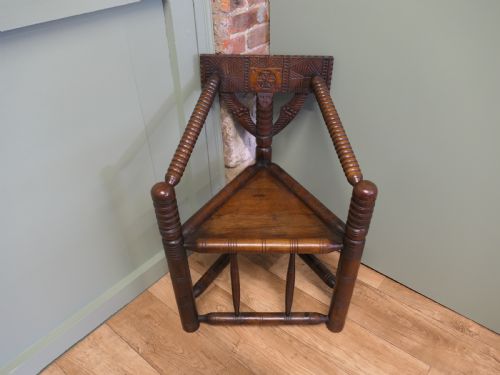
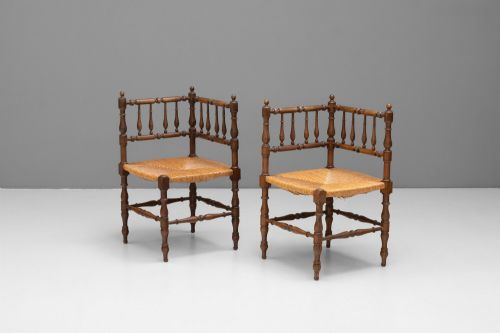
The selections on this page encompass various forms including traditional armchairs, rocking chairs, and corner chairs. These pieces frequently emerge in regional styles such as Victorian country, Jacobean revival, and rustic country.
Makers utilised sturdy timbers to construct these chairs, producing works that range from heavy oak frames to lighter birch and beech structures. Many examples feature supportive seats of cane, rush, or upholstered fabric and velvet.
Materials and construction
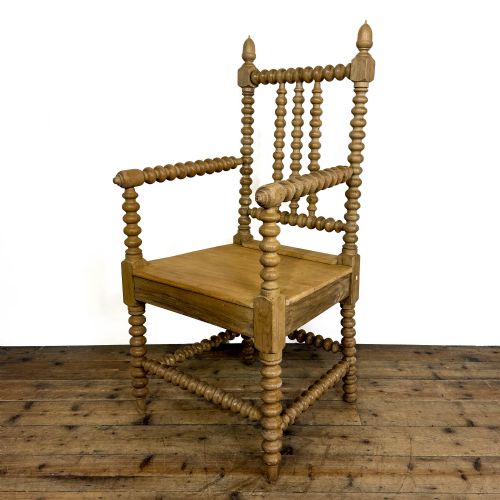
Makers built wooden bobbin armchairs primarily from native timbers such as oak, beech, and birch, often finishing the wood with a dark stain. The characteristic bobbin or spool shapes were produced on a lathe by turning down solid lengths of timber at regular intervals.
Joinery relied on traditional pegging and mortise and tenon methods to assemble the heavy turned components securely. Seating areas were frequently woven from natural rush or cane, or fitted with drop-in pads upholstered in fabric or velvet.
Wooden Bobbin Armchairs Retail Price Guide 2026
Typical asking prices for wooden bobbin armchairs among the pieces listed under this phrase on Sellingantiques today, from the lower quarter to the upper quarter. They describe what is for sale here now, not the wider market.
Some nineteenth-century makers evidently grew so fond of the lathe that even the stretchers received elaborate spool treatment.
Assessing quality and craftsmanship
The quality of wooden bobbin armchairs depends heavily on the crispness and uniformity of the lathe turnings across the frame. Superior examples maintain structural integrity and balanced proportions without excessive replacement of the original turned members.
Finer specimens display thoughtful selection of timber grain, particularly in oak and beech, paired with intact early rush or cane work. The distinction between standard workshop production and finer regional craftsmanship lies in the tightness of the joinery and the harmonious rhythm of the spools.
The Wooden Bobbin Armchairs Glossary
- Bobbin turning
- A form of woodturning that creates a series of rounded, spool-like shapes along the length of a spindle. This decorative technique defines the profile of the entire chair frame.
- Turner's chair
- A traditional armchair constructed almost entirely from turned wooden members and spindles. These pieces frequently date to revival periods inspired by earlier vernacular seating.
- Rush seating
- A woven seat made from marsh grasses twisted into cords and patterned across the chair frame. This traditional method provides a resilient and flexible support.
- Jacobean revival
- A nineteenth-century design movement that reinterpreted seventeenth-century English furnishings. Pieces in this style often incorporate dark oak and heavy turned elements.
- Vernacular furniture
- Everyday objects made by regional craftsmen for local use rather than for court or high-fashion markets. These chairs reflect local traditions and available materials.
Wooden Bobbin Armchairs: Frequently Asked Questions
What periods do these chairs date from?
Wooden bobbin armchairs span a considerable chronology, appearing in seventeenth-century forms and reappearing in nineteenth-century Victorian revivals.
Later interpretations extend into the early twentieth century, incorporating regional vernacular styles and lighter woods like birch.
How do I care for rush or cane seats?
Natural woven seats require gentle treatment and benefit from occasional light cleaning with a dry brush to remove dust. Keeping them away from excessive moisture prevents the organic fibres from becoming brittle.
Applying a damp cloth very sparingly can help maintain flexibility in drier household environments.
Where were these chairs typically placed?
Historically, these sturdy chairs served as principal seating in parlours, libraries, and country houses. Their solid construction made them suitable for daily household use.
Today, they function well as accent seating or reading chairs in both traditional and contemporary interiors.
Are rocking chairs common in this style?
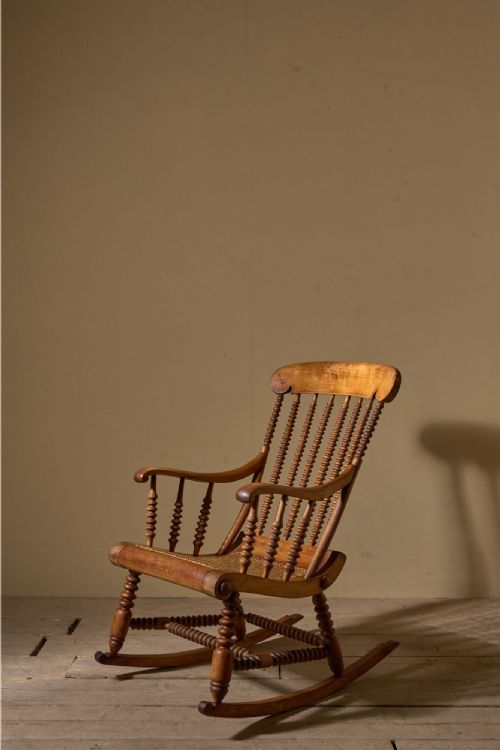
Rocking chairs form a notable category within these listings, combining the rigid turned frame with curved wooden rockers. Makers adapted the traditional bobbin-turned uprights to accommodate movement.
These rocking variants appear in various regional British and Scandinavian interpretations from the nineteenth century.