

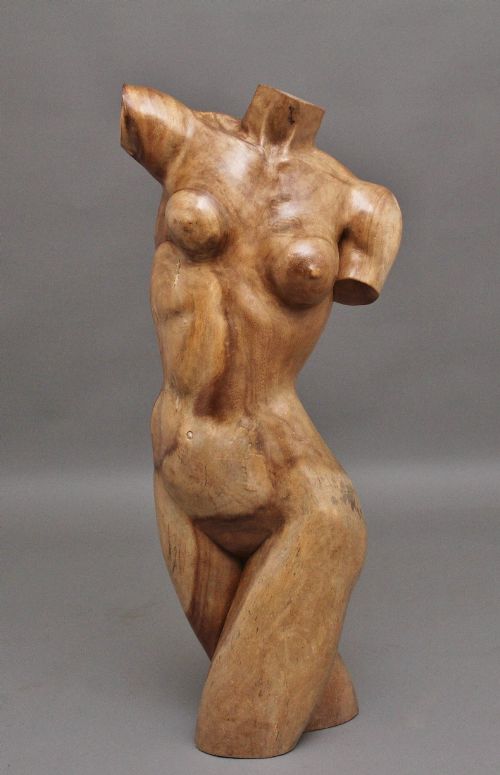
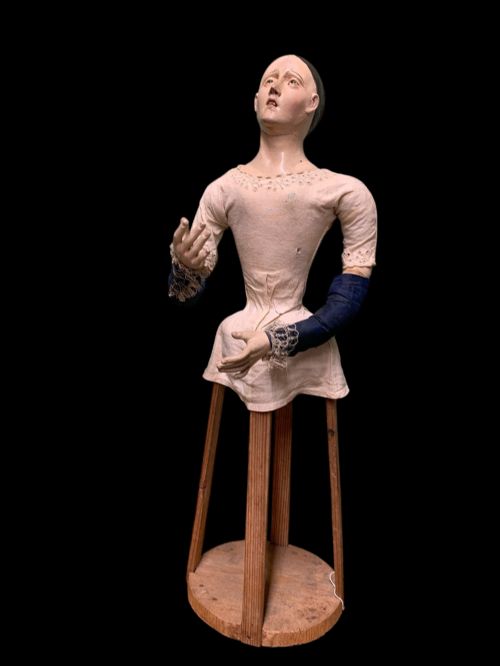


Wooden Art Mannequin
These wooden art mannequin pieces are carved and painted figures that bring character and history into a room.
Wooden Art Mannequin
When you search for wooden art mannequin, you encounter an array of carved figures spanning the nineteenth century, Edwardian era, and the nineteen-twenties. These pieces take diverse forms, ranging from religious processional figures and milliner's heads to trade signs, advertising figures, and hat stands.
You are most likely to meet folk art interpretations and devotional carvings on this page, reflecting utilitarian and ritual origins. The selection encompasses Spanish Colonial and Victorian folk art styles alongside European and American workshop traditions.
Each object serves primarily as a decorative sculpture or statue, bringing substantial presence through life-size cricketer carvings or smaller tabletop display pieces.
Materials and construction methods
The construction relies on traditional hand-carving techniques, resulting in expressive contours and visible tool marks across trade signs, processional figures, and hat stands.
Wooden Art Mannequin Retail Price Guide 2026
Typical asking prices for wooden art mannequin among the pieces listed under this phrase on Sellingantiques today, from the lower quarter to the upper quarter. They describe what is for sale here now, not the wider market.
Listings feature works in wood, gesso, and paint, spanning folk art, Edwardian, and nineteenth-century traditions.
Evaluating craftsmanship and visual impact
The character of the original paint and gesso surface holds equal weight, where undisturbed patination and layered polychrome pigment elevate the visual presence of folk art figures and processional pieces.
The Wooden Art Mannequin Glossary
- Polychrome
- Decorated in multiple colours, this technique involves painting the surface of carved wood to add realism or decorative emphasis. It defines much of the coloration seen on folk art figures.
- Gesso
- A plaster-based material applied to wood to create a smooth surface for painting or gilding. It provides the foundational layer for many painted finishes.
- Santos
- A religious figure or statue used in devotional practices, particularly within Spanish colonial traditions. These processional carvings often feature articulated limbs or textile elements.
- Trade Sign
- An object created to advertise a business or profession directly to the public, such as cigar store figures and milliner's heads. They functioned as commercial landmarks before modern signage.
Wooden Art Mannequin: Frequently Asked Questions
What is a wooden art mannequin used for today?
These figures serve as striking decorative objects and sculptural focal points within modern interiors. Collectors often place them on tables, shelves, or pedestals to display their historical character.
They also function effectively as display props for hats, textiles, and vintage accessories, continuing their original commercial or utilitarian roles.
How do I date a wooden art mannequin?
Dating relies on examining the tool marks left by the carver, the composition of the wood, and the ageing of the gesso and paint layers. Stylistic cues from specific eras, such as Edwardian millinery forms or nineteenth-century folk art, provide further context.
Comparing construction techniques with known period examples helps narrow down the decade of creation.
Are these figures carved from a single piece of wood?
Many smaller figures and heads are carved from solid blocks of timber, while larger pieces like life-size statues or trade signs often utilise joined sections. Construction methods varied according to the workshop and the intended function of the object.
Visible joinery and pegged joints are common in figures designed for processional use or commercial display.
How do I care for painted wooden carvings?
Keep these pieces away from direct sunlight and steady heat sources to protect the wood and prevent the polychrome paint from drying out or flaking. Stable indoor humidity prevents timber from warping or splitting.
Dust them gently with a dry, soft cloth rather than using liquid cleaning products that might damage fragile gesso and paint.