




Wooden Animal Bookends
Wooden animal bookends hold your volumes upright while bringing carved bears, owls, and elephants straight to the shelf.
Wooden Animal Bookends
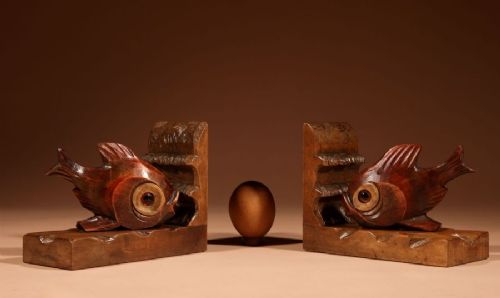
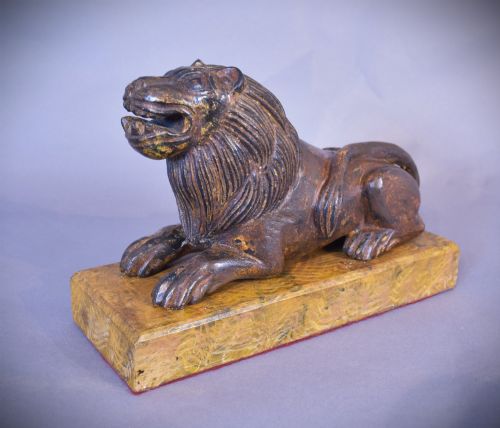
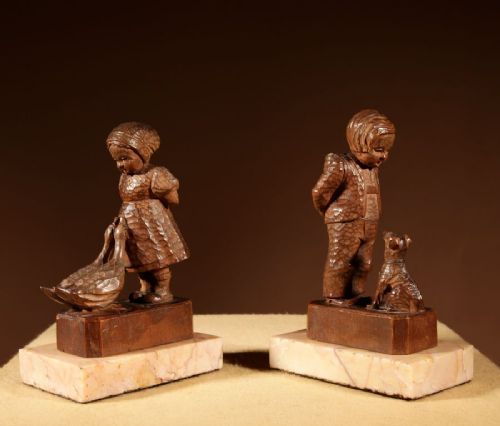
The selection ranges from amusing carved goldfish and bamboo dogs to substantial hardwood elephants on stands and traditional pine lions. Certain examples take the form of sculptural figures mounted upon dedicated plinths or bases to anchor heavy volumes.
Origins stretch from European mountain workshops to Anglo-Indian studios and Chinese export ateliers, reflecting diverse regional carving traditions. Makers utilised local timbers and exotic woods alike to render domestic pets, wild beasts, and birds with distinct personality.
How they were made
Carvers shaped these objects using solid blocks of timber, selecting linden wood, pine, ebony, coromandel, and bamboo according to regional availability and stylistic demands. Hand tools including gouges and chisels created the textured fur, feathers, and muscular forms visible across the surfaces.
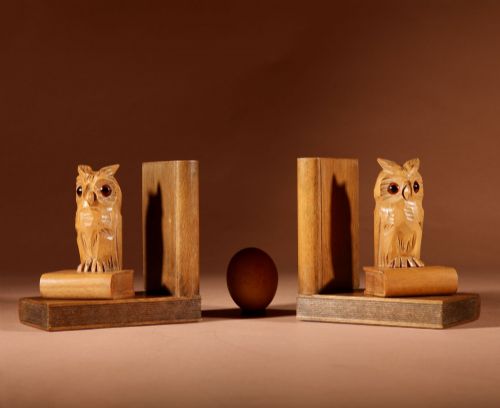
Many pieces incorporate applied details such as glass eyes to lend realism to carved animals like owls and dogs. Surface finishes vary from natural wax polish on carved wood to occasional paint accents and gilt highlights.
Wooden Animal Bookends Retail Price Guide 2026
Typical asking prices for wooden animal bookends among the pieces listed under this phrase on Sellingantiques today, from the lower quarter to the upper quarter. They describe what is for sale here now, not the wider market.
What varies in quality
Quality rests primarily upon the skill of the carver and the proportion of the animal form relative to its functional base. Finer examples display anatomical precision, lively character in the facial expressions, and confident handling of the timber grain.
The choice of material heavily influences the character of the piece, with dense hardwoods like ebony and coromandel offering crisp detail compared to softer pine or linden wood. Integration between the sculptural animal and its supporting plinth distinguishes standard production items from ambitious workshop pieces.
The Wooden Animal Bookends Glossary
- Black Forest
- A regional Swiss and German style known for deeply carved wooden animals, particularly bears and owls, produced through the nineteenth and early twentieth centuries. These pieces often utilise linden wood and display expressive, characterful faces.
- Anglo-Indian
- Furniture and decorative objects made in India by local artisans using traditional carving techniques for British or European patrons. Common woods include dense tropical varieties shaped into elephants or regional fauna.
- Hardwood
- Timber derived from broad-leaved angiosperm trees, valued in these pieces for its durability and capacity to hold fine carved details. Ebony and coromandel are notable examples found in heavier supports.
- Plinth
- A heavy rectangular block or architectural base upon which sculptural animal figures are mounted to provide stability. It anchors the weight of leaning volumes against the base.
- Georgian Revival
- A design style looking back to eighteenth-century British aesthetics, appearing in Edwardian decorative objects such as carved pine lions. It favours classical symmetry and traditional motifs.
Wooden Animal Bookends: Frequently Asked Questions
How do I date wooden animal bookends?
Dating relies on identifying the timber used, the style of the carving, and any prevailing artistic movements such as Art Deco or Victorian revivalism. Finer details like glass eyes or specific mounting plinths also point toward active periods of production between the late nineteenth and early twentieth centuries.
Examine the underside and construction joints for signs of age, tool marks, and wear patterns. Comparing the sculptural style to documented workshop traditions helps narrow down whether a piece belongs to the Black Forest school or an Anglo-Indian export studio.
Are these bookends heavy enough for large books?
Many of these pieces are carved from dense tropical hardwoods like ebony and coromandel, or mounted on substantial wooden plinths designed to resist the pressure of heavy volumes. Lighter pine or bamboo versions rely on the weight of the base or positioning to maintain balance.
When shelving oversized hardbacks, pairing these supports with a fitted shelf backing or placing them near the shelf end ensures stability. The mass of the timber usually provides sufficient resistance for standard domestic libraries.
What styles are common in antique animal bookends?
Naturalistic animal studies from the Black Forest tradition feature prominently, often depicting bears, owls, and dogs with lifelike expressions. Other regional styles include Chinese hardwood elephants and British depictions of lions or terrier dogs.
Art Deco influences appear in streamlined bamboo dog designs, while Victorian and Edwardian examples lean toward classical or whimsical interpretations. Each style reflects the decorative preferences and carving competencies of its specific origin.