

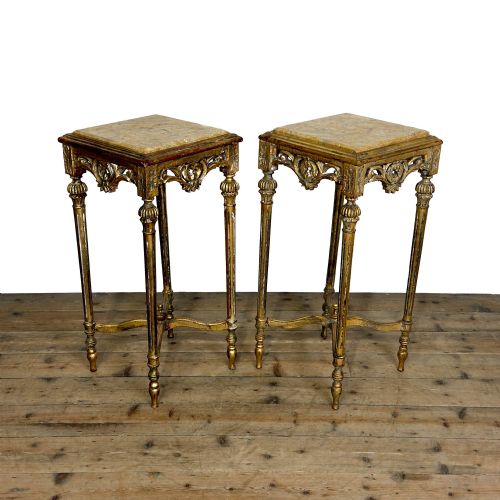
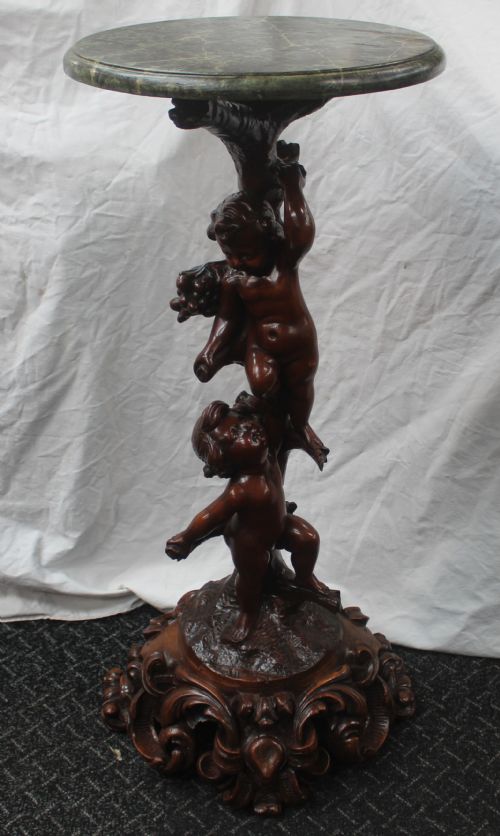
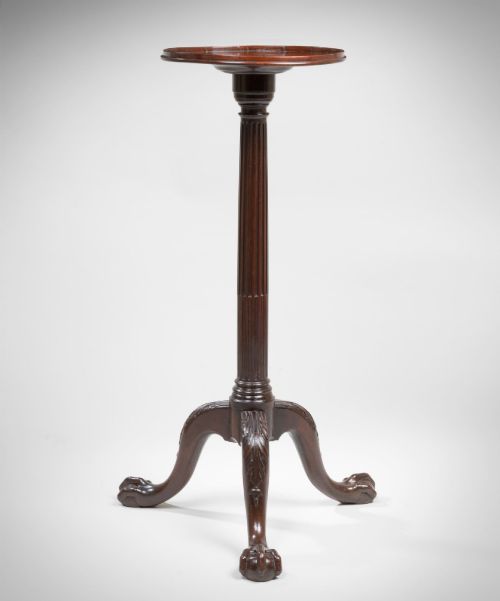
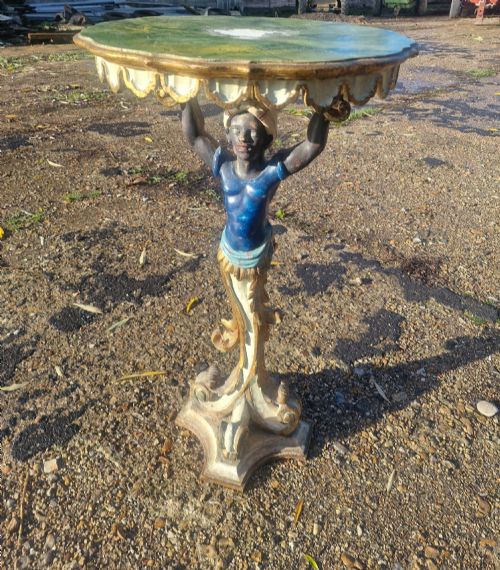
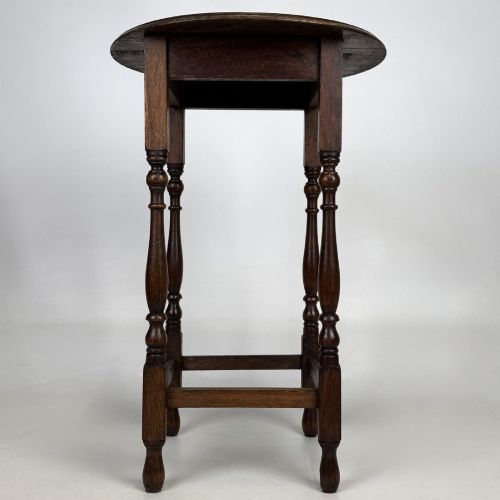
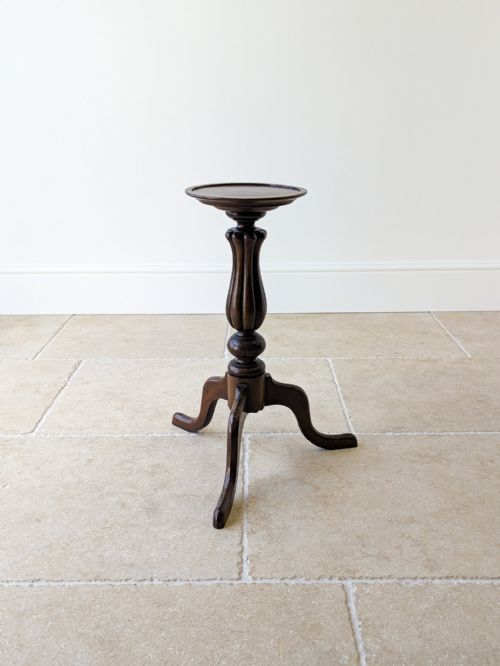
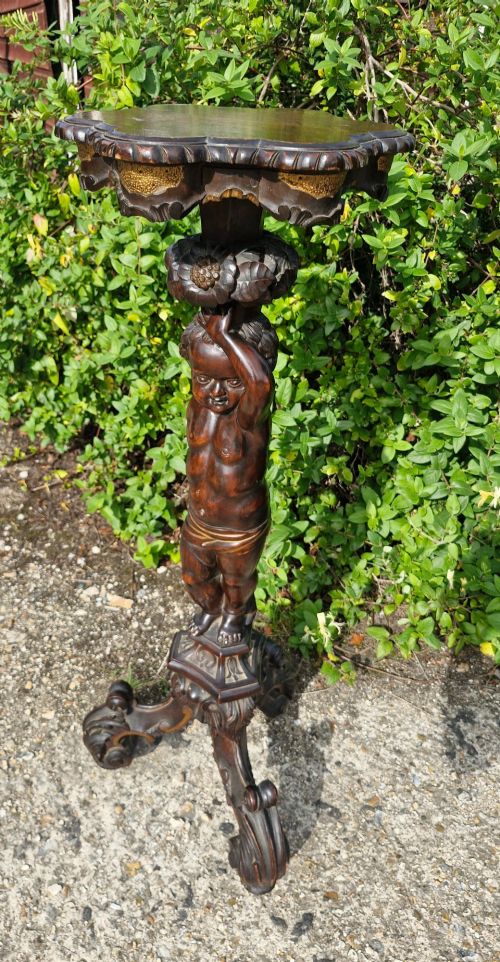
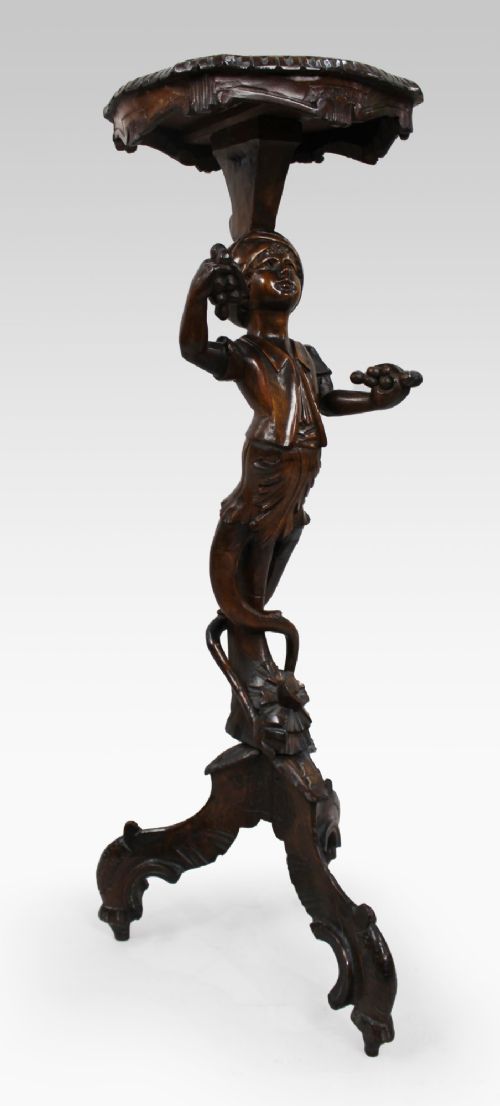




Wood Torchere Table
A wood torchere table raises light or foliage above the room, offering slender height where a standard side table feels too heavy.
Wood Torchere Table
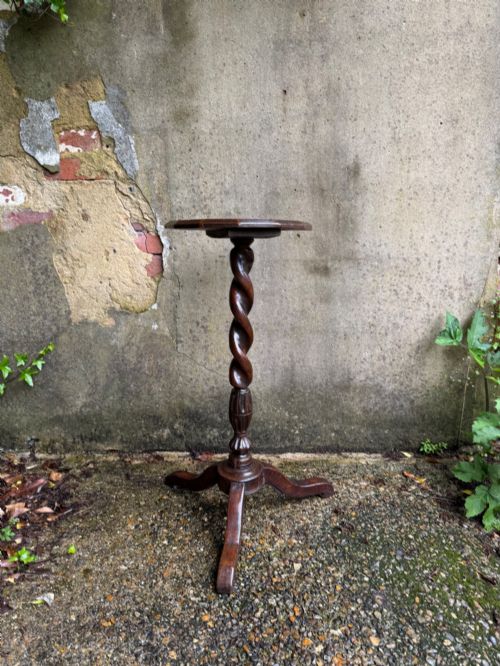
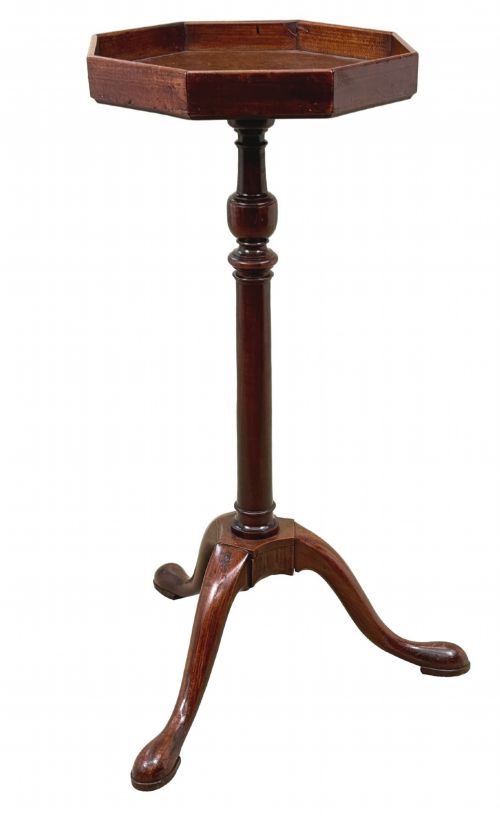
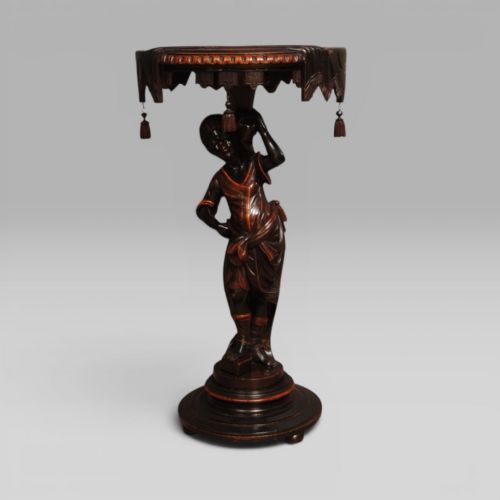
A wood torchere table functions primarily as a candle stand, plant stand, or pedestal, designed to occupy corners and perimeters rather than centre stage. These tall, narrow tables appear in forms ranging from tripod candle stands to elaborate figural pedestals.
The selections span centuries of craftsmanship, with 18th century Georgian pieces sitting alongside Victorian and Edwardian examples. Mahogany and oak dominate the timber choices, though walnut, yew wood, burr elm, and rosewood also emerge across the selection.
Makers utilised diverse regional idioms, producing English tripod designs, Venetian carved figures, and French Empire style tables with ormolu mounts. Buyers frequently encounter pieces that double as lamp tables and occasional tables.
How they were made
Cabinetmakers constructed these stands using dense hardwoods such as mahogany, oak, and walnut, frequently employing turned columns, rope twist shafts, and tripod bases for stability. Surface decoration relied on floral marquetry inlay, gold leaf, and polychrome painted finishes.
More ornate examples incorporate carved figural elements, marble tops, and cast bronze or ormolu mounts. Joinery techniques varied from traditional pegging in early oak pieces to sophisticated cabinetwork in Georgian and Regency specimens.
Wood Torchere Table Retail Price Guide 2026
Typical asking prices for wood torchere table among the pieces listed under this phrase on Sellingantiques today, from the lower quarter to the upper quarter. They describe what is for sale here now, not the wider market.
The selection includes mahogany, oak, walnut, yew wood, burr elm, and rosewood across periods from the 17th century through the Edwardian era.
What varies in quality
Quality rests on the crispness of the carving, the selection of figured timber such as burr elm or yew wood, and the structural integrity of the slender column and base. Tables featuring intact original surfaces, delicate inlay, and well-executed figural carving command greater attention.
Proportion and stability separate standard utility stands from finer examples produced during the Georgian and Regency periods. The integration of luxury materials like marble tops and ormolu mounts elevates the overall execution of the piece.
The Wood Torchere Table Glossary
- Torchere
- A tall stand originally intended to carry a torch or candle. These pieces now frequently support lamps, plants, or decorative objects.
- Tripod
- A base supported by three legs. This configuration provides steady balance on uneven floors for narrow, upright furniture.
- Marquetry
- Decorative veneer work arranged in patterns on a furniture surface. Artisans use contrasting woods to create floral or geometric designs.
- Ormolu
- Gilded bronze mounts applied to furniture. This French technique adds metallic contrast and decorative detail to the timber framework.
Wood Torchere Table: Frequently Asked Questions
What is a wood torchere table used for?
These tall stands elevate table lamps, floral arrangements, and decorative objects above the floor. Their slender profiles make them suitable for lighting dark corners or displaying items without occupying much surface space.
Historically, similar stands supported candles or torches to illuminate rooms. Today they serve as versatile plant stands, occasional tables, or dedicated pedestals.
How do I place a torchere table in a room?
A wood torchere table fits naturally into empty corners, beside armchairs, or flanking doorways where standard furniture proves too wide. Their vertical presence draws the eye upward, breaking the horizontal lines of lower seating.
Pairing a sturdy oak or mahogany stand with a heavy lamp ensures stability. Lighter tripod designs work well as display spots for trailing plants or ceramics.
How do I distinguish 18th century pieces from Victorian ones?
Eighteenth century stands often display restraint in their proportions, featuring classical column turns and rich mahogany or walnut timber. Georgian examples rely on clean lines and subtle details like fluting or piecrust edges.
Victorian and later 19th century pieces frequently embrace heavier carving, figural elements, or eclectic revivals. Examining the secondary timbers and construction methods helps clarify the period of manufacture.
Are these tables sturdy enough for daily use?
Most wood torchere tables possess narrow footprints designed for display rather than heavy weight-bearing tasks. Tripod bases and central columns require careful placement to avoid accidental knocks in busy walkways.
Placing heavier items near the centre of the top and positioning the table against a wall or in a low-traffic corner ensures safe everyday living.