







Wood Painting Easel
A wood painting easel gives you a sturdy, adjustable structure to support canvases and display large works while you paint or exhibit them.
Wood Painting Easel
A wood painting easel is an adjustable stand designed to hold canvases, panels, or display pieces securely at a comfortable working or viewing height. When you search for wood painting easel, you encounter various formats ranging from large studio pieces to smaller tabletop items and specialised display stands.
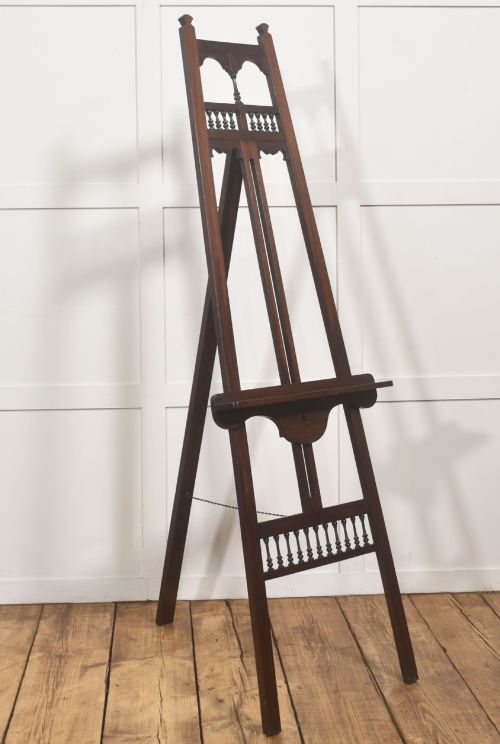
The selection on this page includes 19th Century and Victorian examples alongside 1930, 1910, 1920, and Regency pieces. Forms span standard artist easels, floor standing models, tabletop versions, book stands, and folio stands.
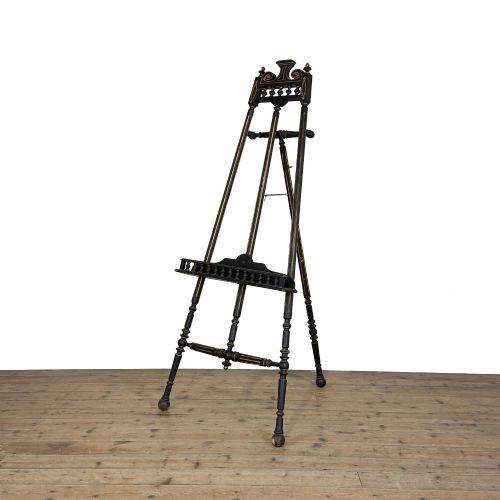
You are most likely to meet substantial studio models in oak or mahogany alongside decorative variations featuring gothic, aesthetic, or provincial detailing. These objects combine practical utility with distinct period craftsmanship.
How they were made
Makers constructed these pieces using dense hardwoods such as oak, mahogany, walnut, and ebonised wood, often supplementing the primary timber with brass and metal hardware for adjustable mechanisms.
Surface treatments range from simple polished hardwood grains to gold leaf highlights, ebonised finishes, and carved decorative elements like swan motifs or Florentine patterns.
Construction methods focused on mechanical utility, incorporating fully adjustable frames, folding supports, and sturdy floor-standing or tabletop formats to bear the weight of heavy canvases and books.
Wood Painting Easel Retail Price Guide 2026
Typical asking prices for wood painting easel among the pieces listed under this phrase on Sellingantiques today, from the lower quarter to the upper quarter. They describe what is for sale here now, not the wider market.
Periods represented span from the Regency era and 19th Century through to 1910, 1920, and 1930.
What varies in quality
Quality in a wood painting easel is defined by the integrity of the timber, the complexity of the woodwork, and the precision of the adjustable mechanisms. Dense hardwoods like mahogany and oak demonstrate superior structural resilience compared to softer alternatives.
The refinement of decorative details, from hand-carved elements and ebonised finishes to brass fittings and gold leaf application, distinguishes standard utility items from more ambitious stylistic expressions.
The Wood Painting Easel Glossary
- Easel
- A upright support used for holding an artist's canvas or panel while painting or for displaying a finished picture.
- Folio Stand
- A rack or stand designed for holding large books, prints, drawings, or architectural folios.
- Ebonised Wood
- Timber treated with a dark stain or finish to imitate the appearance of expensive ebony wood.
- Gothic Revival
- A design style drawing inspiration from medieval architectural forms, visible in pointed arches and heavy timber framing.
- Aesthetic Movement
- A late nineteenth-century style emphasising visual and material beauty over narrative or moral themes.
Wood Painting Easel: Frequently Asked Questions
How do I choose the right easel size?
Consider whether you need a large studio model for floor placement or a compact tabletop version for smaller works. Your available workspace will naturally guide this decision.
Larger 19th Century studio pieces accommodate substantial canvases, whereas tabletop French oak examples suit restricted spaces or surface display.
What is the difference between a studio easel and a display easel?
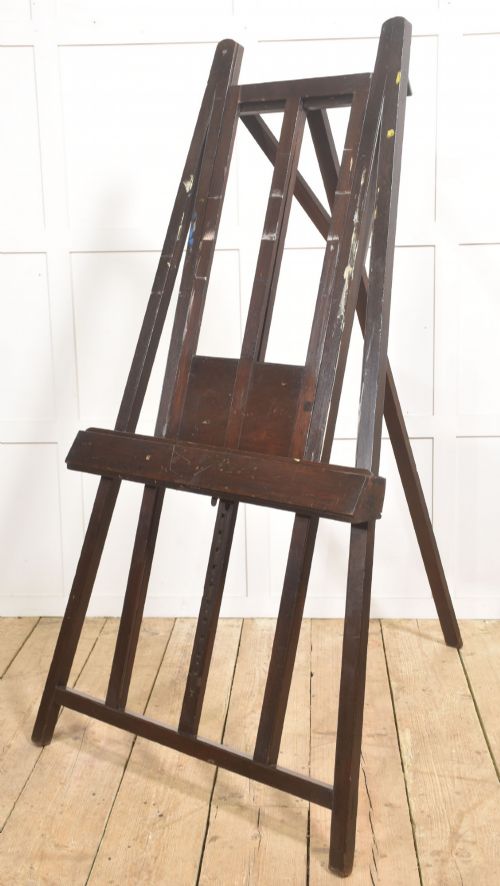
Studio easels are built primarily for robust daily use by artists, featuring heavy frames and fully adjustable mechanisms to alter the height and angle of working canvases.
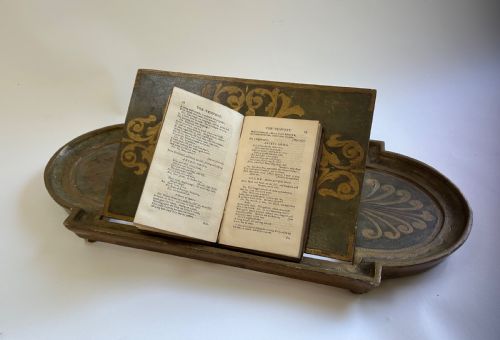
Display easels and book stands prioritise decorative presentation, incorporating carved wooden details, swan motifs, or Florentine styling to showcase finished works or folios.
How do I care for antique wood furniture?
Keep wooden pieces away from direct heat sources and strong sunlight to prevent the timber from drying out or splitting. Regular gentle dusting preserves the polished finish of hardwoods like mahogany and oak.
Avoid excessive moisture and apply suitable wax polish sparingly when the wood appears dry to maintain its natural lustre.
How can I tell the period of an easel?
Dating relies on identifying stylistic markers such as Victorian Gothic Revival details, Regency architectural influences, or 1930s construction traits. Examining the joinery, metal fittings, and wood types also helps determine age.
Catalogued examples on this page span the Regency era through the 19th Century up to 1930.