

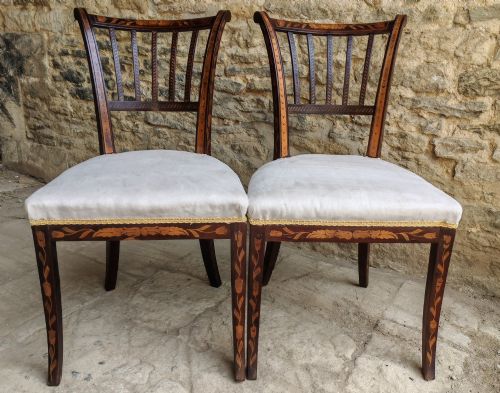


Wood Marquetry Seating
Wood marquetry seating comprises chairs, settees, and benches adorned with intricate timber patterns, offering functional elegance for period interiors.
Wood Marquetry Seating
When buyers search for wood marquetry seating, they encounter various forms including dining chairs, armchairs, side chairs, and settees. These items range from Georgian and Regency periods through to the Victorian, Edwardian, and 1900 eras.
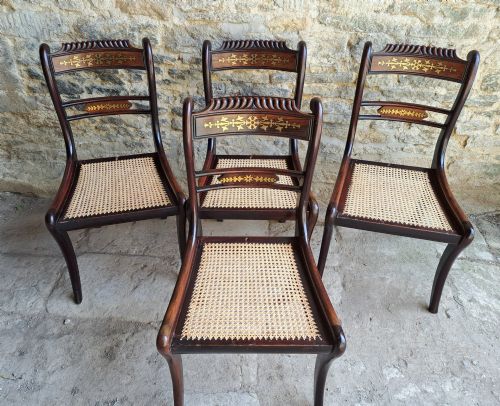
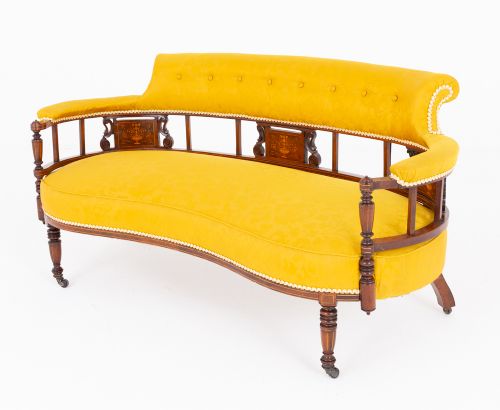
The most common pieces met on this page are Edwardian mahogany armchairs and sofas decorated with delicate inlay, alongside Regency faux rosewood and brass inlaid dining chairs.
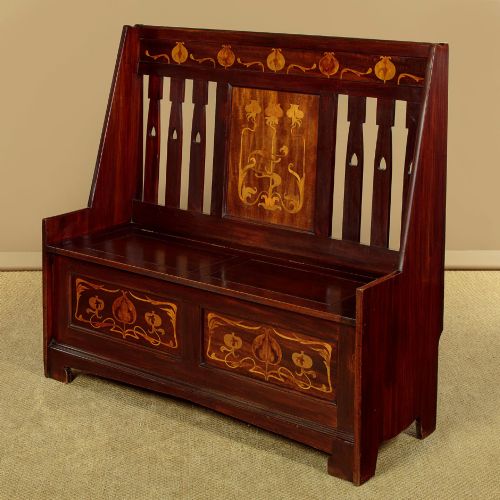
Moorish Revival, Arts and Crafts, and Sheraton Revival styles also appear, showing how different eras adapted timber inlay techniques to seating.
Materials and Construction
Cabinetmakers utilised primary timbers such as mahogany, rosewood, walnut, and satinwood to build the frames of chairs and settees.
Decorative surfaces combine wood inlay, brass stringing, and occasional bone elements, fitted precisely into the timber ground.
Frames are shaped into dining chairs, corner chairs, and sofas, sometimes upholstered in matching fabric.
Wood Marquetry Seating Retail Price Guide 2026
Typical asking prices for wood marquetry seating among the pieces listed under this phrase on Sellingantiques today, from the lower quarter to the upper quarter. They describe what is for sale here now, not the wider market.
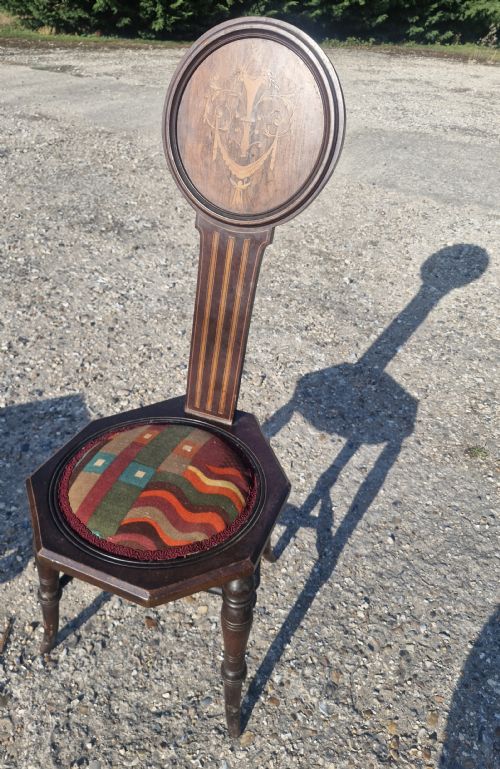
A musical chair awaits discovery among the seating, hiding a mechanical tune within its Victorian walnut marquetry frame.
Assessing Quality in Marquetry Seating
The precision of the wood inlay separates standard production from finer work, visible in the tightness of the joints between contrasting veneers.
Timber selection dictates the baseline quality, with dense grains of rosewood and mahogany providing a stable base for detailed ornamentation.
James Shoolbred And Co
The Wood Marquetry Seating Glossary
- Marquetry
- Decorative veneer applied to a wood structure in patterns and pictures. It differs from inlay by assembling the pattern on a backing before gluing it to the piece.
- Settee
- A long upholstered seat with a back and arms, designed for more than one person. These often feature detailed mahogany frames and marquetry backs.
- Satinwood
- A hard, durable timber with a characteristic golden-yellow sheen. It frequently appears in late Victorian and Edwardian inlaid furniture.
- Faux Rosewood
- A painted or stained finish mimicking the dark grain of genuine rosewood. This technique was common on Regency dining chairs.
Wood Marquetry Seating: Frequently Asked Questions
What periods do these chairs date from?
The pieces span from the Georgian and Regency eras through the Victorian period and into the Edwardian years and 1900.
Craftsmanship styles shift across these decades, moving from formal brass inlay to lighter Edwardian satinwood and mahogany marquetry.
How were inlaid settees used historically?
Settees and small sofas served as decorative and functional seating in formal parlours, drawing rooms, and bedrooms.
Their ornamental backs meant they were often placed where the intricate timber work could be readily seen.
Are these seats suitable for daily dining?
Dining chairs from Georgian and Regency periods were built for regular use around the table, though antique frames require mindful care.
Upholstered salon chairs and corner seats function best in lighter settings where their decorative marquetry remains protected.
What is the difference between an armchair and a nursing chair?
Nursing chairs are typically lower to the ground with open or low arms, designed historically for comfort during domestic tasks.
Armchairs offer higher seating positions and more substantial frames suited for general living spaces.