




Wood Marquetry Coffee Table
A wood marquetry coffee table brings intricate surface patterns and rich timber tones into a room, spanning periods from Victorian work to continental styles.
Wood Marquetry Coffee Table
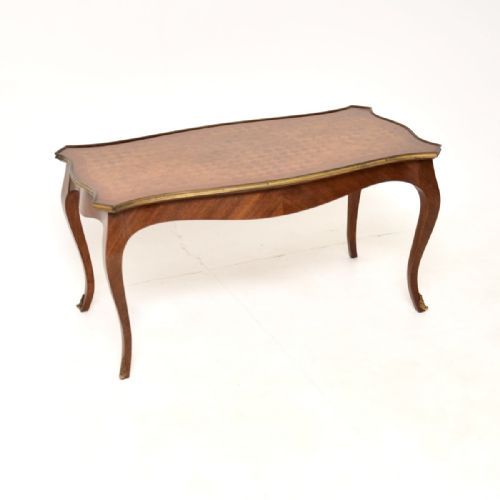
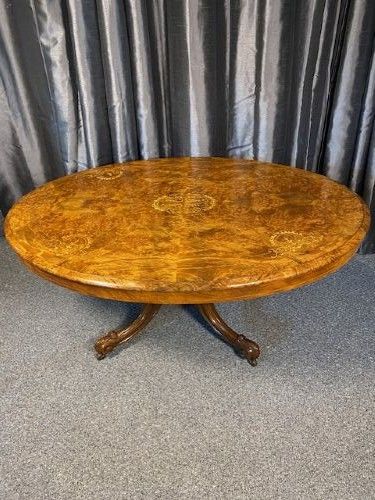
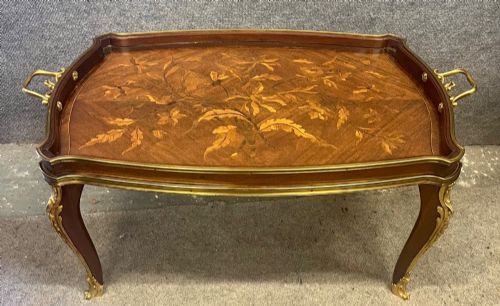
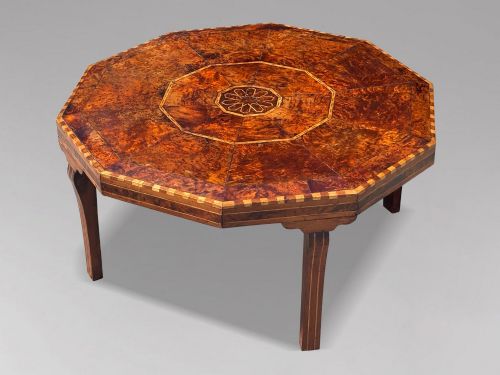
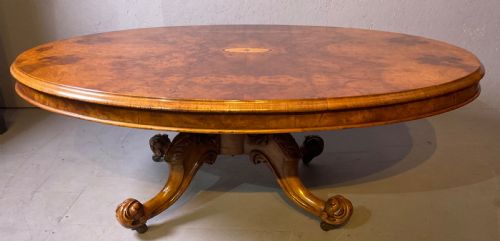
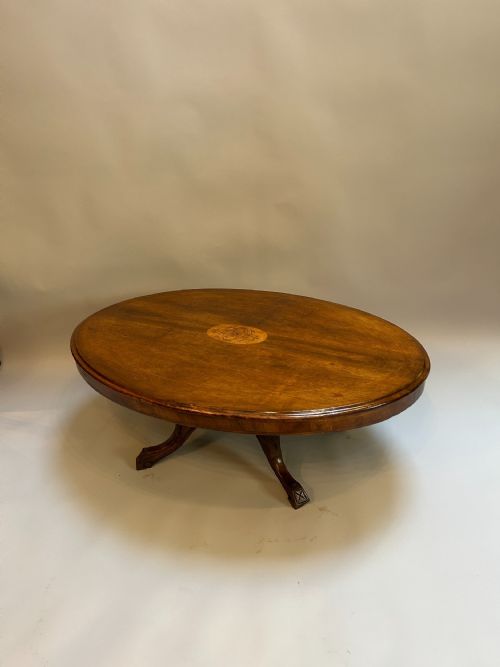
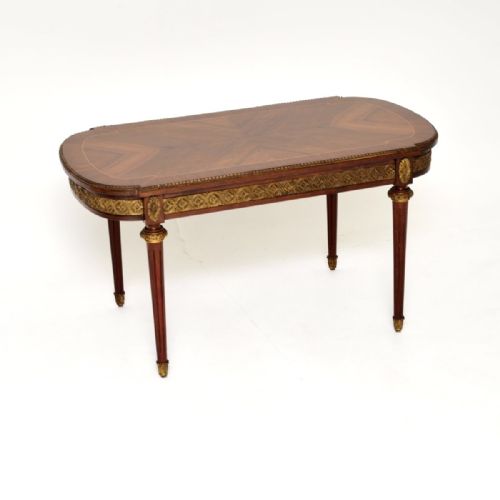
When searching for a wood marquetry coffee table, collectors encounter pieces adapted from earlier forms, including low occasional tables, converted trays, and low centre tables. The selection ranges from Victorian burr walnut designs to French examples featuring detailed floral and geometric veneers.
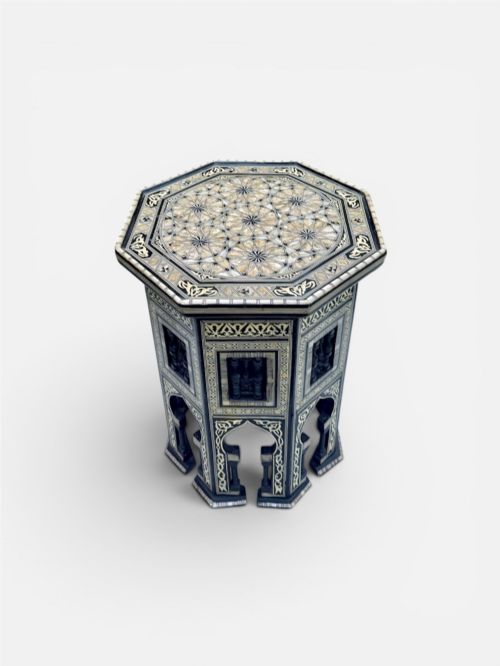
The inventory on this page relies heavily on nineteenth-century pieces, alongside Edwardian and later twentieth-century iterations. Buyers frequently meet circular, oval, and octagonal formats, often resting on pillar supports, tripod bases, or low frames.
Regional variations appear across the selection, encompassing British cabinet work, French marquetry, Italian Sorrento pieces, and Middle Eastern octagonal tables. Each origin brings distinct timber choices and specific decorative motifs to the surface.
Materials and construction methods
Cabinet makers constructed these surfaces using dense hardwoods such as walnut, mahogany, rosewood, and kingwood as a base. Finer timbers like satinwood, boxwood, and burr yew supplied contrasting tones for detailed picture panels and geometric banding.
Marquetry and parquetry techniques involved cutting thin veneers by hand and fitting them together to form pictorial scenes or repeating patterns. Craftsmen then glued these veneers to a stable underlying timber core before polishing the surface.
Periods represented span from the seventeenth-century Dutch tradition through the Victorian era into the nineteen-thirties.
Distinguishing quality across the range
The standard of a wood marquetry coffee table depends on the precision of the veneer work and the variety of woods employed. Tighter joints between individual veneer pieces and more ambitious pictorial designs separate superior examples from simpler production.
The choice of secondary timbers and the integrity of the underlying frame also define better pieces. Well-balanced proportions and refined patination across the polished surfaces indicate careful workshop execution.
Liberty & Co.·Emile Galle·Greenwood & Sons
The Wood Marquetry Coffee Table Glossary
- Marquetry
- A decorative technique where small pieces of veneer are assembled to form pictorial or abstract patterns on a wooden surface. This method creates the intricate imagery seen on many tabletops.
- Parquetry
- A geometric mosaic of wood pieces used for covering floors or furniture surfaces. It relies on repeating shapes like squares, triangles, and lozenges.
- Burr Walnut
- A specialised timber cut from the gnarled growths of a walnut tree, yielding highly swirled and mottled grain patterns. Cabinet makers prized it for decorative tabletops.
- Oyster Veneer
- Thin slices cut transversely from small branches, producing circular or oval patterns resembling oyster shells. This technique gained popularity during earlier periods.
- Ormolu
- Gilded bronze mounts applied to the edges and legs of furniture, frequently seen on French pieces. These metal additions accentuate the contours of the table.
Wood Marquetry Coffee Table: Frequently Asked Questions
How do I clean a wood marquetry coffee table?
Dust the surface regularly with a soft, dry cloth to prevent dirt accumulation in the veneer joints.
Apply a traditional beeswax polish sparingly when the timber appears dry, buffing gently to maintain the sheen.
Are these tables suitable for daily use?
Most pieces function well as coffee tables or occasional surfaces provided coasters protect the polished top from moisture.
Avoid placing them in direct sunlight or near heat sources to prevent the veneers from lifting.
How can I tell the period of a table?
Examine the timber species, base construction, and secondary woods visible underneath or inside the frame.
Style indicators such as Victorian walnut turning or Edwardian stringing help narrow down the manufacturing decade.
What is the difference between marquetry and parquetry?
Marquetry forms pictorial designs like flowers, urns, or landscapes using various tinted woods.
Parquetry arranges geometric shapes into repeating patterns such as cubes, chequers, or herringbone.