

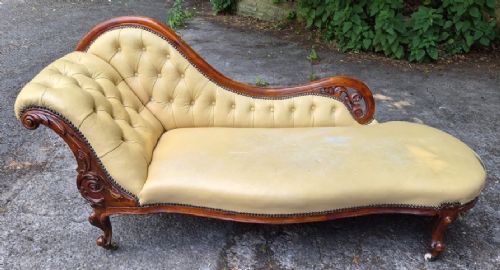


Wood Framed Couch
A wood framed couch brings enduring form to any room, offering substantial timber structure combined with deep upholstered comfort across centuries of design.
Wood Framed Couch
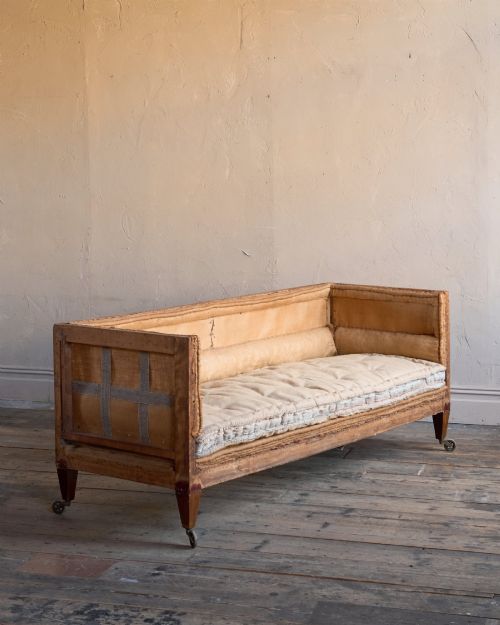
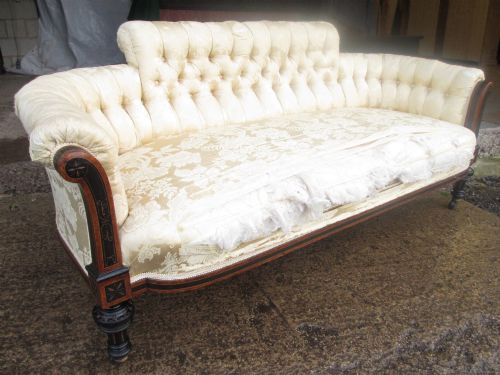
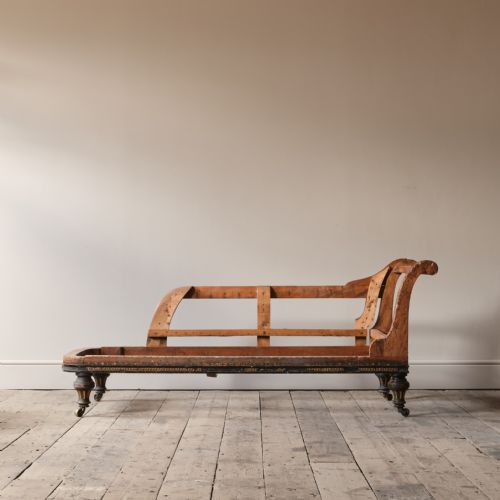
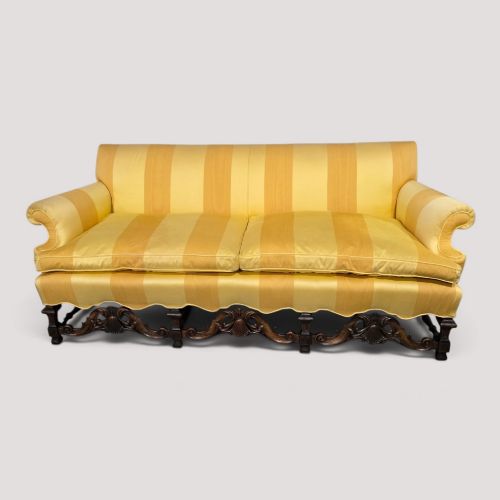
When searching for a wood framed couch, buyers encounter a diverse selection of seating that spans from the geometric lines of the Regency era through to the heavy carvings of Victorian production and later Edwardian interpretations. These pieces take many structural forms, including daybeds, chaises longues, settees, and large country house sofas designed for central placement in principal rooms.
The most common examples on this page date from the nineteenth century, utilising dense timbers like mahogany, walnut, and rosewood to anchor elaborate joinery and exposed wooden frames. Many carry influences from French Rococo Revival, Baroque Revival, and Chinese Chippendale styles, showing that makers drew freely on historical motifs while prioritizing domestic comfort.
How they were made
Makers constructed these frames using hard timbers such as mahogany, oak, walnut, rosewood, and beech, often carving scroll-ends, herms, and claw-and-feet directly into the solid wood. Giltwood and ebonised finishes appear alongside simulated rosewood surfaces, demonstrating the application of surface decoration to alter the visual weight of the timber.
Upholstery relies on traditional stuffing secured over webbing, utilising hessian and textile coverings alongside modern or period leather. Frames frequently combine exposed polished woodwork with deep seating capacity, requiring robust joinery to support heavy sprung interiors.
Wood Framed Couch Retail Price Guide 2026
Typical asking prices for wood framed couch among the pieces listed under this phrase on Sellingantiques today, from the lower quarter to the upper quarter. They describe what is for sale here now, not the wider market.
Materials recorded across the inventory include mahogany, walnut, rosewood, oak, beech, brass, giltwood, leather, hessian, and textile.
What varies in quality
The distinction between tiers rests upon the ambition of the timber carving and the integrity of the underlying joinery, where crisp hand-carved details on walnut and mahogany separate superior examples from plain utility frames. Maker attribution introduces another level of distinction, as branded or documented workshop output commands greater appreciation than anonymous regional furniture.
Surface preservation and structural retention of the original timber frame dictate the integrity of the piece over time. Frames that retain their factory polish, uncompromised structural pins, and deeply figured grain demonstrate a higher standard of initial craftsmanship.
Howard & Sons·Miles & Edwards·Holland & Sons·Hampton & Sons
The Wood Framed Couch Glossary
- Chaise longue
- An upholstered couch with a headrest at one end, designed for reclining. These pieces emerged in various French and English revival styles during the nineteenth century.
- Chesterfield sofa
- A padded settee featuring arms and back of the same height, traditionally button-tufted and covered in leather or heavy textile. Examples from the Regency period demonstrate deep seating and heavy carved supports.
- Giltwood
- Timber treated with gold leaf or gold paint to simulate solid gold enrichment. This technique highlights carved frames on formal settees and daybeds.
- Canape
- An ornamental French sofa featuring an exposed wooden frame and an upholstered back. These seats display carved walnut, beech, or gilt surfaces typical of continental design.
- Scroll-end
- A structural terminal shaped into a spiral curve, commonly seen on nineteenth-century sofa arms. This feature adds dynamic movement to the timber silhouette.
Wood Framed Couch: Frequently Asked Questions
What is a country house sofa?
A country house sofa is a large, deep-seated piece built for comfort in English residential interiors, often featuring generous proportions and traditional upholstery.
These pieces typically date from the nineteenth and early twentieth centuries, prioritizing relaxed seating depths over formal upright posture.
How do I identify a Regency couch?
Regency couches show classical restraint or bold revival motifs inspired by ancient Greek, Roman, and Egyptian forms, often utilising rosewood, mahogany, or simulated grain.
Details such as carved herms, bronze mounts, and scrolled ends help distinguish this early nineteenth-century period from later Victorian revivals.
Where should I place a daybed?
A daybed works effectively as a transitional seating and lounging option in libraries, studies, or large drawing rooms where central floor placement reveals its exposed wooden frame.
Because many examples feature finished backs and detailed timber carvings on all sides, they do not need to sit flush against a wall.
What is the difference between a settee and a sofa?
Settees traditionally denote lighter, often two-seater wooden-framed seats with partially exposed woodwork, whereas sofas generally provide larger, fully upholstered seating arrangements.
In historical listings, however, the terms frequently overlap depending on the scale of the timber frame and the depth of the cushions.