


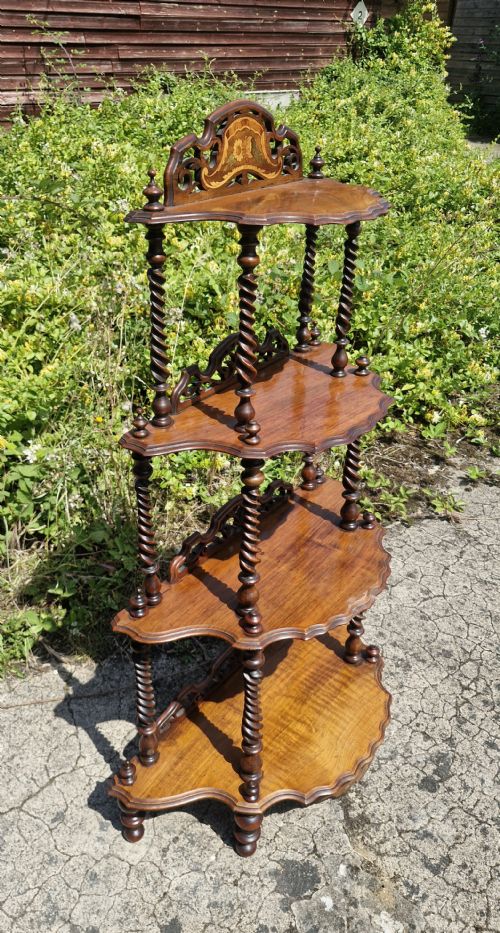


Wood Corner Whatnot
A wood corner whatnot provides tiered open display for the home, making use of neglected wall angles with upright shelving.
Wood Corner Whatnot
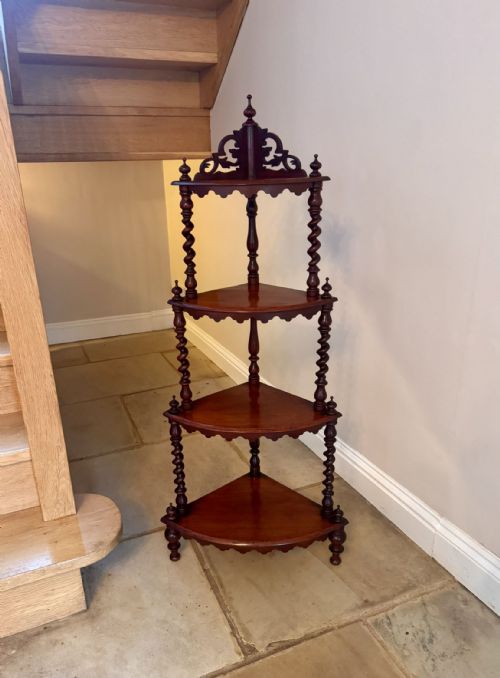
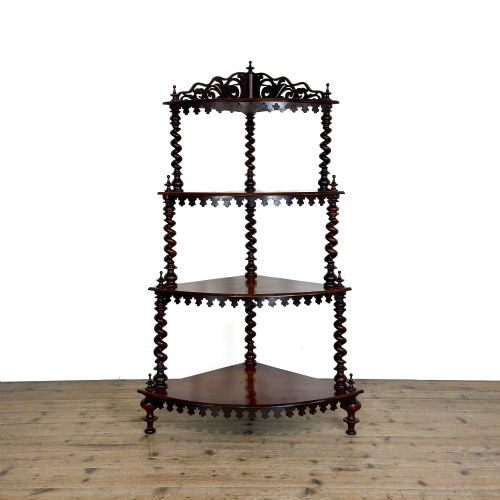
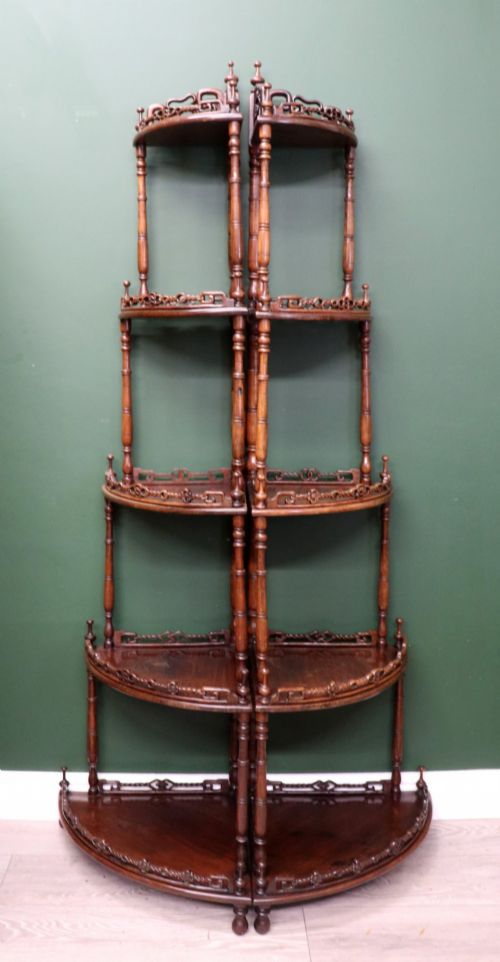
A wood corner whatnot is a tiered shelving unit designed to fit neatly into the angle of a room. These pieces provide vertical display space for ornaments and books without dominating the floor space of a chamber.
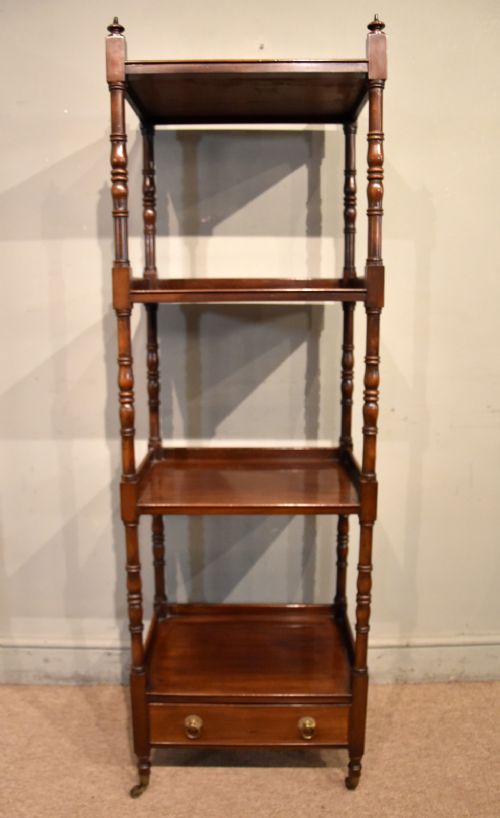
Most examples encountered on this page belong to the Victorian era, alongside pieces from the Georgian and Regency periods. They take the form of corner shelves, multi-tiered display stands, and etageres constructed for domestic interiors.
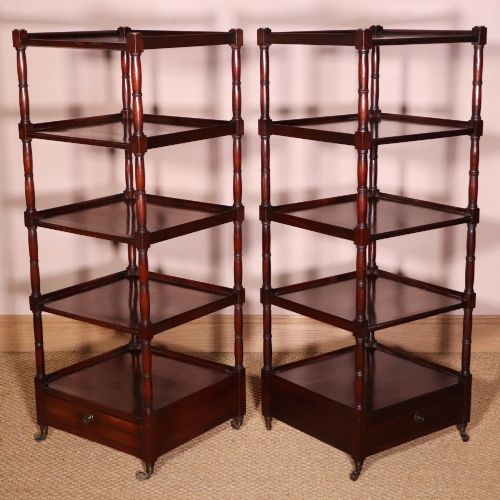
Makers utilised various configurations, ranging from compact three-tier structures to taller six-tier stands. The corner format remains a practical choice for turning dead space into functional exhibition areas.
Materials and construction methods
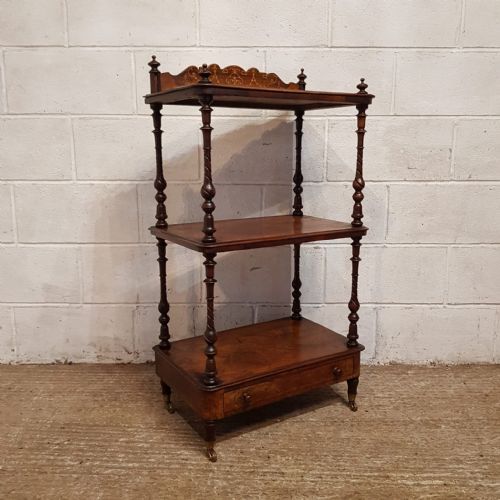
Cabinetmakers built these pieces primarily from dense timbers such as mahogany, walnut, burr walnut, and rosewood. Oak and ebonised woods also appear, providing sturdy foundational frames for the open tiers.
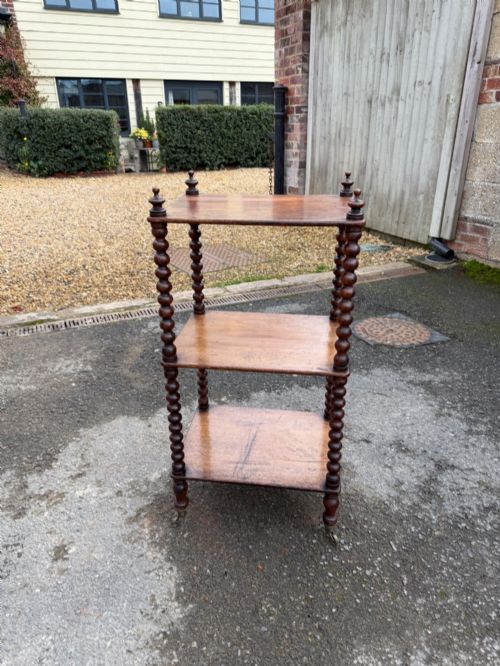
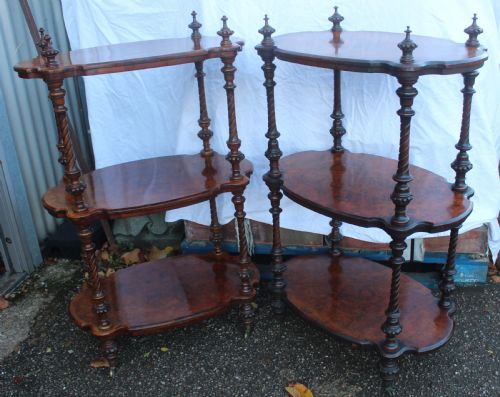
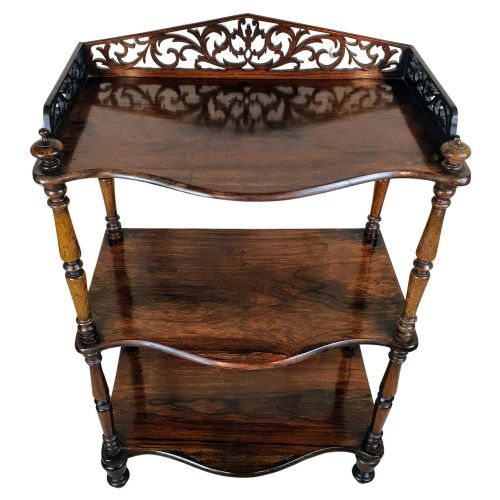
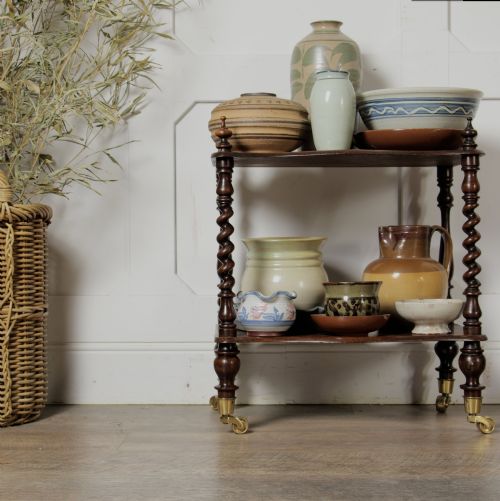
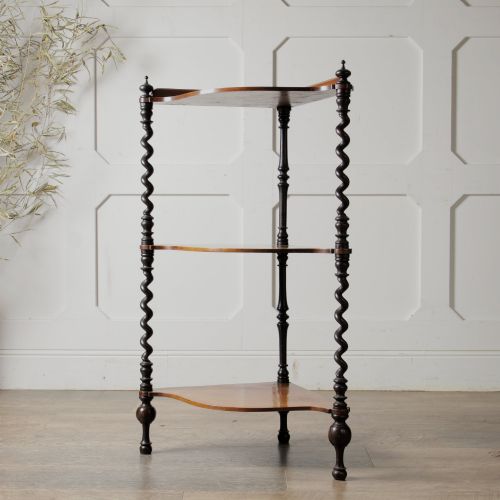
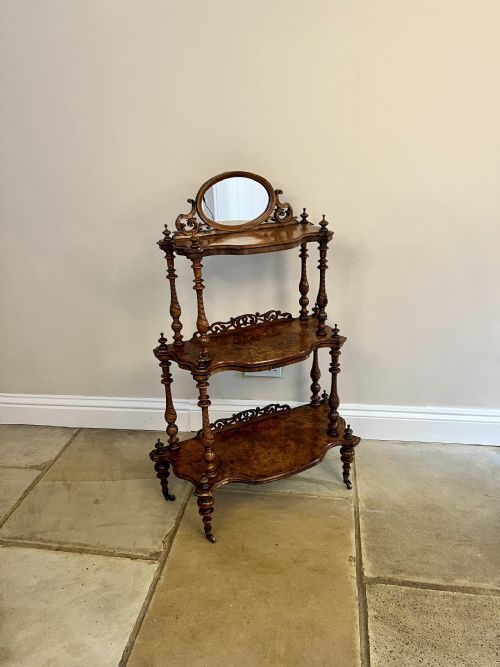
Decoration relied on marquetry inlay, wood inlay, and pierced fretwork panels. Turned supports, including barley twist columns, frequently connect the graduated shelves from top to bottom.
Wood Corner Whatnot Retail Price Guide 2026
Typical asking prices for wood corner whatnot among the pieces listed under this phrase on Sellingantiques today, from the lower quarter to the upper quarter. They describe what is for sale here now, not the wider market.
Listings feature woods including mahogany, walnut, burr walnut, rosewood, oak, and glass components.
Distinctions in quality and execution
Quality rests upon the selection of timber veneers, such as richly figured burr walnut or dense mahogany, paired with crispness in turned elements like barley twist columns. Finer pieces incorporate delicate pierced fretwork and precise marquetry inlay.
Structural integrity separates standard utilitarian units from superior examples. Well-made stands maintain rigid tier alignment and clean joints at the wall angle, ensuring stability across multiple display levels.
The Wood Corner Whatnot Glossary
- Whatnot
- An open-tiered piece of furniture designed for displaying small objects and ornaments. These stands appeared in various forms throughout the nineteenth century.
- Etagere
- A piece of furniture consisting of a set of open shelves for displaying articles. The term is often used interchangeably with whatnot in period listings.
- Fretwork
- Ornamental work consisting of interlaced or perforated patterns. Pierced examples require careful carving to achieve delicate geometric or floral designs.
- Barley Twist
- A type of turning resembling a spiral rope or twisted column. This decorative technique appears frequently on nineteenth-century supports.
- Marquetry
- Decorative woodwork in which pieces of wood are fitted into a veneer to form designs. This technique enhances the visual appeal of flat tier surfaces.
Wood Corner Whatnot: Frequently Asked Questions
What is a corner whatnot used for?
A corner whatnot serves primarily as an open display stand for ornaments, ceramics, and small books. The stepped tiers allow multiple items to be shown clearly in a limited footprint.
Historically, these units occupied unused wall angles in reception rooms and parlours. They brought decorative utility to corners that standard furniture could not easily fill.
How do I identify a Victorian piece?
Victorian examples often feature dense timbers like rosewood and burr walnut alongside decorative flourishes such as barley twist columns. Pierced fretwork galleries and inlaid marquetry panels also point toward this period.
Earlier pieces from the Georgian or Regency eras tend toward simpler mahogany construction with cleaner structural lines. Examining the timber grain and turning style helps clarify the likely decade of manufacture.
Where should I place a corner whatnot?
These units fit naturally into the internal right angles of a room, making use of space that remains empty. Placing them away from direct heat sources protects the polished timber surfaces and veneers.
Freestanding corner models anchor themselves securely against two intersecting walls. Their triangular footprint provides inherent stability on level flooring.
What is the difference between a whatnot and an etagere?
While both terms describe multi-tiered shelving units, an etagere often implies a slightly lighter, more decorative framework meant for display. Whatnots encompass a broad range of tiered stands, including sturdy multi-tier storage units.
In practice, makers and dealers used the designations interchangeably during the nineteenth century. Both forms share the defining characteristic of open shelves graduated in size from top to bottom.