

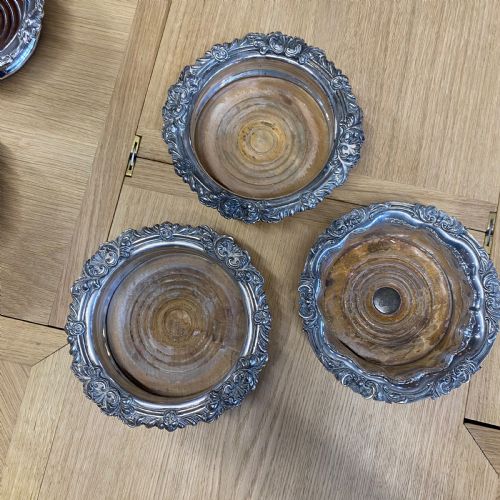
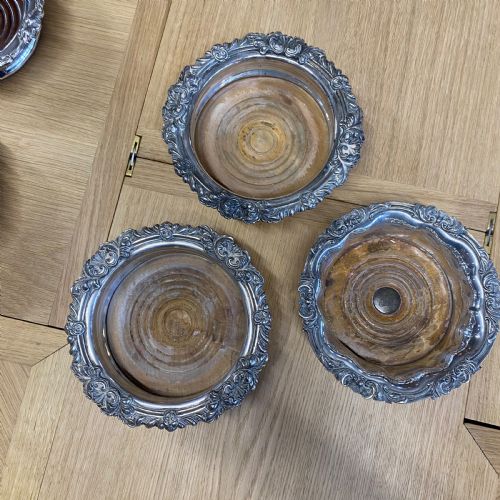
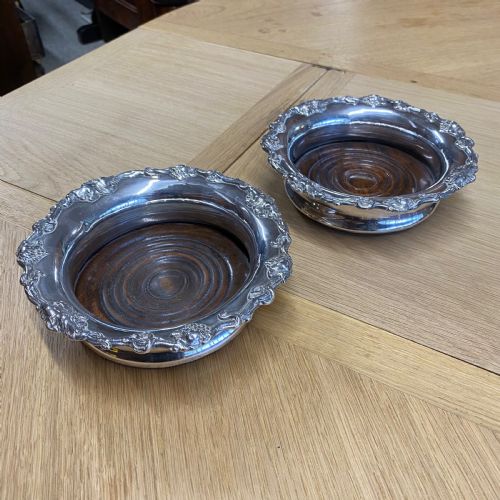
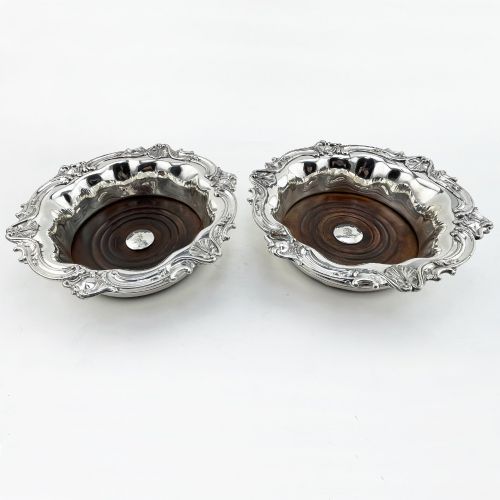
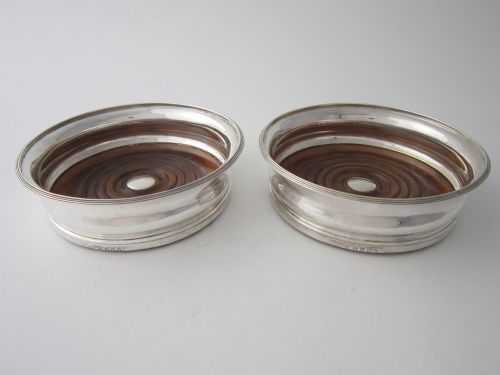
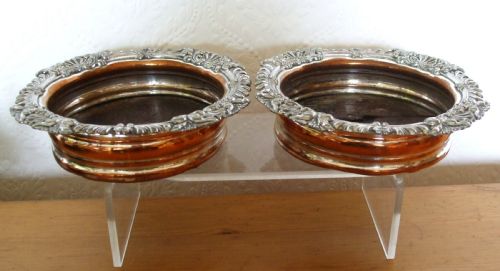


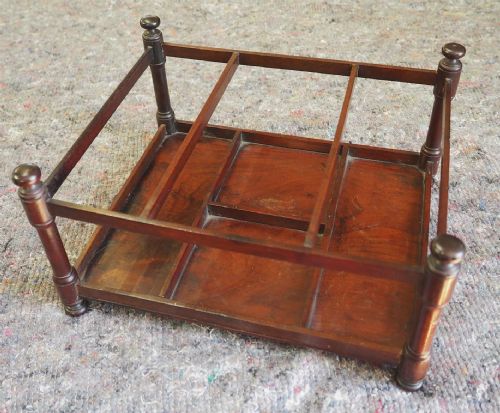
Wood Bottle Coaster
A wood bottle coaster protects the table from moisture and rings while adding classic character to dining tables.
Wood Bottle Coaster
A wood bottle coaster serves to hold wine bottles and decanters securely, protecting polished dining surfaces from rings and spills. When searching for a wood bottle coaster, buyers encounter circular stands designed to fit standard bottle bases.
The selections available here span periods from the eighteenth century through the Edwardian era, incorporating styles such as Georgian, Victorian, and Regency. Many examples combine turned timber bodies with fitted metal mounts, silver rims, or central buttons.
Forms range from single stands to multi-bottle holders and larger magnum sizes. Mahogany and oak appear frequently alongside treen constructions and turned rosewood bodies.
How they were made
Maker's workshops utilised traditional turning techniques on timber lathes to shape circular wooden bodies from dense hardwoods like mahogany and oak. These turned frames were often lined with baize or felt underneath to protect furniture.
Many pieces integrate metal elements, uniting wood with sterling silver mounts, copper, brass, or Old Sheffield Plate rims. Turned treen examples rely entirely on precision woodworking without metal additions.
Wood Bottle Coaster Retail Price Guide 2026
Typical asking prices for wood bottle coaster among the pieces listed under this phrase on Sellingantiques today, from the lower quarter to the upper quarter. They describe what is for sale here now, not the wider market.
Listings feature mahogany, oak, and rosewood alongside silver plate, copper, and brass across Georgian and Victorian periods.
What varies in quality
Quality shows in the crispness of the wood turning and the weight of the timber used in the body. Finer examples maintain smooth, symmetrical circular profiles with well-fitted metal linings and intact base inserts.
The integration between timber and metal mounts dictates the overall standard of construction. Superior pieces demonstrate precise joining where silver, brass, or Old Sheffield Plate meets the turned wood.
Matthew Boulton·James Mein of Kelso·Asprey
The Wood Bottle Coaster Glossary
- Treen
- Small domestic wooden objects produced by turning on a lathe or through hand carving. This term applies to utilitarian and decorative items made from domestic and exotic woods.
- Old Sheffield Plate
- A composite material formed by fusing a thin sheet of silver to a thicker copper base before rolling and fabrication. This technique preceded modern electroplating.
- Decanter coaster
- A specialised stand sized to accommodate the broader base of a decanter rather than a standard wine bottle. These items share the same protective function on the dining table.
- Georgian
- Pertaining to the period covering the reigns of the four British monarchs named George, spanning the eighteenth and early nineteenth centuries. Furniture and tableware from this era display distinct classical proportions.
Wood Bottle Coaster: Frequently Asked Questions
What is a wood bottle coaster used for?
These pieces sit beneath wine bottles and decanters on the dining table to catch condensation and drips. They prevent moisture and ring marks from reaching polished wood surfaces.
Beyond protection, they allow bottles to be slid smoothly across the table between guests during dinner service.
How do I clean a wooden coaster?
Wipe the wooden surfaces gently with a dry or barely damp cloth to remove dust and surface marks. Avoid soaking the timber in water, especially where wood meets metal mounts.
Apply suitable furniture wax occasionally to nourish the timber and maintain the polish of the grain.
Are these coasters suitable for modern wine bottles?
Most traditional pieces accommodate standard wine bottles and traditional bordeaux or burgundy shapes. Magnum sizes and larger decanters require specifically proportioned wide-rimmed stands.
Check the internal diameter of the coaster against the base measurements of your bottles to ensure a proper fit.
How can I tell a Georgian coaster apart from a Victorian one?
Georgian examples often display restrained classical lines, plain mahogany turning, and delicate silver or Sheffield plate mounts. Victorian versions frequently incorporate heavier proportions, bolder carved details, and varied mixed metals.
Examination of the timber species, lining materials, and mounting techniques helps clarify the period of manufacture.