

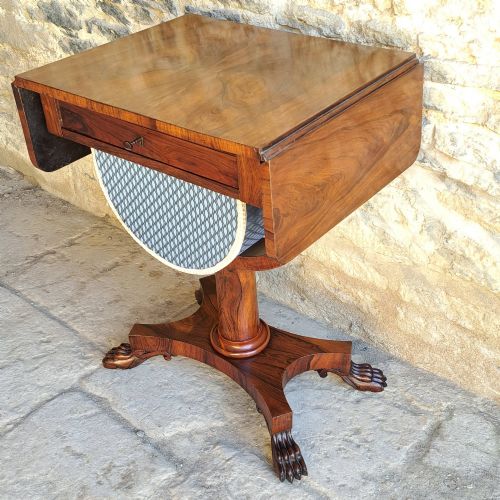


Wood and Fabric Work Table
A wood and fabric work table brings together polished timber and fitted interior textiles to create a functional piece for needlework and small crafts.
Wood and Fabric Work Table
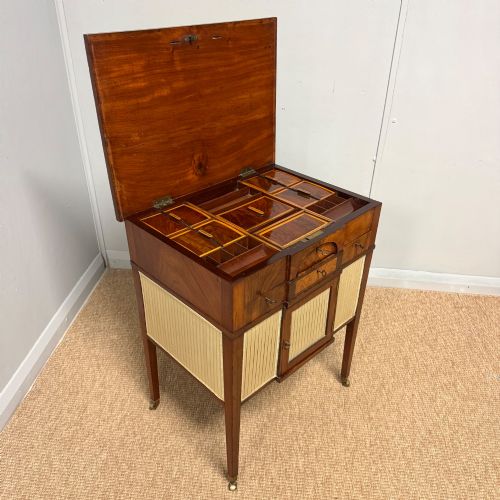
A wood and fabric work table combines a solid timber frame with integrated textile components, serving as a dedicated station for sewing, hobbies, and small domestic tasks. These pieces appear predominantly across the Georgian, Regency, William IV, Victorian, and Edwardian periods.
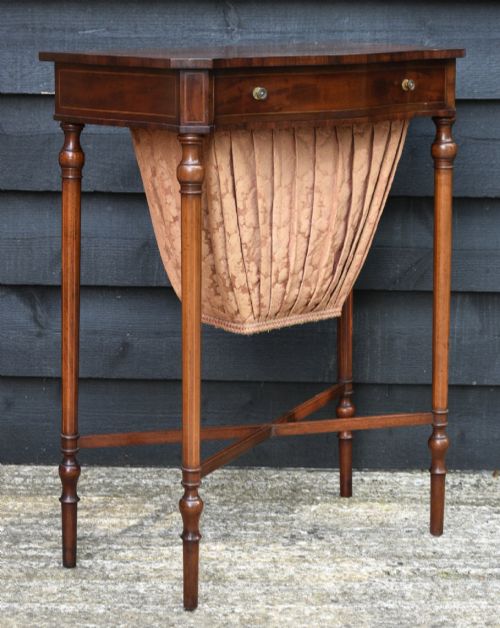
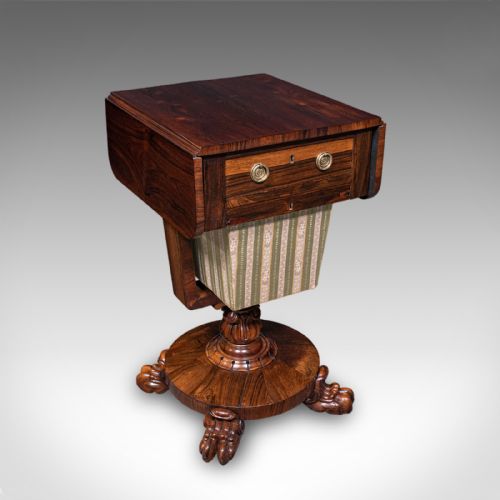
The primary forms on this page include sewing tables, work tables, occasional tables, side tables, and ladies hobby tables. Buyers encounter drop leaf variants, serpentine proportions, and freestanding designs equipped with compartments and storage for threads and implements.
Timbers such as mahogany, rosewood, walnut, burr walnut, satinwood, and boxwood provide the structural wooden elements, whilst silk and fabric form the accompanying storage bags or fitted linings.
Materials and technique
Cabinetmakers constructed the frames using dense hardwoods like mahogany and rosewood, often applying feathering or figuring to the grain for visual depth. Secondary timbers and boxwood stringing provide structural support and decorative contrast.
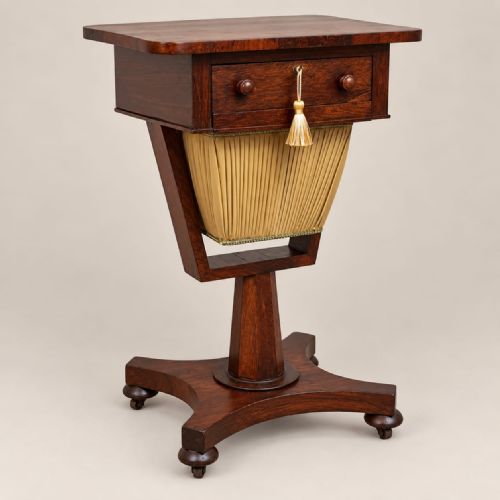
Fabric elements, notably silk and gathered cotton, are integrated into suspended hanging bags or lined compartments beneath the work surface. Brass accents appear on castors, hinges, and drawer pulls to complete the construction.
Wood and Fabric Work Table Retail Price Guide 2026
Typical asking prices for wood and fabric work table among the pieces listed under this phrase on Sellingantiques today, from the lower quarter to the upper quarter. They describe what is for sale here now, not the wider market.
The selection spans the nineteenth and early twentieth centuries, featuring woods such as rosewood, mahogany, walnut, and satinwood.
Craftsmanship and distinction
Distinction in these pieces rests on the choice of timber veneer, such as figured rosewood or burr walnut, and the precision of cabinetmaking joints. Finer examples display harmonious proportions, such as small or serpentine shapes, and integrated internal compartments.
The preservation of the original fabric components and hanging bags, alongside quality brass hardware and stable drop leaf mechanisms, elevates the standing of a piece within the range.
Gillow of Lancaster
The Wood and Fabric Work Table Glossary
- Drop leaf
- A table featuring hinged side flaps that fold down to reduce the footprint or lift to extend the surface area.
- Serpentine
- A curved line of furniture moulding or fronts featuring a convex centre flanked by concave curves.
- Feathered mahogany
- Timber veneer cut to display a symmetrical plume pattern resembling feathers along the grain.
- Satinwood
- A lustrous, hard timber with a yellowish colour used for fine cabinetmaking and decorative stringing.
Wood and Fabric Work Table: Frequently Asked Questions
What is a wood and fabric work table?
A wood and fabric work table is a functional antique piece designed for needlework, sewing, and small crafts, featuring a timber frame paired with a suspended textile bag or compartment.
These tables combine a solid top surface with internal storage spaces tailored for threads, needles, and sewing implements.
How were work tables used historically?
Historically, ladies utilised these tables in the parlour or sitting room to hold ongoing sewing projects, embroidery, and crafting materials.
The drop leaf surface and compartments allowed the user to keep tools organised while sitting nearby for handiwork.
How do I identify a Regency work table?
Regency work tables typically date from the early nineteenth century and feature dark timbers like rosewood or mahogany, often with brass mounts and classical proportions.
They frequently incorporate lyre supports or pillar bases alongside silk hanging bags for sewing.
How do I live with an antique work table?
These pieces function well as side tables or lamp tables in a modern sitting room, while retaining their historic character and storage utility.
Placing them away from direct heat sources helps protect the polished timber and delicate fabric elements from deterioration.