







Wire Fireplace Guard
A wire fireplace guard protects the room from escaping embers while keeping the hearth's warmth unobstructed.
Wire Fireplace Guard
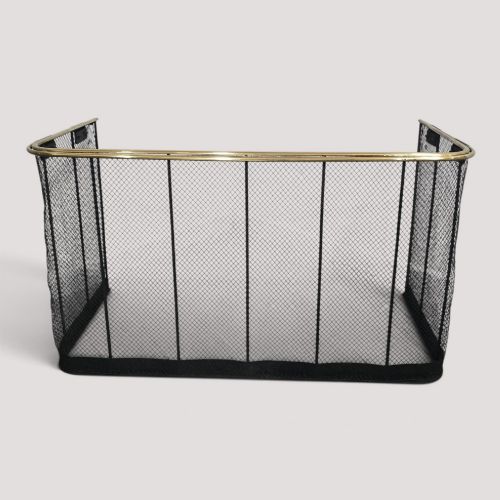
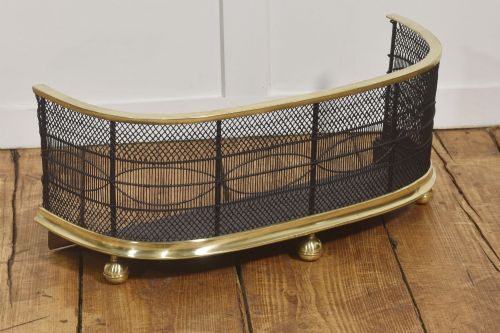
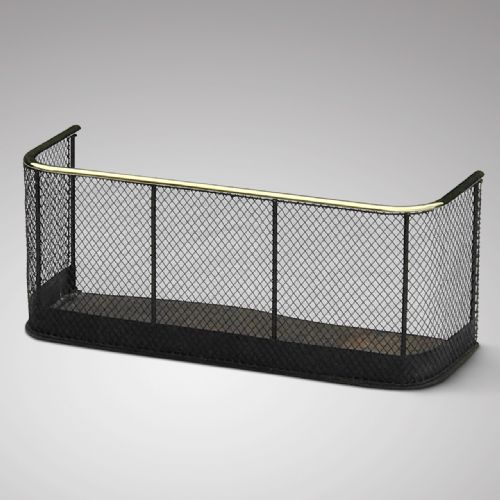
A wire fireplace guard takes the form of a protective screen or nursery fender placed before an open hearth to contain sparks and ash. When you search for a wire fireplace guard, you encounter pieces designed to secure the hearth area safely.
The selections span the nineteenth century, the Victorian period, the Edwardian era, and the early twentieth century. Common formats include bowed nursery guards, spark guards, and fire screens outfitted with brass top rails or frames.
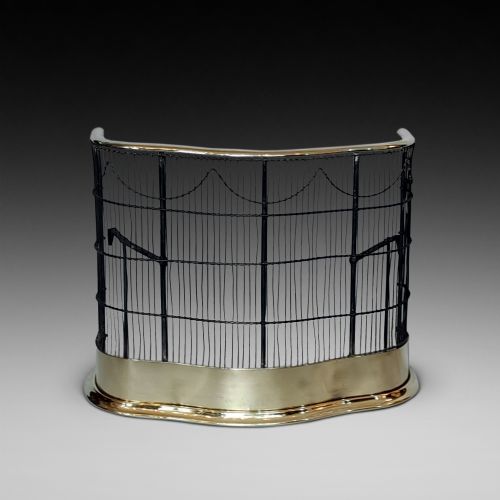
Originating largely within English country house and traditional domestic contexts, these items combine practical safety duties with decorative metalwork. They range from simple mesh barriers to elaborate brass-rimmed serpentine designs.
How they were made
Construction relies heavily on durable metals combined with fine metal mesh or woven iron wire. Frameworks utilise brass, wrought iron, and steel wire to build sturdy structures that withstand regular hearth heat.
Many examples feature polished brass rims, top rails, or embossed brass frames paired with dark iron mesh bodies. Artisans shaped iron wire and wire mesh into rigid panels, securing them within supportive metal surrounds.
Wire Fireplace Guard Retail Price Guide 2026
Typical asking prices for wire fireplace guard among the pieces listed under this phrase on Sellingantiques today, from the lower quarter to the upper quarter. They describe what is for sale here now, not the wider market.
Some nursery fenders doubled as indoor clothes dryers, helping Victorian households manage endless small garments by the hearth.
What varies in quality
Distinctions in quality arise from the gauge of the wire and the weight of the supporting brass or iron frame. Finer execution shows in evenly woven mesh, securely joined metal joints, and substantial brass top rails.
Design complexity also separates standard utility guards from finer examples. Serpentine shapes, bowed nursery structures, and embossed brass detailing indicate more ambitious craftsmanship than simple flat mesh screens.
The Wire Fireplace Guard Glossary
- Nursery fender
- A low protective barrier placed around a hearth to prevent children and pets from getting too close to the fire. These guards often incorporate clothes rails or elevated top bars.
- Fire guard
- A protective screen placed in front of an open fireplace to catch flying sparks and embers. They use wire mesh panels held within metal frames.
- Serpentine
- A gently undulating curved shape seen on the front edges of certain guards. This contour adds both visual elegance and structural stability.
- Spark guard
- A specialised screen designed specifically to intercept hot sparks emitted by burning fuel. They typically feature fine wire mesh construction.
Wire Fireplace Guard: Frequently Asked Questions
What is a wire fireplace guard used for?
These guards serve primarily to contain sparks, ash, and embers thrown from open fires, protecting flooring and furnishings. They also act as a physical barrier to keep children and pets at a safe distance from hot grates.
Historically, nursery versions often included built-in rails for drying children's clothes near the warmth of the hearth. Today, they remain a practical addition to any functioning traditional fireplace.
How do I date a wire fireplace guard?
Dating relies on observing material combinations, construction methods, and stylistic cues present in the frame. Pieces from the Regency period often display lighter, refined brass work, while Victorian and Edwardian examples frequently feature heavier wire mesh and bold brass top rails.
Turn of the century pieces may also incorporate embossed brass motifs or country house aesthetics. Comparing the specific metal combinations helps place an item within the nineteenth or early twentieth century.
What is the difference between a fire screen and a fire guard?
A fire screen often emphasises decorative appearance, sometimes utilising solid panels of brass, wood, or fabric to block unlit hearths during warmer months. They focus on ornament as much as utility.
A fire guard specifically prioritizes safety, utilising open wire mesh or iron wire to ensure visibility of the flames while stopping sparks. Many period pieces blend these functions by pairing mesh bodies with decorative brass frames.
How do I live with an antique wire guard?
Living with these pieces involves integrating them into an active or decorative hearth setting. They require stable placement on level flooring before the fireplace opening to ensure proper safety.
Maintenance involves gentle dusting of the wire mesh and occasional polishing of brass elements if a brighter finish is desired. They add immediate historical character and texture to a room.