
Winged Back Armchair
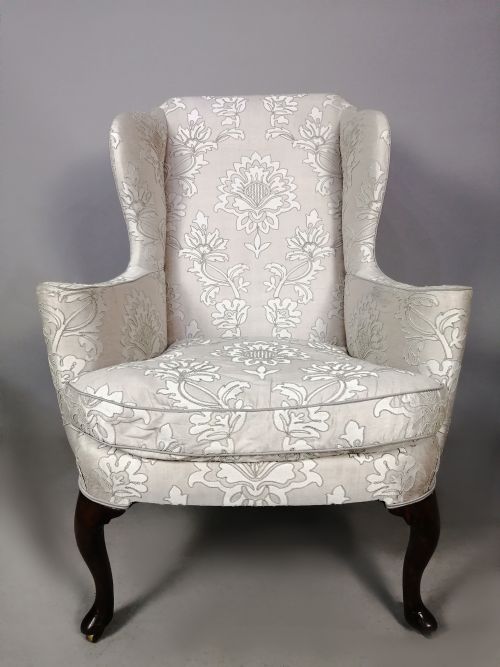
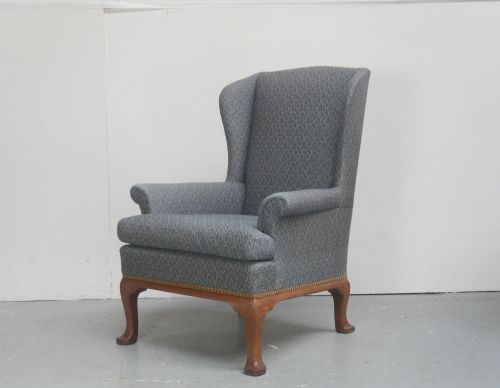
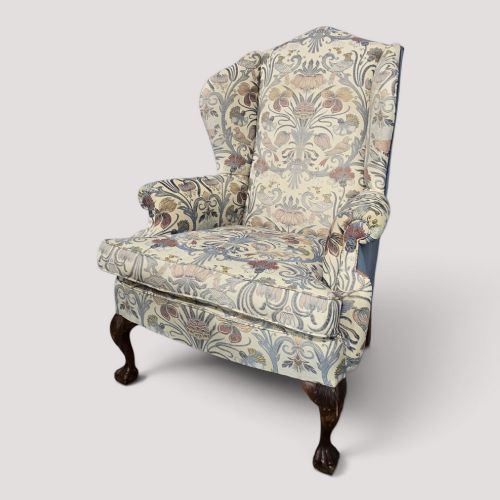
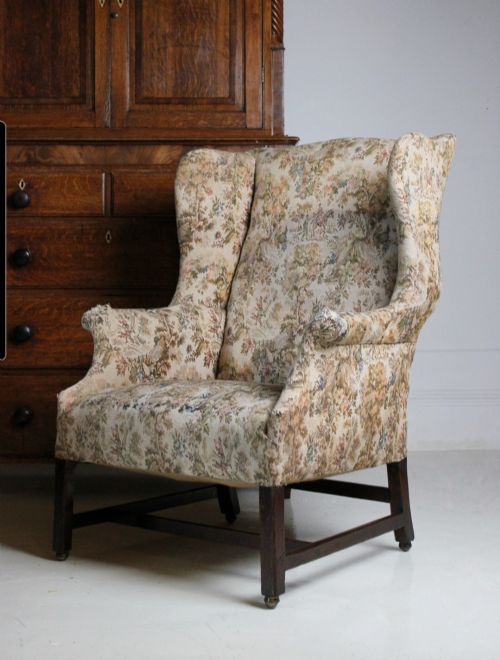
A winged back armchair provides draught protection around the head and shoulders, offering a commanding fireside seat found across Georgian and later periods.
Winged Back Armchair
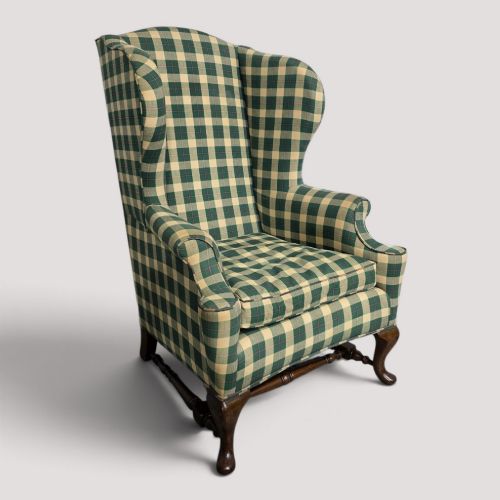
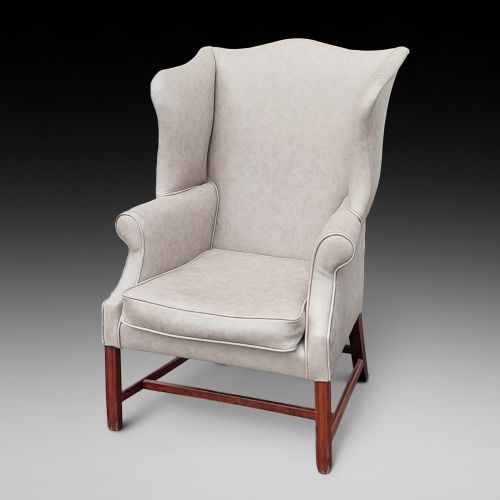
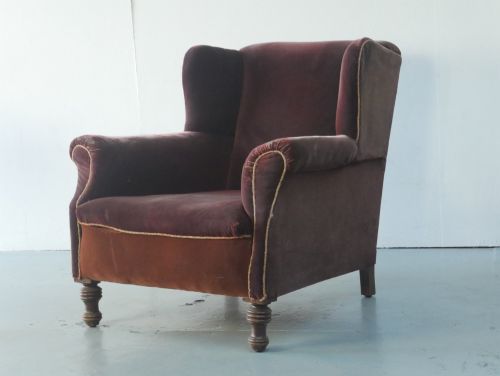
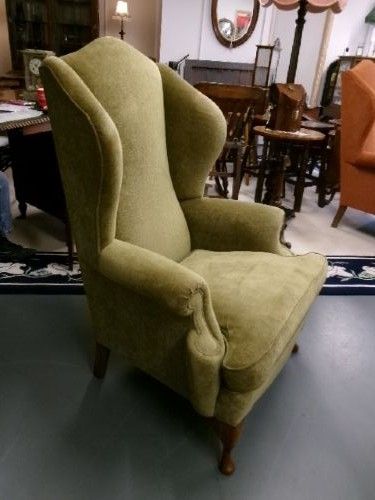
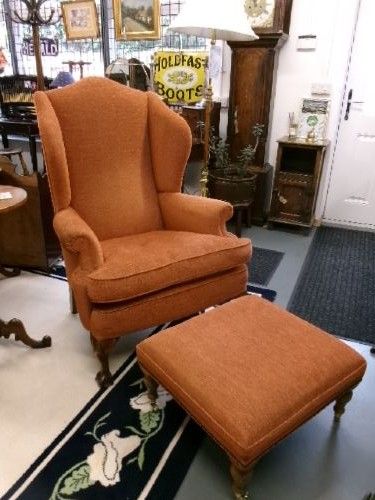
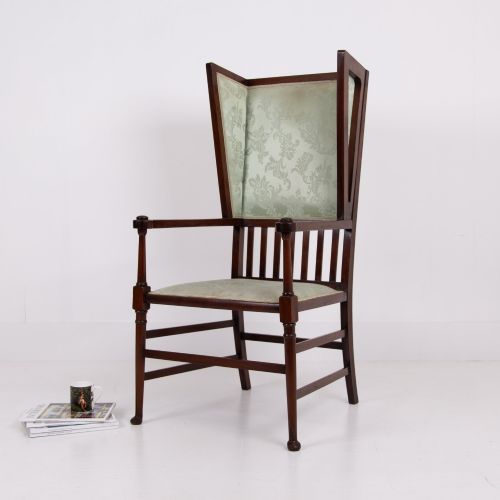
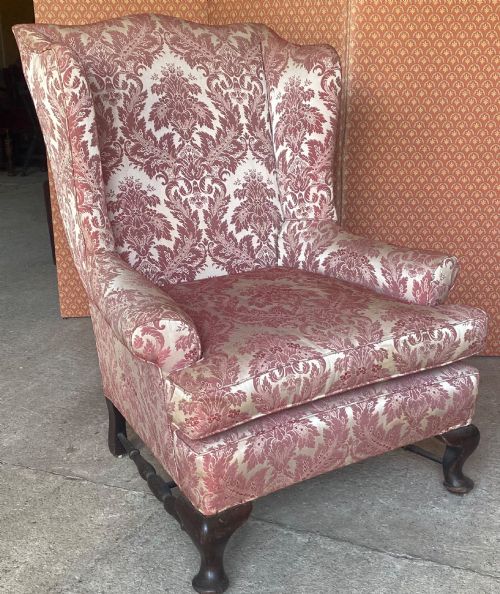
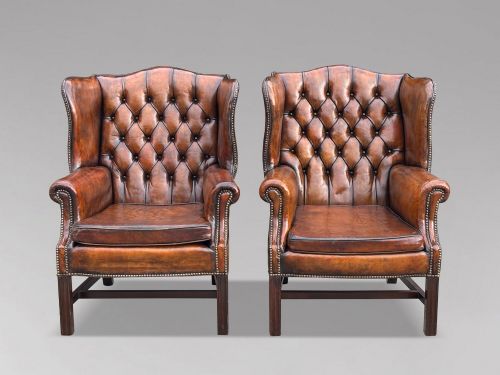
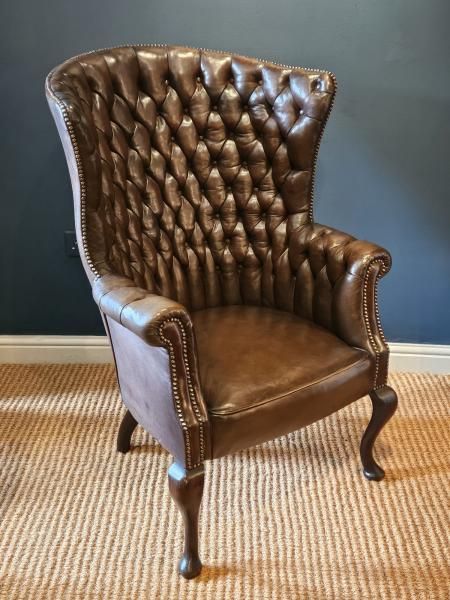
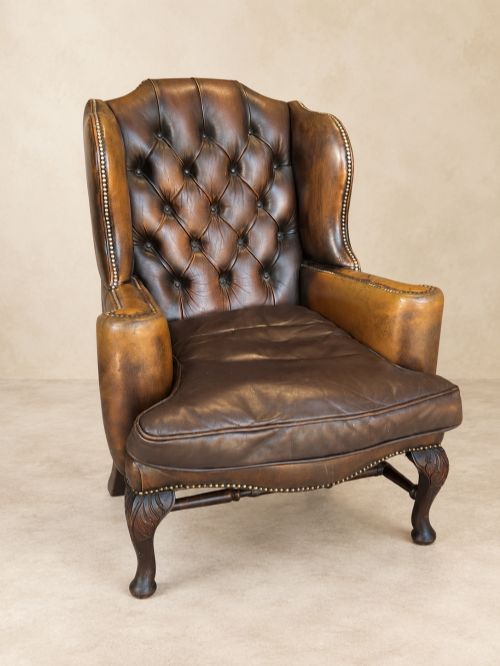
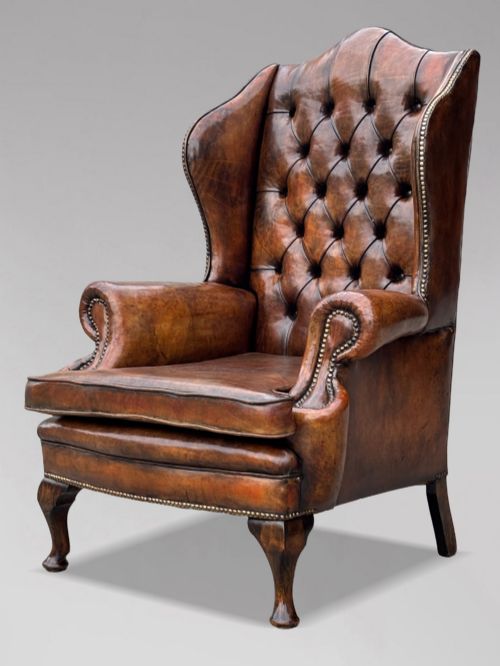
When searching for a winged back armchair, you encounter forms ranging from robust 18th century examples to later revivals in oak, mahogany, and walnut. The most frequently met pieces date from the 19th century and the early decades of the 20th century, often incorporating deep buttoning and generous proportions.
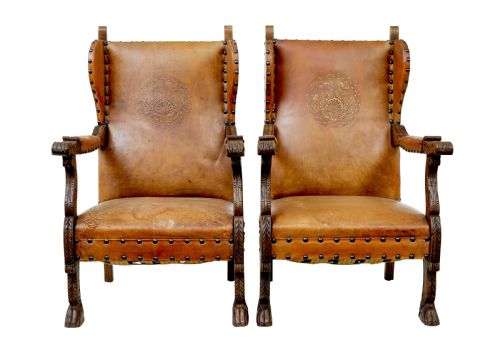
Designs span from formal George III style frames with cabriole legs to vernacular lambing chairs and occasional French variations. Upholstery choices vary widely, including plain leather, embossed leather, velvet, chenille, plaid wool, and calico over feather-filled cushions.
How they were made
Frames rely on sturdy timbers such as mahogany, walnut, and oak, joined to support the high back and characteristic side wings. Woodwork is occasionally inlaid, carved with cabriole details, or left plain beneath traditional upholstery builds.
The characteristic cushioning and padding utilise materials like leather, fabric, and feathers. Brass upholstery tacks often secure the edges of leather and textile coverings along the wooden frame.
Periods represented span from the 18th century through the Victorian era and into the 1930s.
What varies in quality
The integrity of the timber frame and the authenticity of the period structure dictate the standing of a piece. Earlier examples display precise joinery and timber selection that mark them out from later revival interpretations.
The standard of upholstery materials, from supple leather to specialist woven fabrics, alters the tactile finish. Subtle proportions in the sweep of the wings and the stance of the legs separate standard seating from exceptional examples.
Howard And Sons
The Winged Back Armchair Glossary
- Cabriole leg
- A furniture leg that curves outward at the knee and tapers inward to an ankle, common on Georgian seating.
- Lambing chair
- A traditional high-backed wooden chair, sometimes with enclosed sides, designed for warmth near a hearth.
- Barrel back
- An upholstered chair where the back and arms form a continuous semicircular enclosure.
- Buttoning
- A method of upholstery where recessed buttons pull the fabric tight against the padding in a grid pattern.
- Wing
- The triangular side panel attached to the back of an armchair to deflect draughts away from the sitter's head.
Winged Back Armchair: Frequently Asked Questions
What is the purpose of the wings?
The side panels trap heat from a fireplace around the head and protect the occupant from household draughts.
This functional design remained popular through successive centuries for fireside comfort.
Are these chairs suitable for daily use?
Many examples are built on robust hardwood frames that accommodate regular sitting, particularly pieces with feather-filled cushions. Modern placement depends on the condition of the internal webbing and upholstery.
Sturdy nineteenth and twentieth century editions integrate easily into contemporary living spaces.
What is a lambing chair?
A lambing chair is a vernacular variant featuring a high wooden back and enclosed sides, historically used in rural settings for warmth. These pieces are typically constructed from solid oak.
They offer a distinct rustic alternative to fully upholstered versions.