


Windsor Carver Chairs
Windsor carver chairs are sturdy wooden armchairs defined by their distinct seated frames and turned spindles, prized for their traditional domestic utility.
Windsor Carver Chairs
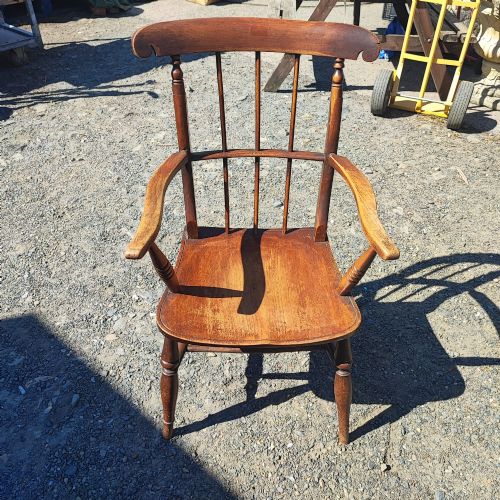
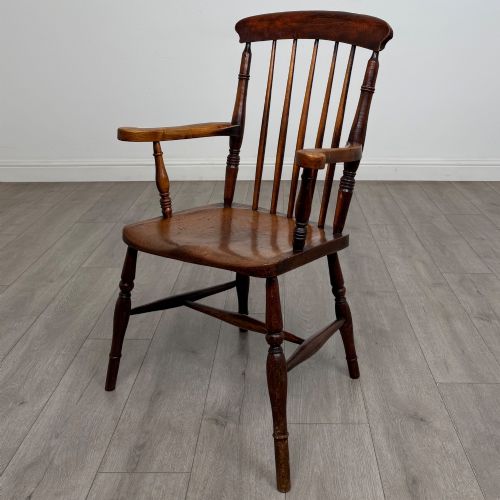
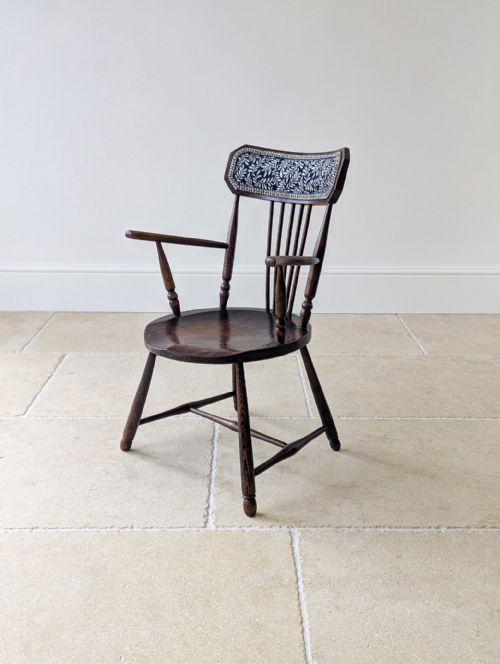
Windsor carver chairs are wooden armchairs built with a solid timber seat into which the legs, back staves, and arms are separately tenoned. Buyers seeking these pieces will encounter various regional forms spanning the Georgian, Regency, Victorian, and Edwardian eras.
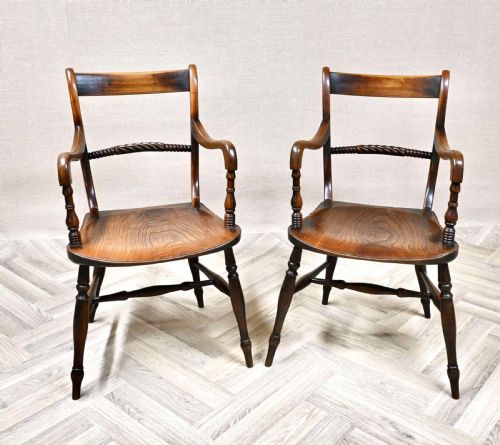
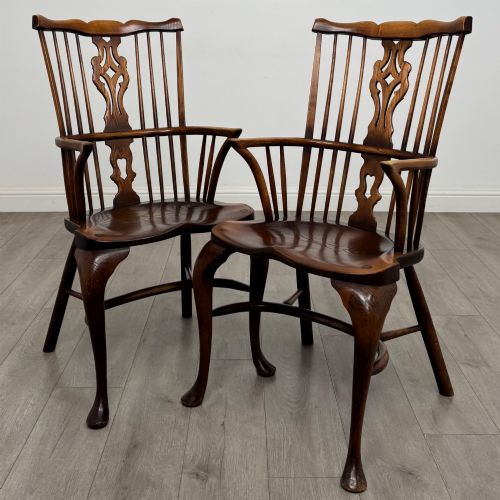
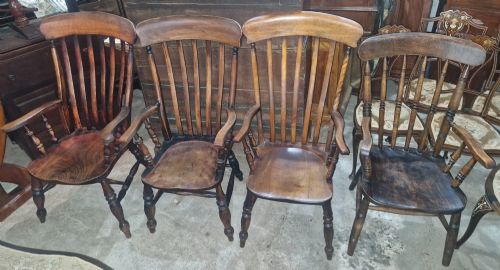
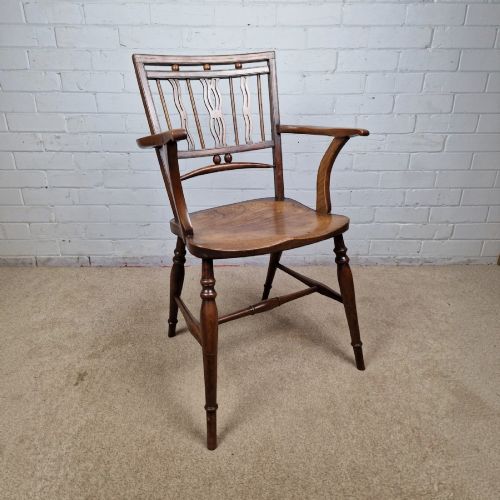
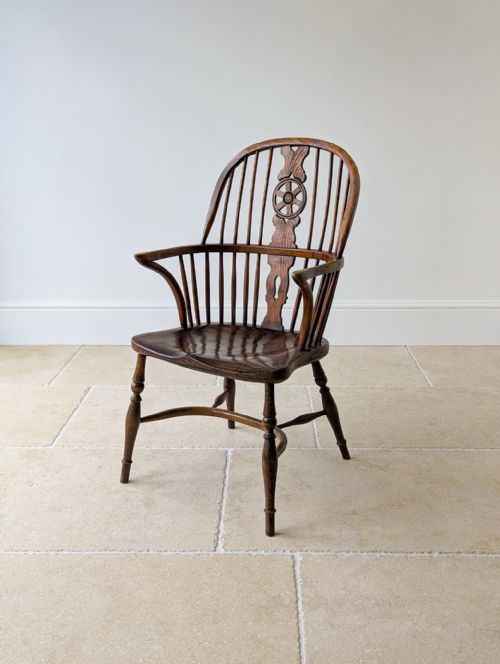
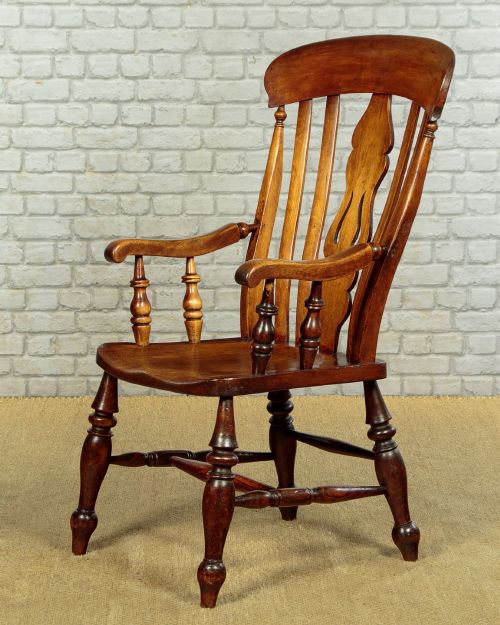
The selections available here range from high-back and comb-back designs to wheelback and bar-back configurations. Most common are nineteenth-century farmhouse and kitchen armchairs intended for practical daily domestic use.
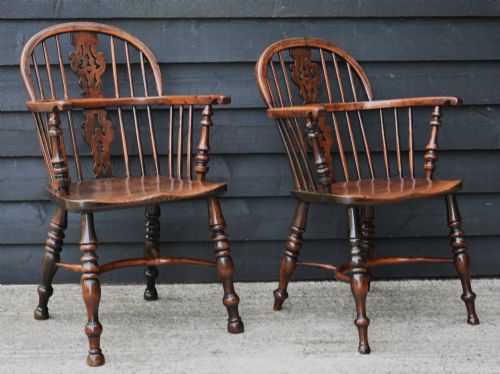
Originating largely from English country workshops, these carvers embody traditional vernacular craftsmanship. They appear in matched pairs or larger sets alongside simpler dining chairs.
How they were made
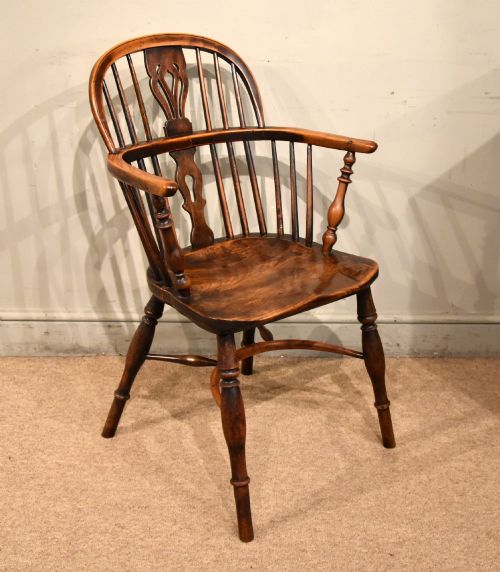
Makers utilised a combination of native timbers, frequently pairing a thick elm seat with ash, beech, or fruitwood for the bowed frames and turned legs. Yew wood was also selected for its rich grain and flexibility in steam-bent hoops.
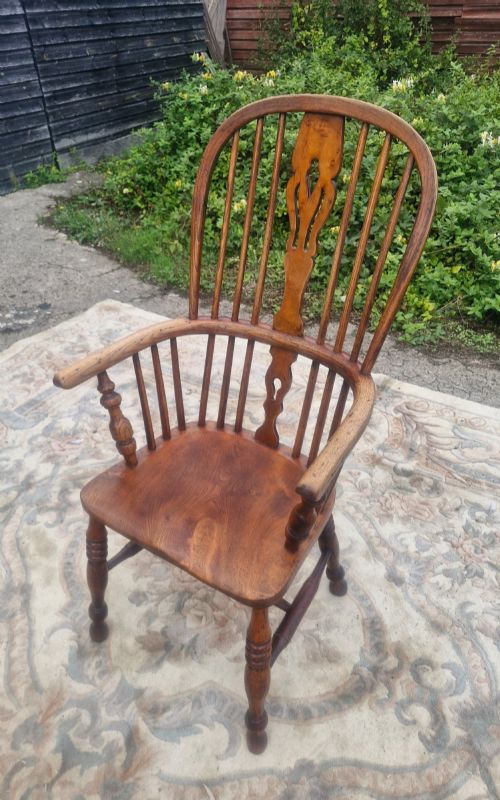
The construction relied on the stick-back or spindle-back technique, where individual turned spindles were driven directly into drilled holes in the solid wooden seat. Steam-bending was employed to shape the continuous back rails and armbows.
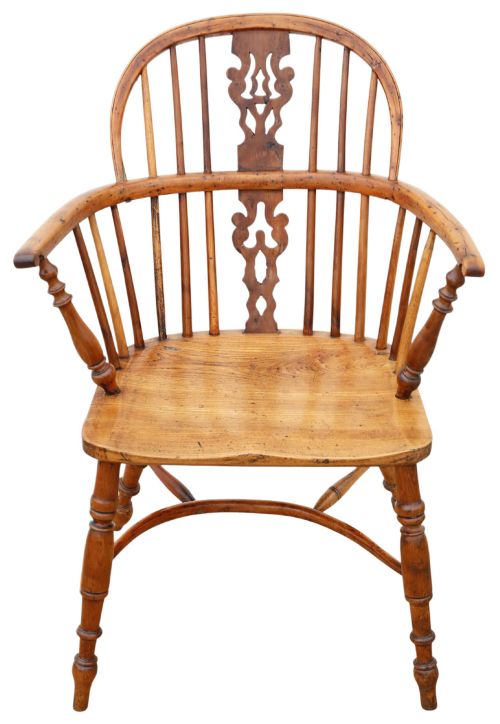
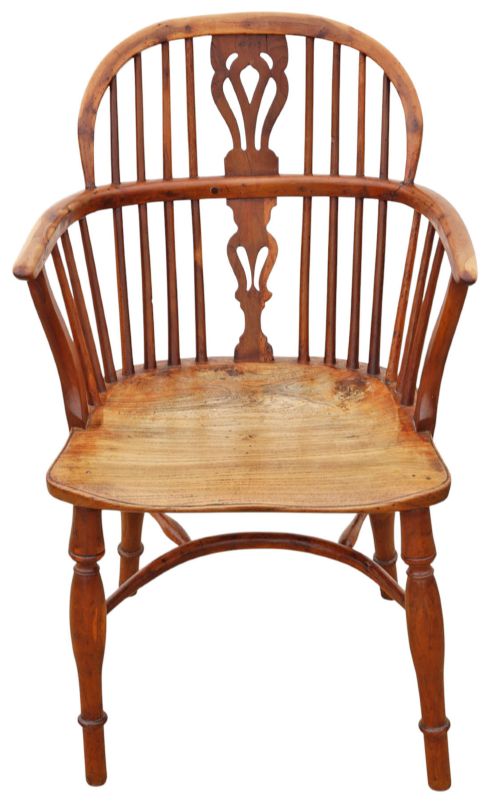
The inventory records vernacular styles including wheelbacks, stick backs, bar backs, and crinoline stretchers.
What varies in quality
Quality rests primarily in the choice and figuring of the timber, particularly the grain depth of the elm seat and the choice of yew wood. Well-figured wood and balanced proportions elevate certain examples above standard utility pieces.
The complexity of the turning on the legs and stretchers, such as crinoline stretchers or detailed spindle work, distinguishes finer country pieces from plain provincial output.
The Windsor Carver Chairs Glossary
- Carver chair
- An armchair, typically designed for the head of a dining table or for parlor use. These feature supporting armrests integrated into the upper frame.
- Elm seat
- A thick wooden seat slab chosen for its interlocking grain that resists splitting when legs and spindles are wedged into place. This formed the heavy structural anchor of the chair.
- Crinoline stretcher
- An arched under-framing stretcher connecting the legs of a chair in a curved loop. It provides lateral stability to the turned legs.
- Wheelback
- A Windsor chair back incorporating a pierced central wooden splat carved in the shape of a spoked carriage wheel. This decorative motif gained popularity in the nineteenth century.
- Comb back
- A Windsor chair design where the vertical spindles rise to support a horizontal headboard resembling the teeth of a comb. This style often dates to the eighteenth century.
Windsor Carver Chairs: Frequently Asked Questions
What defines a Windsor carver chair?
A Windsor carver chair is distinguished by its heavy solid wooden seat, into which the legs and back spindles are tenoned directly. The addition of wooden armrests separates these carvers from standard dining chairs.
They rely on a framework of turned spindles rather than a solid upholstered back. This skeletal construction provides both lightness and remarkable structural strength.
How do I date an antique Windsor chair?
Dating relies on observing stylistic markers, wood choices, and construction methods. Earlier eighteenth-century examples often feature comb backs and vernacular forms, while nineteenth-century pieces frequently display wheelback or bar-back designs.
Tool marks underneath the seat and the wear patterns on the elm slab also offer clues to age. Machine-turned components generally point toward later Victorian or Edwardian production.
Were these chairs used in dining rooms?
Kitchens and farmhouse dining rooms served as the primary locations for these sturdy armchairs. They were built for daily domestic utility around large household tables.
Carvers were typically placed at the heads of the table while simpler side chairs filled the sides. Their robust construction suited them to heavy family use.
How do I care for antique elm and ash?
Maintaining these wooden chairs involves keeping them away from direct heat sources and sudden humidity changes. Extreme dryness can cause the timber to shrink and loosen the joints.
Application of traditional beeswax helps nourish the wood grain and protect the surface. Regular dusting with a soft cloth preserves the historic patina.