


Windmill Landscape Art
Windmill landscape art captures rural industry and open skies across centuries of oil paint and watercolour.
Windmill Landscape Art
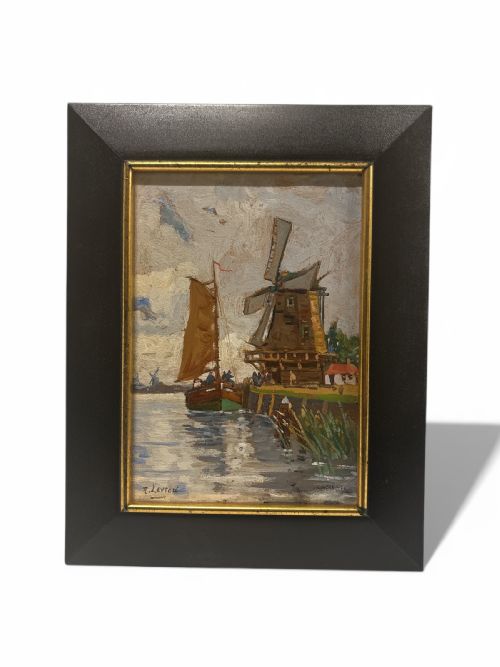
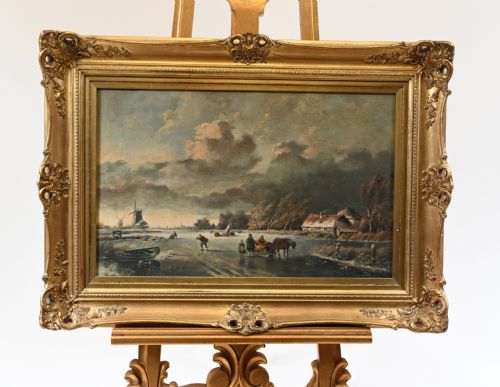
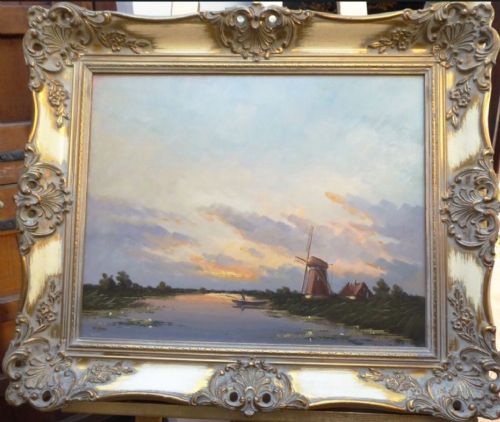
Windmill landscape art encompasses framed paintings, oil paintings and watercolours depicting traditional mills within rural and coastal scenes. Buyers searching this phrase meet works spanning the Victorian period through to the mid twentieth century, originating from British and Dutch settings.
The selections frequently feature flatlands, rivers, canals and coastal marshes alongside the structural form of the mill. Impressionist and Dutch School influences shape the visual approach of many surviving examples.
Works range from intimate watercolours on paper to large oil paintings on canvas and wood panel. These depictions balance topographical record with atmospheric rendering of light and weather.
How they were made
The primary supports consist of canvas, paper, wood panel and glass, carrying applications of oil paint or watercolour. Brushwork varies from tight topographical detail in nineteenth century watercolours to looser impasto in mid twentieth century impressionist oils.
Frames incorporate wood and gilt finishes to house the paintings and watercolours securely. Surviving pieces demonstrate traditional framing methods appropriate to their respective periods from the Georgian era onwards.
One unexpected piece includes an automaton alongside traditional painted scenes.
What varies in quality
Quality rests in the fidelity of atmospheric perspective and the confidence of handling across sky and water. Stronger examples use pigment and tone to convey the specific dampness of Dutch canals or the open light of Norfolk marshlands.
The resolution of architectural detail in the mill structure and the integration of foreground activity separate accomplished compositions from routine topographical recording.
Thomas Bush Hardy·James Orrock·Ernest Uden·Charles Harmony Harrison·Jan van Couver·John D. Walker·William Tatton Winter·Frederick William Jackson·Edward Seago·Pieter Cornelis Dommersen·John Holland Snr·Kershaw Schofield·Cecil Arthur Hunt
The Windmill Landscape Art Glossary
- Watercolour
- A painting method where fine pigment is suspended in water soluble binder applied to paper. This medium allows for transparent washes of light and colour.
- Oil paint
- A slow drying paint made by mixing pigments with drying oils such as linseed. It permits deep blending and rich textural application on canvas or panel.
- Impressionist
- A style focusing on the visual impression of the moment, especially the shifting effects of light and colour. This approach appears frequently in post war river and marshland scenes.
- Dutch School
- A collective term for painting traditions originating in the Netherlands, heavily represented here by canal and windmill subjects. These works emphasise flat horizons and expansive skies.
Windmill Landscape Art: Frequently Asked Questions
How do I identify a 19th century windmill painting?
Nineteenth century works rely on traditional oil on canvas or detailed watercolour techniques, often showing romanticized rural or Dutch coastal views.
Examination of the backing materials, framing style, and artist signatures helps confirm the era.
What is the difference between oil and watercolour windmill art?
Oil paintings use heavy pigments on canvas or wood panel, offering rich textures and deep colour blending. Watercolours utilise paper supports, providing lighter, more translucent atmospheric effects.
Both formats capture the movement of wind and water around traditional mills.
Where were most of these landscape paintings made?
The majority originate from British and Dutch locations, reflecting regions where windmills were central to drainage and local industry.
Artists frequently painted the flatlands of Norfolk alongside the canals and coastal shores of Holland.
How should I care for an antique watercolour?
Watercolours require protection from direct sunlight to prevent fading of the paper and pigments. Framing behind conservation glass limits environmental damage.
Keeping the piece in stable humidity conditions preserves the paper support over time.