


Dutch Windmill Artwork
Dutch windmill artwork captures the flat horizons and maritime light of the Low Countries through oil paint and watercolour.
Dutch Windmill Artwork
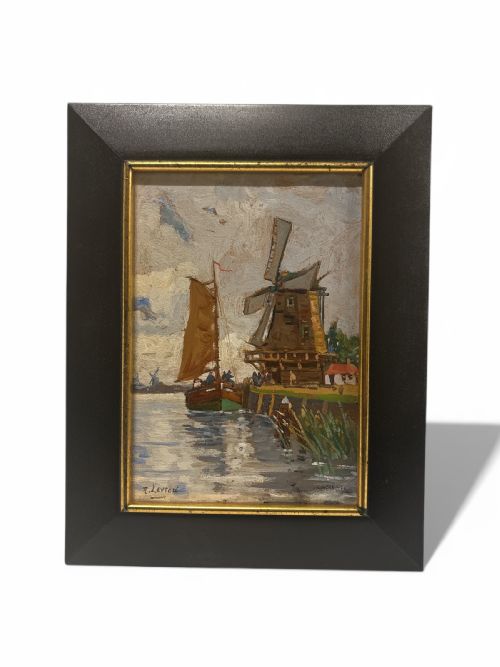
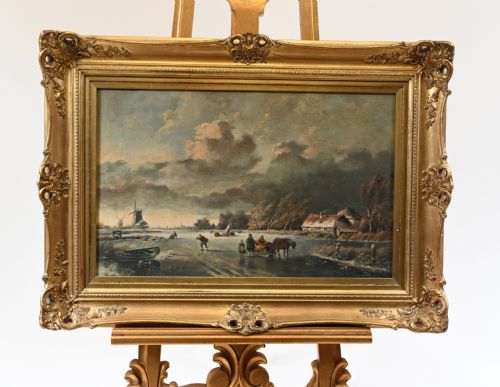
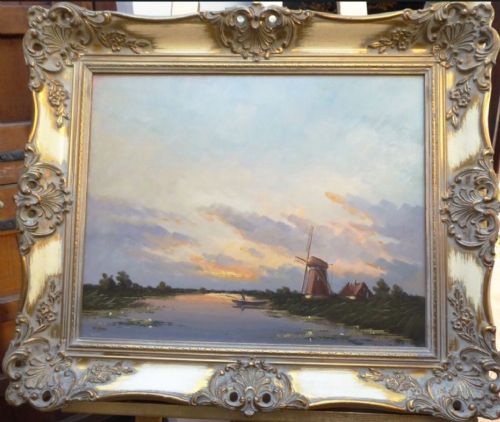
When you search for dutch windmill artwork, you find a collection of paintings and watercolours dominated by nineteenth century and mid twentieth century pieces. The subjects focus on rural canals, frozen waterways, and coastal views featuring traditional mills.
You are most likely to meet impressionist interpretations and traditional Dutch school scenes rendered in oil or watercolour on canvas, paper, or wood panels. These works capture both the quiet daily life along the river landscape and expansive polder views.
The objects range from intimate watercolours by named artists such as Thomas Bush Hardy and Jan van Couver to larger framed landscape paintings signed by painters like T. Bergman and Kershaw Schofield.
Materials and methods
These works rely primarily on oil paint applied to canvas or wood panels, alongside watercolours executed on paper. Artists utilised traditional brushwork to build atmospheric skies and shimmering water surfaces.
Many of the oil paintings are housed within gilt or gilded wood frames that complement the tonal palette of the nineteenth century and Edwardian periods.
Materials across these listings include oil paint, watercolour, canvas, wood, paper, and gilt.
Judging quality in the range
Quality rests on the confidence of the brushwork and the artist's command of light, particularly in capturing the low sun over water and flat horizons. Stronger pieces show deft handling of atmosphere rather than rigid architectural precision.
The integrity of the original support, whether canvas, wood, or paper, and the preservation of the pigment layer dictate the visual impact of the piece.
The Dutch Windmill Artwork Glossary
- Impressionist
- A style of painting emphasising loose brushstrokes and the shifting effects of light. It became popular in the late nineteenth and early twentieth centuries.
- Polder
- A low-lying tract of land enclosed by dikes that forms an artificial hydrological cycle. It is a recurring subject in Dutch landscape painting.
- Gilt
- Covered thinly with gold leaf or gold paint. This finish frequently adorns the wooden frames of nineteenth century oil paintings.
- Watercolour
- Artists' paint made with water-soluble binders and pigments applied to paper. It yields transparent washes well suited to maritime scenes.
Dutch Windmill Artwork: Frequently Asked Questions
What periods do these paintings cover?
The selection spans from the nineteenth century through the Edwardian era up to the mid twentieth century. Most pieces reflect traditional and impressionist styles from these periods.
Dates are assigned based on stylistic evidence and signatures recorded by the dealers.
Are these works signed by artists?
Several pieces bear signatures or attributions to named painters such as Thomas Bush Hardy, Jan van Couver, and Kershaw Schofield. Others remain attributed to the broader Dutch school.
Signatures help place the work within a specific nineteenth or twentieth century context.
What framing is typically found?
Many oil paintings arrive in period frames, often featuring gilt or gilded wood moulding. These frames enhance the visual weight of the landscape.
Check individual listings to confirm whether the artwork retains its original period frame.
How do I care for these artworks?
Keep oil paintings and watercolours away from direct sunlight and fluctuating humidity to protect the canvas, paper, and pigments. Glazed watercolours particularly benefit from stable indoor environments.
Dust wooden frames gently with a dry cloth without using liquid cleaners.