



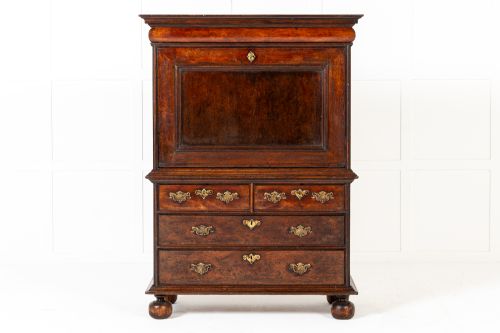


William Mary Secretary
A william mary secretary brings complex burr walnut veneers, double domes, and fall fronts into a room with immense presence.
William Mary Secretary
A william mary secretary search reveals bureau bookcases, escritoires, and fall front desks designed for correspondence and storage. These pieces date principally from the late seventeenth century and the eighteenth century, with occasional later revival examples.
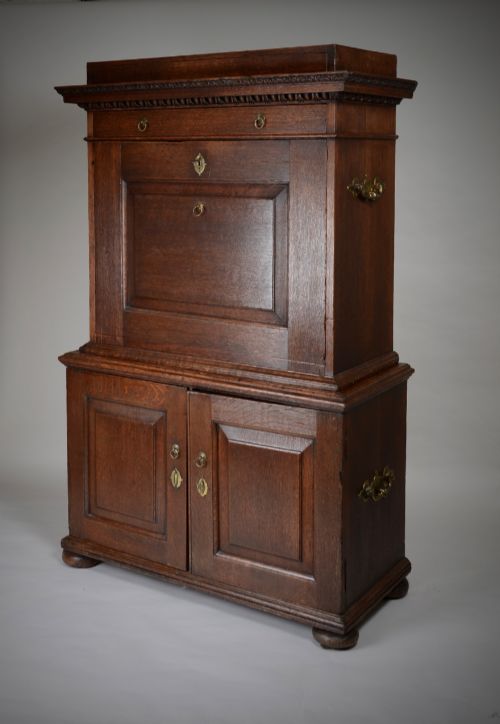
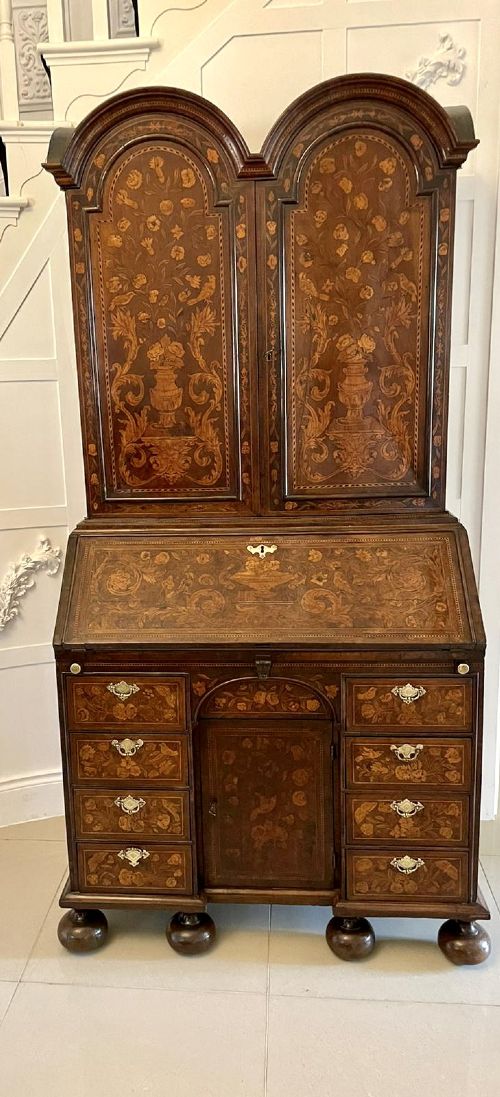
The form typically combines a writing compartment with a shelved upper bookcase or cabinet section, often finished with a double dome top. Walnut, burr walnut, and oak dominate the surviving examples across this selection.
Buyers encounter both bureau bookcases and compact escritoires, some featuring fitted interiors with pigeonholes and small drawers. Regional variations and later interpretations sit alongside pieces bearing intricate wood marquetry and japanned finishes.
Construction and Materials
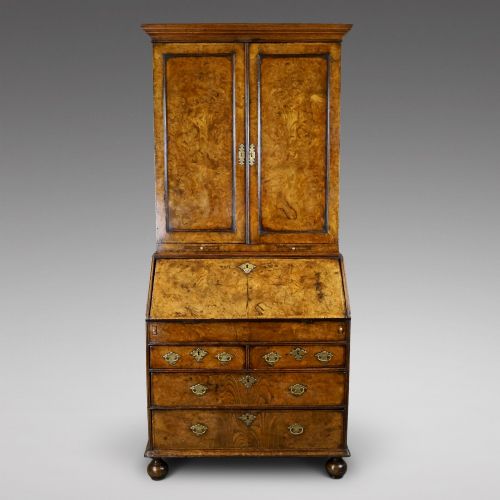
Cabinetmakers utilised dense timbers such as walnut, oak, and elm as the primary structural carcase for a william mary secretary. Highly figured burr walnut veneers were carefully sawn and applied to the exterior surfaces to create symmetrical patterns.
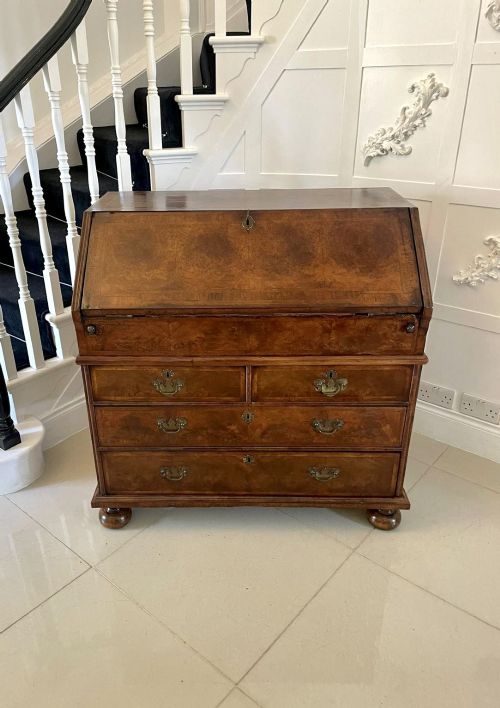
Decorative techniques include intricate wood marquetry panels and black japanning applied to the exterior surfaces. Brass hardware, including drop handles and escutcheons, secures the drawers and fall front flaps.
William Mary Secretary Retail Price Guide 2026
Typical asking prices for william mary secretary among the pieces listed under this phrase on Sellingantiques today, from the lower quarter to the upper quarter. They describe what is for sale here now, not the wider market.
Listings feature walnut, burr walnut, oak, elm, and wood marquetry across seventeenth and eighteenth century periods.
Judging Quality
The visual strength of a william mary secretary depends largely on the selection and matching of burr walnut or figured grain across the fall front and drawer fronts. Superior cabinetmaking shows precise alignment of veneer patterns and intact marquetry work.
Internal complexity dictates distinction, particularly the arrangement of drawers, pigeonholes, and secret compartments within the writing section. The preservation of original surface finishes and period brasses elevates the standing of an individual piece.
The William Mary Secretary Glossary
- Bureau bookcase
- A writing desk with a hinged fall front combined with an upper enclosed shelving section. These tall pieces provide both workspace and display capacity.
- Escritoire
- A dedicated writing cabinet featuring a fall front writing surface concealing numerous small interior drawers. The term often describes refined late seventeenth century examples.
- Burr walnut
- Timber taken from the warted growths of walnut trees, yielding highly swirly and decorative grain patterns. Cabinetmakers sliced this wood into thin veneers for primary display surfaces.
- Marquetry
- Inlaid patterns formed by fitting together contrasting pieces of wood veneer to create pictorial or geometric designs. This technique decorates the most elaborate surfaces.
- Double dome
- An upper cabinet roof line shaped into two adjacent rounded arches. This architectural profile crowns the tallest bureau bookcases of the period.
William Mary Secretary: Frequently Asked Questions
What is a william mary secretary?
A william mary secretary is a tall writing cabinet with a fall front desk area, often combined with an upper bookcase. These pieces emerged in the late seventeenth century.
They provide enclosed workspace alongside shelving for books and papers, unified by decorative wood veneers.
How do I identify this period?
Identification relies on specific structural forms, such as double dome tops, fall front desks, and kneehole configurations. Materials like burr walnut and oak point directly to the era.
Hardware styles, including brass drop handles and escutcheons, further confirm late seventeenth and early eighteenth century origins.
Where was the writing done?
Writing took place on a hinged board known as a fall front or flap, which drops down to reveal an inner array of drawers and pigeonholes. This surface supported correspondence before folding shut to conceal the contents.
Secret compartments were frequently built behind these inner drawers for secure storage.
How do I fit one in a room?
These large cabinet pieces require substantial wall space and clearance for the drop front desk flap to open fully. Placing them away from direct sunlight protects the fragile walnut veneers.
They function well as focal points in studies or living rooms, providing vertical storage without occupying excessive floor area.